




Hydrophobic lens coating: What You Need to Know
3 April 2026

TL;DR: A hydrophobic lens coating, also known as a water-repellent coating, is a thin, transparent layer applied to lenses that repels water, reduces smearing, and makes glasses easier to clean. It improves visibility in rain and helps maintain clearer lenses throughout the day.

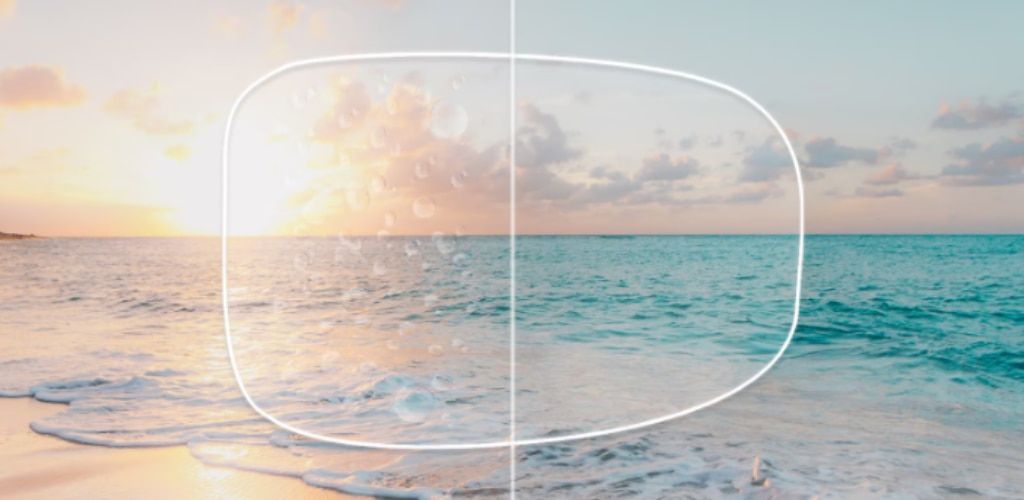
A hydrophobic lens coating is a water-repellent layer applied to the surface of the lenses. The coating causes water to bead up into droplets rather than spread across the lens.
Instead of forming a thin film that can blur your vision, these droplets roll off the surface more easily, helping to keep lenses crystal clear and free from contaminants such as water spots or residue.
Hydrophobic coatings work by altering surface tension, reducing how strongly water molecules adhere to the lens surface. This makes them particularly effective in high humidity or wet weather conditions.
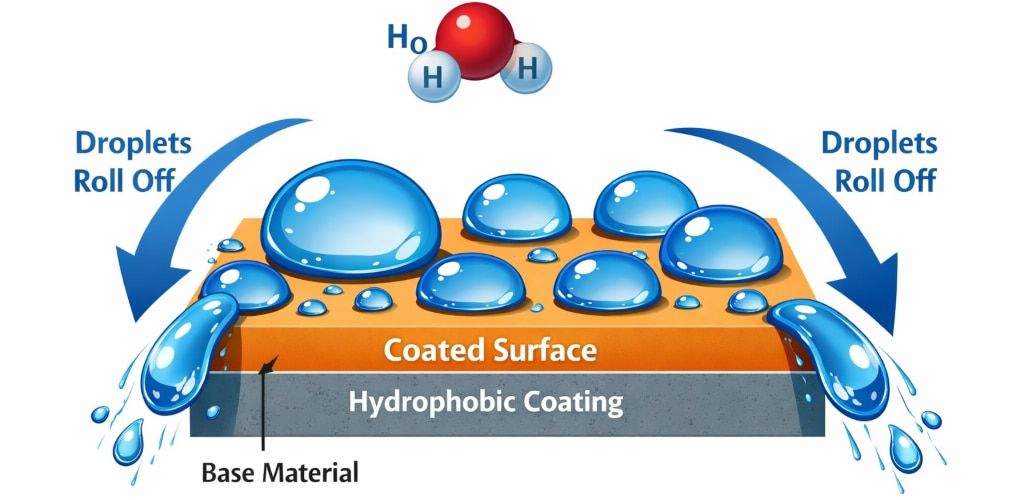
The coating creates a low surface energy layer, which reduces how strongly water molecules stick to the lens. This changes how liquids behave on the surface.
This process helps maintain clearer vision and supports eye protection by ensuring consistent visual clarity in changing conditions.

Hydrophobic coatings improve both visual clarity and lens maintenance, while supporting the overall performance of modern lens materials.
Key advantages:
One of the main benefits of hydrophobicity is how it improves vision in wet conditions.
Without a coating, water spreads across the lens surface and creates a blurry layer.
With a hydrophobic coating:
This is especially useful when:
Hydrophobic coatings also make lenses easier to care for and protect against everyday wear and tear, including abrasions from cleaning.
They reduce how strongly water, dust, and particles stick to the surface.
A hydrophobic coating means:
Many hydrophobic coatings are combined with a hard coat or scratch-resistant coating, as well as anti-static layers, to improve durability and extend the lifespan of your lenses.

Hydrophobic coatings are used across multiple types of lenses, supporting different functions beyond everyday eyewear.
For prescription eyeglasses and sunglasses, hydrophobic coatings provide practical, daily benefits.
They help:
At Glasses Direct, hydrophobic coatings are often included as part of advanced lens packages. For example, Glasses Direct offers KODAK lens options and LensProtect+, which include water, oil and smudge-repellent layers, anti-static technology, scratch resistance, anti-reflection, and enhanced durability. These combined coatings are designed to support clearer vision and longer-lasting lens performance in everyday use.
An optician may recommend combining hydrophobic with anti-static coatings to improve comfort, clarity, and long-term lens performance.
Hydrophobic coatings are also used in more technical applications.
Camera lenses A hydrophobic camera lens coating helps prevent water droplets from distorting images. This is especially useful for outdoor photography and content creation for social media, where image clarity matters.
Safety glasses and goggles In industrial or sports settings, clear vision is critical. A hydrophobic coating helps maintain visibility and supports eye protection in environments where moisture, splashes, or airborne particles are common.

Hydrophobic and oleophobic coatings are often used together, but they serve different functions.
Key differences:
Most modern lenses combine both coatings, often alongside anti-static and UV protection layers, to improve overall performance.
A super-hydrophobic coating offers a higher level of water resistance and enhanced performance.
This means:
While no coating makes lenses completely waterproof, super-hydrophobic layers are particularly useful in high humidity or heavy rain, where maintaining fog-free, clear vision is essential.
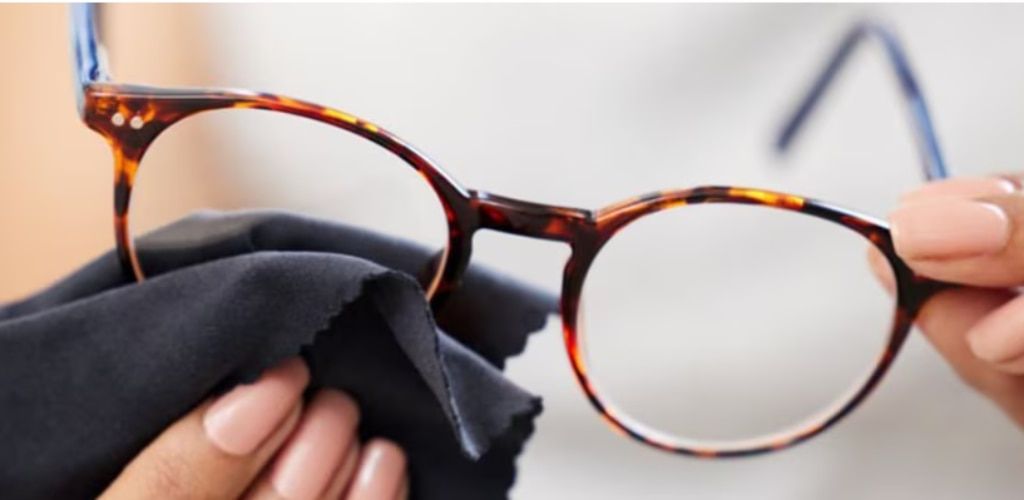
Proper care helps maintain the effectiveness of your coating over time and protects the surface from damage.
Following these cleaning steps helps preserve the coating and maintain a clear lens for longer.

For most people, a hydrophobic coating for lenses is a practical upgrade rather than a luxury.
It is especially useful if you:
The combination of clarity, durability, and easier cleaning makes it a valuable addition to modern eyewear.
A hydrophobic lens coating is a simple but effective way to improve your eyewear. By repelling water, reducing smearing, and supporting fog-free clarity, it enhances both visibility and convenience.
Many modern lens packages, such as KODAK lens options and LensProtect+ available at Glasses Direct, combine hydrophobic, oleophobic, anti-static, scratch-resistant, and anti-reflective coatings to deliver a more complete lens solution.
Whether you wear glasses every day or only occasionally, this coating helps your lenses stay crystal clear for longer. Combined with anti-static technology, UV protection, hard coat layers, and advanced lens materials, it forms part of a high-quality eyewear experience.
If you’re looking for glasses that perform well in everyday conditions, a hydrophobic coating for lenses is a smart, reliable choice.
It repels water from the surface of the lens, helping maintain clearer vision and reducing smearing and streaks.
No. Hydrophobic coatings repel water, while anti-fog coatings prevent condensation build-up caused by temperature changes or UV light exposure.
Not always. It’s often included in premium lens packages or added as an upgrade.
With proper care, it can last for the lifespan of your lenses.
Yes, over time and with improper cleaning, the coating can gradually reduce in effectiveness.