







Sustainable glasses frames: how to make a more considered choice
10 August 2026

In short: Choosing sustainable glasses frames comes down to three things — what the frames are made from, how long they are likely to last and whether the brand is transparent about its environmental claims. Bio-acetate, recycled metals and responsibly made materials are the most widely available options. But the most sustainable pair of glasses is often the one you wear for the longest.
Who this guide is for: Anyone buying new glasses who wants to make a more considered choice — without having to wade through vague sustainability claims.

More eyewear brands than ever describe their frames as sustainable, eco-friendly or responsible. Some of those claims are well-founded. Others are vague, unverified or built around a single material swap that doesn’t tell the full story.
This guide cuts through the noise. It explains what to actually look for when buying sustainable frames, what the most common materials mean in practice, and how to spot the difference between a genuine commitment and a marketing badge.
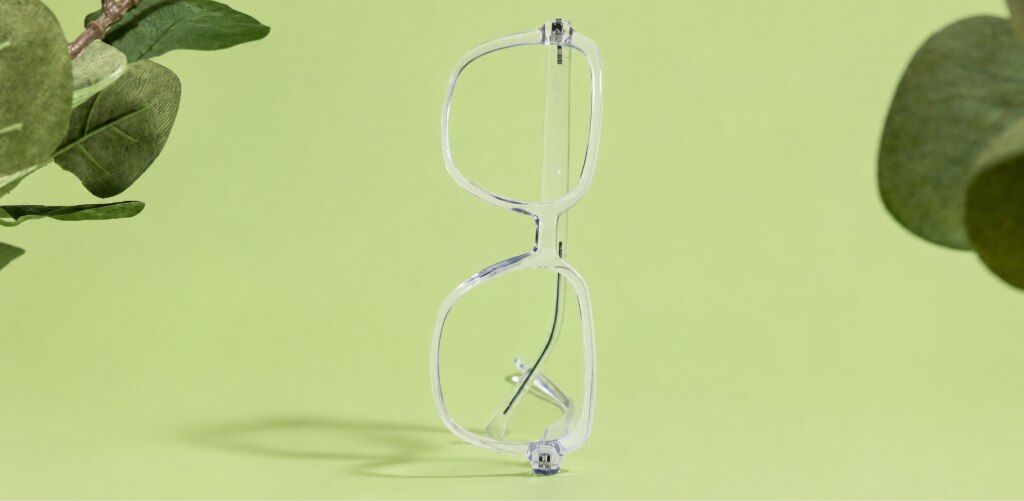
Before getting into materials, it’s worth acknowledging something that rarely appears in sustainability guides: longevity matters more than the material.
A bio-acetate frame replaced every 12 months has a higher environmental impact than a standard acetate frame worn for five years. Durability, fit and comfort all contribute to how long you keep a pair of glasses — which makes them sustainability factors too.
When buying new frames, consider:
A durable, well-fitted frame is a sustainable choice regardless of what it’s made from.
| Material | What it means | Longevity | Best for |
|---|---|---|---|
| Bio-acetate | Plant-based alternative to standard acetate | Same as acetate | Fashion-led styles, colour variety |
| Recycled metal | Titanium or steel using reclaimed content | Excellent | Everyday wear, lightweight comfort |
| Responsibly-made nylon | Nylon produced with lower environmental impact | Excellent | Active and sports frames |
| Recycled plastic | Frames made from reclaimed plastic waste | Good | Contemporary styles |
| Bamboo / wood | Renewable natural materials | Moderate — requires more care | Statement or occasional wear |
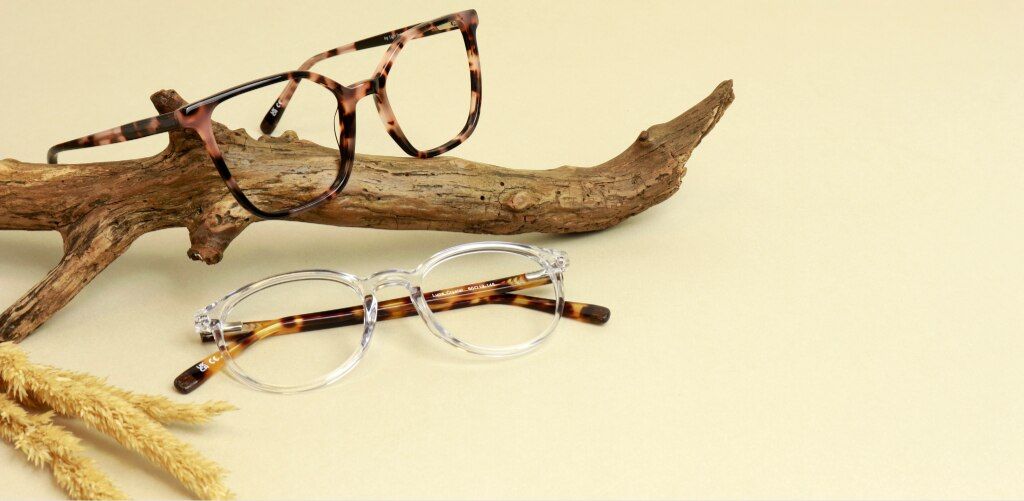
Bio-acetate uses plant-based cellulose — typically from cotton fibre or wood pulp — in place of petroleum-derived chemicals used in standard acetate production. The result looks and feels identical to traditional acetate and comes in the same range of colours and finishes.
What it doesn’t do: bio-acetate won’t biodegrade in your recycling bin. It breaks down under industrial composting conditions — which requires specialist facilities. It’s a lower-impact material, not a zero-impact one.
Worth looking for if: you want the full colour range and premium feel of acetate with a reduced environmental footprint.
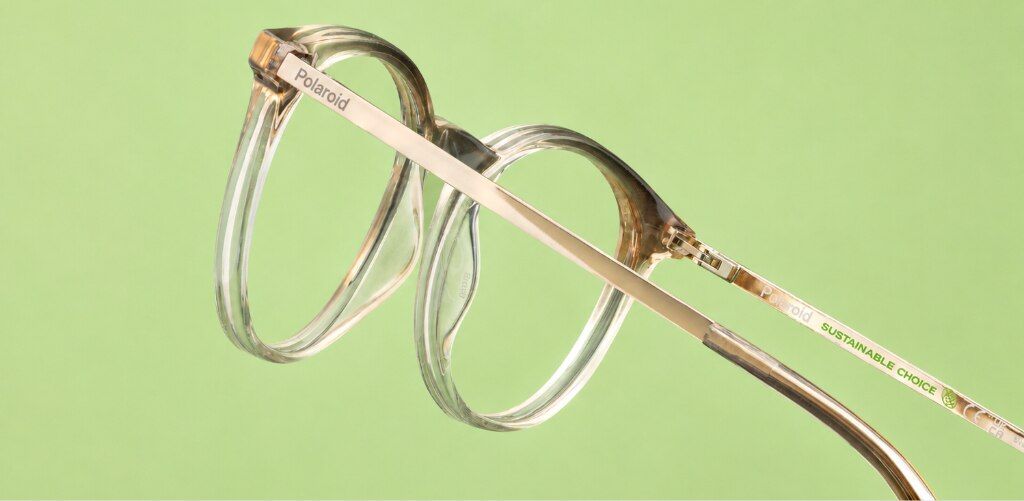
Recycled titanium and stainless-steel use reclaimed metal content rather than newly mined raw materials. The environmental benefit is real — metal recycling uses significantly less energy than primary metal production.
From a wearer’s perspective, recycled metal frames perform identically to standard metal frames. They’re lightweight, durable, corrosion-resistant and hypoallergenic.
Worth looking for if: you want everyday frames that last, with a verifiable reduction in material impact.

Some lightweight frames — particularly sports and active styles — use nylon produced with a lower environmental footprint than standard nylon. This material can be described as responsibly made. It’s a genuine step in the right direction, but it isn’t a recycled or biodegradable material.
Worth looking for if: you want a lightweight, flexible frame for active wear with a more considered production process.
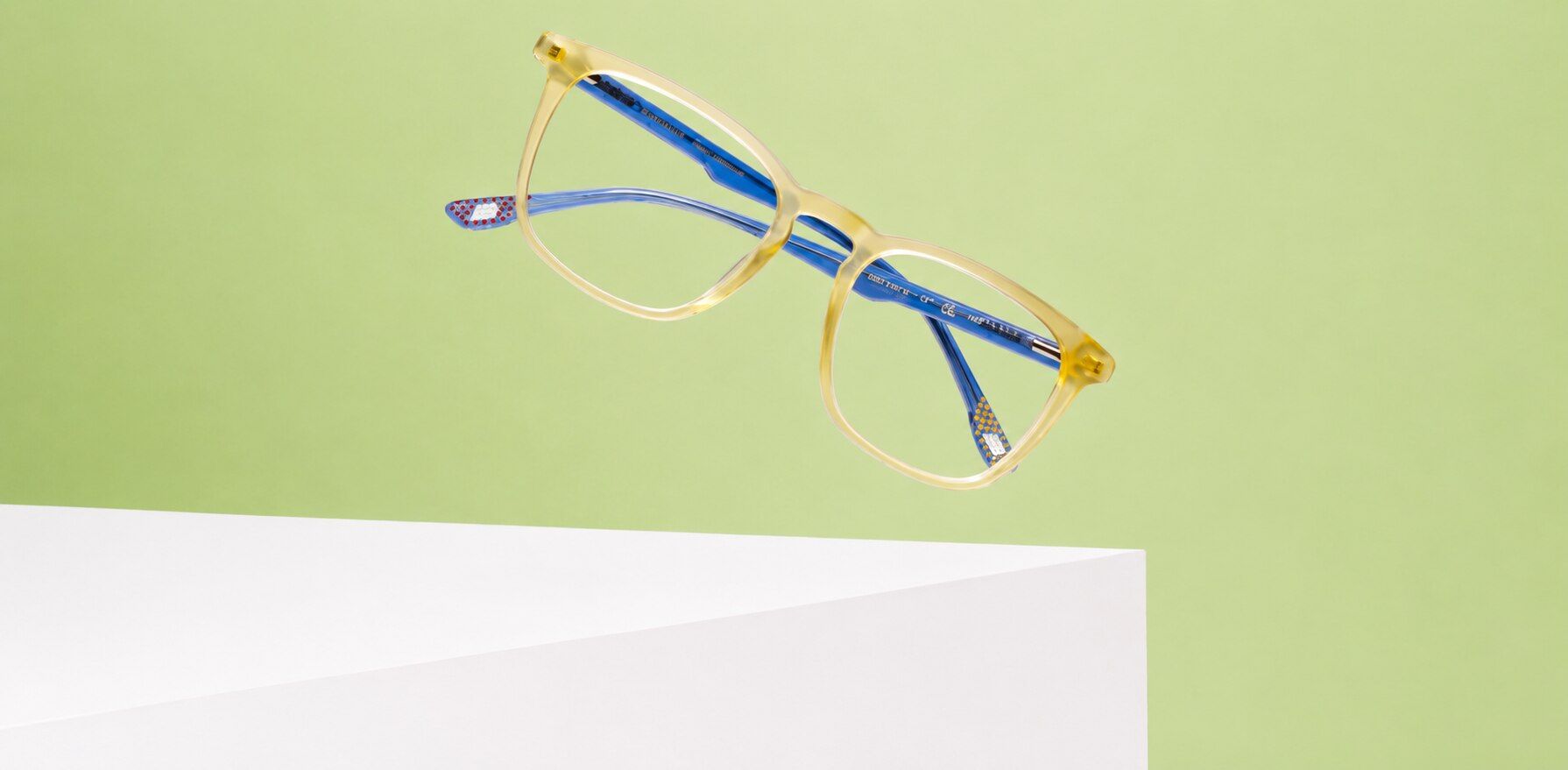
Recycled plastic frames are made from post-consumer or ocean-recovered plastic. They divert waste from landfill or the ocean and convert it into durable eyewear. Quality and durability vary by brand.
Worth looking for if: reducing plastic waste is a priority and you’re happy to research the specific brand’s credentials.
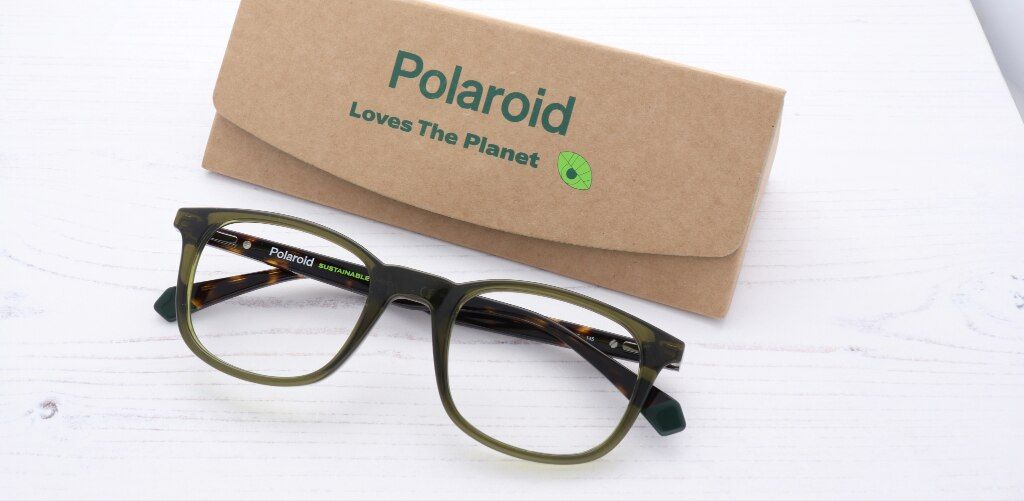
Not every “eco” claim holds up. Here are the signs to look out for:

Before buying, these five questions are worth asking:
A brand that can answer most of these clearly is worth trusting. One that can’t may be worth reconsidering.
At Glasses Direct, the range includes frames made from bio-based acetate, recycled metals and responsibly made materials — including Arden frames made with bio-based acetate with natural wooden temple tips, and frames made from bio-nylon*, a responsibly made plant-derived material. You can also explore the eco-friendly frames collection for a curated edit of lower-impact styles.

Not sure which frames are right for you? With Glasses Direct’s free Home Trial, you can choose up to four frames and try them at home for seven days — before spending anything on lenses.
Choosing a frame you love and keep wearing for longer is one of the best sustainable choices you can make.
Sustainable glasses frames reduce environmental impact through their material, manufacturing process or longevity. The most common sustainable materials are bio-acetate, recycled metals, recycled plastics and responsibly-made nylon. Longevity — how long you wear the frame — is also a significant factor.
Bio-acetate uses plant-based cellulose rather than petroleum-derived materials, making it a lower-impact alternative. It looks, feels and performs identically to standard acetate. However, it’s not biodegradable at home — it requires industrial composting conditions.
Look for specific material information, named certifications, percentage of recycled or bio-based content and end-of-life guidance. Vague terms like “eco-conscious” without supporting evidence are not a reliable indicator of genuine sustainability.
Not always. Recycled metal and responsibly-made frames are available across a range of price points. Some specialist materials such as ocean-recovered plastic may carry a small premium, but sustainable options are increasingly available at mid-range prices.
Many opticians accept old frames for recycling or donation. Some brands also offer take-back schemes. Frames in good condition can often be donated through vision charities.
Yes. Most sustainable frame materials are compatible with single-vision, bifocal and varifocal prescriptions. Always confirm lens compatibility at the point of ordering.
Responsibly made refers to a frame produced with a lower environmental footprint than standard manufacturing — covering material sourcing, production processes and supply chain practices. It does not mean the frame is biodegradable or made from recycled content.
*bio-based nylon has 46% bio-based carbon content representing the amount of raw materials coming from plant-based sources vs fossil-based ones (tested according to ASTM D-6866 standard).