






Glasses for small noses: how to find the perfect fit
25 June 2026

Quick summary: If glasses constantly slide down, pinch or sit too low, then the issue is usually the fit rather than frame style. The best glasses for small noses typically feature adjustable nose pads, lightweight materials or a low-bridge design — all of which help keep frames secure and correctly positioned throughout the day.
Whether you have a small nose, a low nose bridge or flatter facial features, the right frame makes a noticeable difference to both comfort and lens alignment. This guide explains what to look for, which frame styles work best, and how specialist options such as low-bridge glasses or Asian-fit frames can help.

Finding comfortable eyewear can be challenging when your nose bridge is narrow, low or less pronounced. This is largely because standard frames are designed around average bridge measurements, which means they may not sit correctly on every face.
Common problems include:
In contrast, a well-fitted frame sits securely without slipping or pinching. It also positions lenses correctly, which means clearer, more comfortable vision.
For many people, specialist options — such as glasses for low nose bridges, glasses for flat noses, or Asian-fit frames — provide a better everyday experience than standard designs.
When shopping for the best glasses for small nose shapes, there are a few features worth prioritising. In particular, look out for the following.
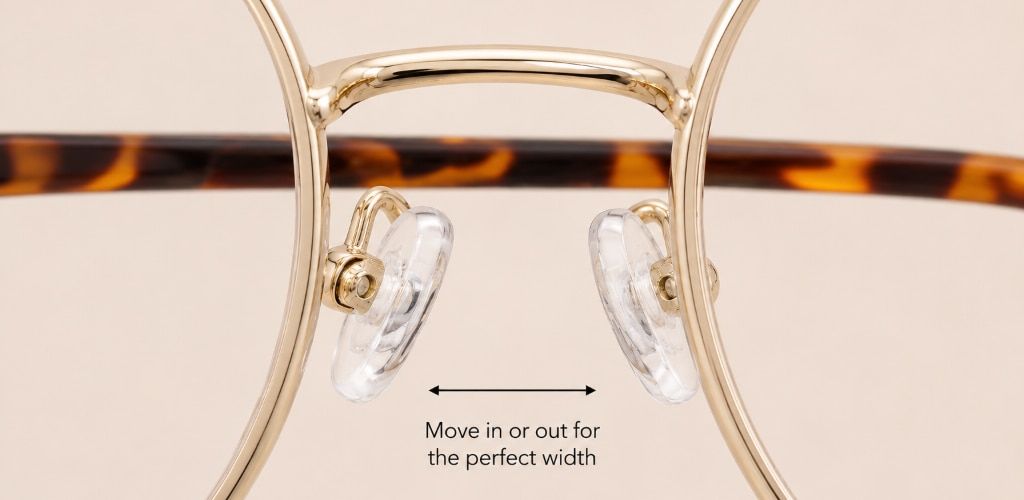
Adjustable nose pads allow the fit to be customised precisely.
Unlike fixed plastic bridges, adjustable pads can:
As a result, they’re particularly useful for eyeglasses designed for flat nose bridge structures, where extra support is needed.
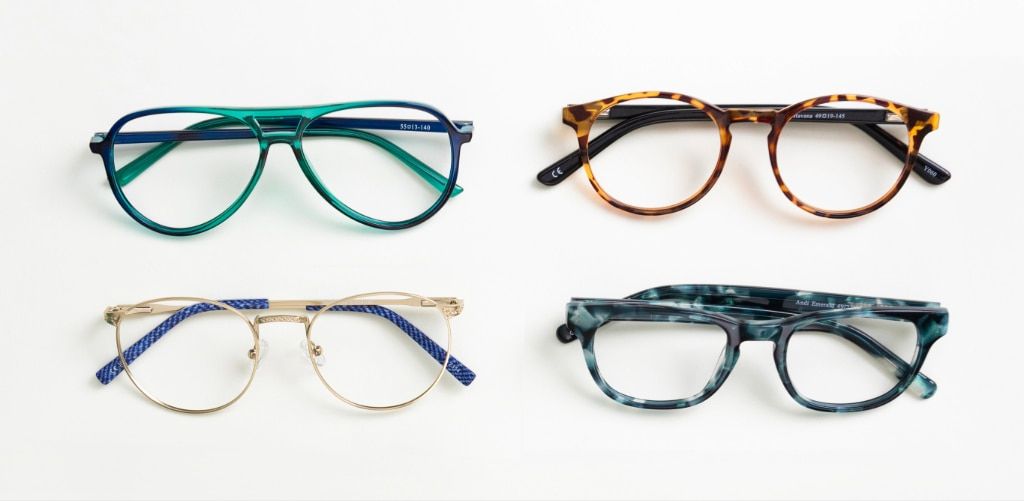
Heavy frames can place unnecessary pressure on a smaller nose. For that reason, it’s worth looking for lighter materials such as:
Not only do lighter frames tend to stay in place more effectively, they also remain comfortable during extended wear.
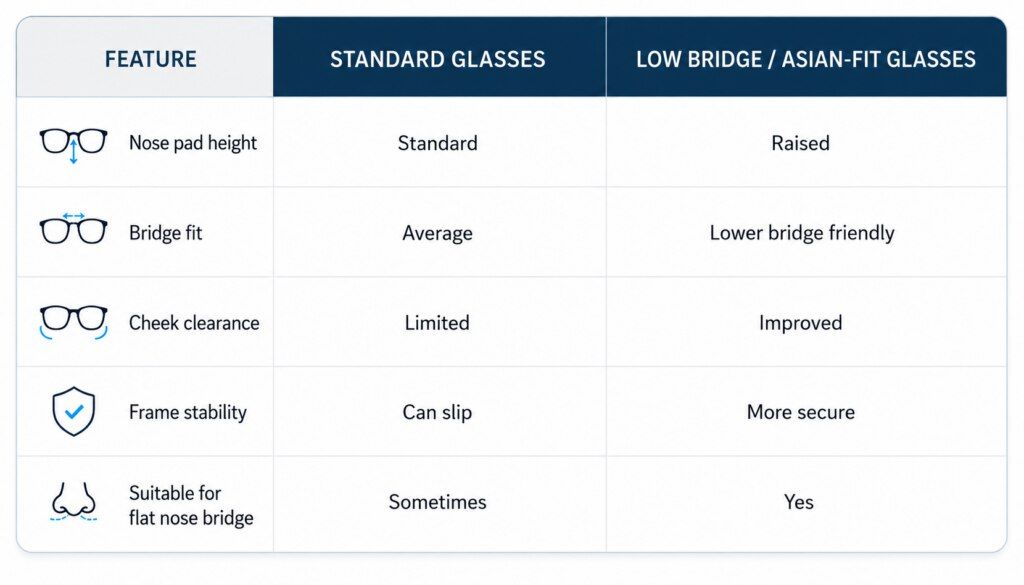
Low-bridge-fit glasses — also called Asian-fit glasses — are designed for people with a lower or flatter nose bridge. Despite the name, they can suit anyone whose glasses tend to sit too low, touch the cheeks, or slide down their face.
In contrast to standard frames, low-bridge-fit designs often feature:
Together, these features work to keep frames properly positioned. So if glasses regularly slide or press uncomfortably close to the cheeks, low-bridge-fit designs are worth considering.
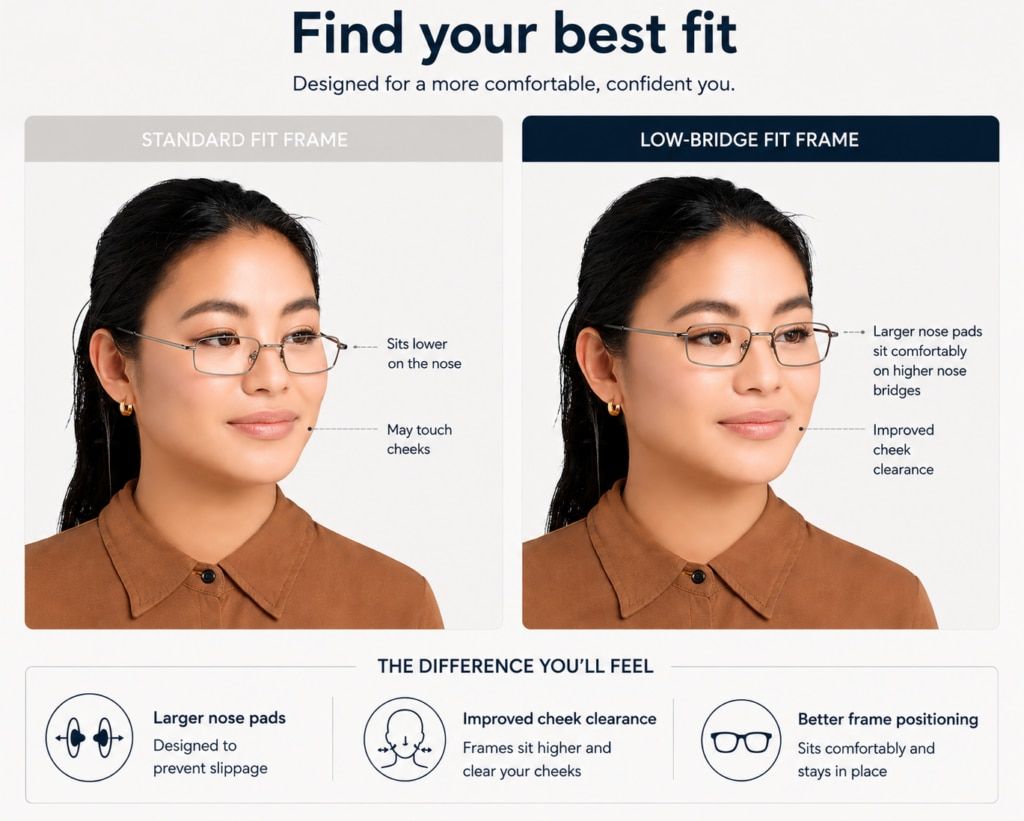
While fit matters most, certain frame shapes also work particularly well.
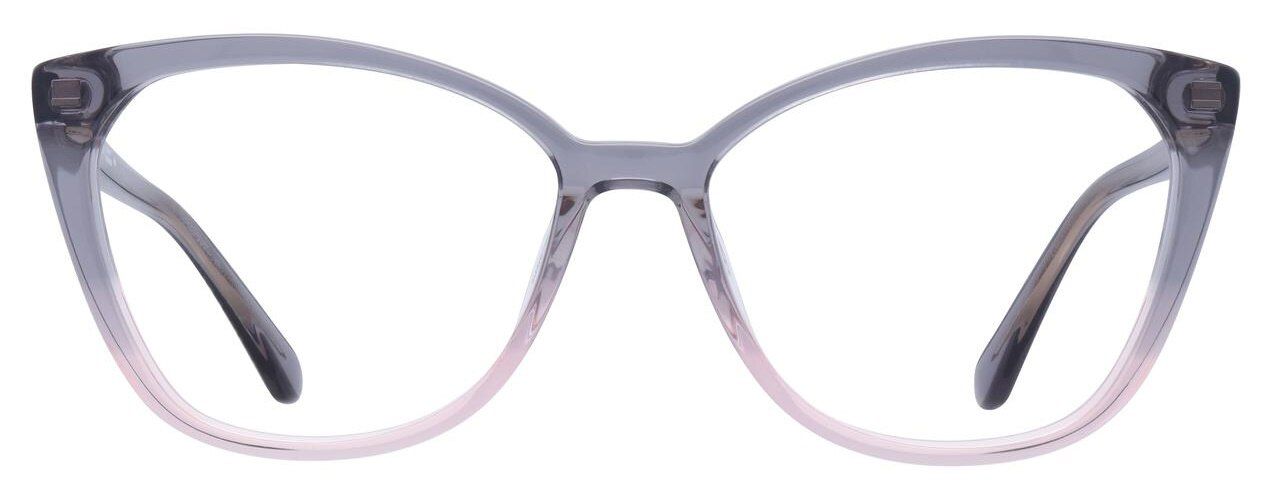
Cat-eye styles draw attention upward and, in doing so, create balance across the face.
Benefits include:
What’s more, many cat-eye frames come with narrower bridges, making them a comfortable and secure everyday option.
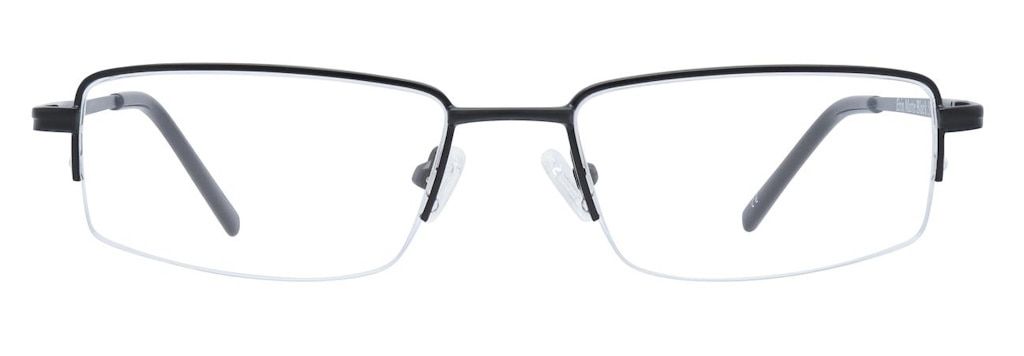
Rectangular frames remain one of the most versatile options for smaller facial features. They’re also extremely stylish.
They offer:
For many wearers, rectangular styles rank among the best glasses for low nose bridge facial structures. This is because weight is distributed evenly across the face, reducing pressure on any single point.
Top pick:
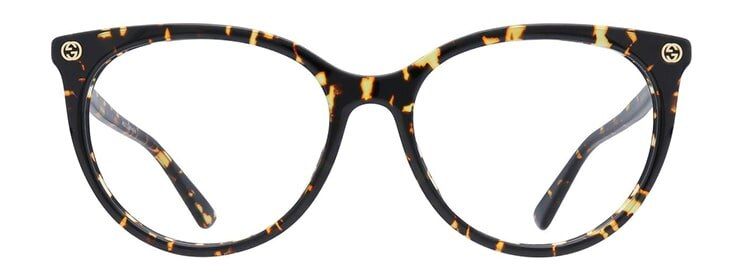
Oval frames, meanwhile, create a softer look while maintaining everyday comfort.
They work well because:
When combined with a narrower bridge, oval frames can be among the most comfortable glasses for small noses.
Choosing the right glasses for a smaller nose goes beyond picking a frame style. In practice, understanding bridge measurements, using our free Home Trial and knowing the signs of a good or poor fit all help narrow things down considerably.
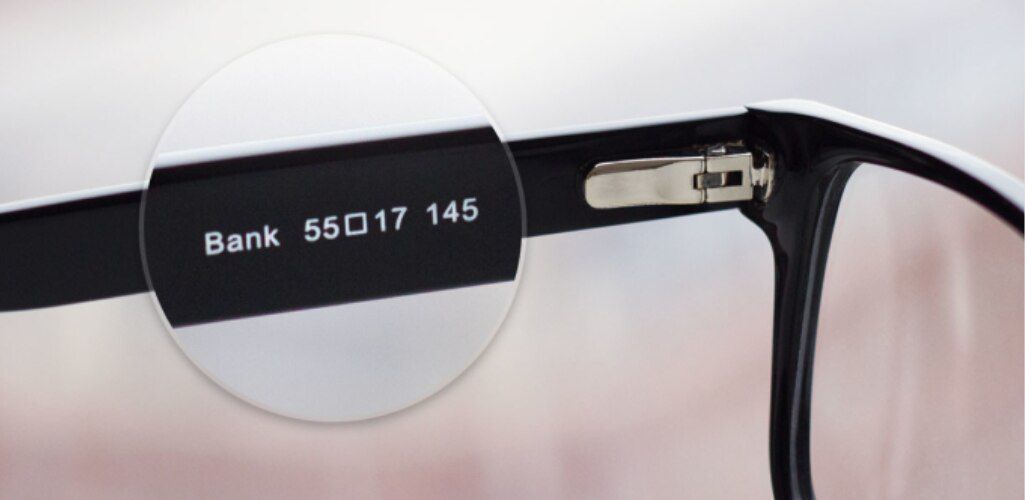
The bridge measurement is the middle number printed on most frame arms.
For example:
55□17-145
As a general rule, a narrower bridge measurement can help if glasses frequently slide. Standard bridge widths typically range from 14–31mm. By comparison, low-bridge glasses are usually designed with bridge measurements of 8–16mm, which provides a more secure position and prevents frames from dropping too low.
Once you have your measurements, use the Best Fit Machine to find frames most likely to suit your face shape and fit requirements.
That said, bridge width alone doesn’t tell the whole story. Frame design, nose pad placement and overall geometry all affect how frames sit. This is precisely why low-bridge-fit and Asian-fit glasses often perform better than simply choosing a narrower number.

When trying on frames at home with the free Home Trial, look out for these signs:
A Good Fit
✓ Frames stay in place when your head moves
✓ The bridge sits comfortably without pinching
✓ Lenses are centred in front of the eyes
✓ Frames don’t touch the cheeks
✓ No pressure marks appear after wearing
A Poor Fit
✗ Glasses slide down the nose repeatedly
✗ The bridge feels tight or uncomfortable
✗ Lenses sit too low on the face
✗ Frames touch the cheeks when smiling
✗ Frames need to be pushed back up throughout the day
If any of these fitting issues sound familiar, low-bridge-fit glasses are worth trying. Unlike standard frames, these are specifically designed to sit securely on lower or flatter nose bridges — preventing slipping without creating pressure points.
Standard frames are built around average nose bridge measurements and often don’t account for lower or flatter bridge shapes. Low-bridge-fit frames, on the other hand, use larger nose pads, a more tailored bridge width and a different frame angle to keep everything in the right position. It’s for this reason that many people searching for ‘eyeglasses for flat nose bridges’ or ‘Asian-fit glasses’ find specialist designs far more comfortable day-to-day.

Glasses for small noses should feel secure, comfortable and effortless to wear all day — no sliding, no readjusting, no pressure points.
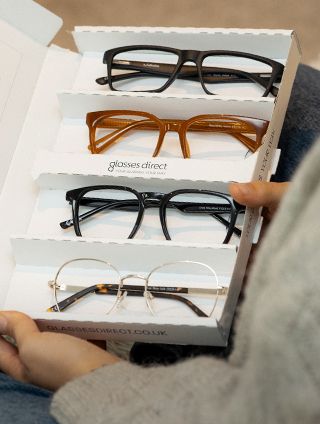
If standard frames haven’t worked so far, specialist designs such as Asian-fit glasses and low-bridge glasses can make a real difference. Features such as adjustable nose pads, lightweight materials and low-bridge construction help frames stay exactly where they should. And with the free Home Trial, it’s easy to try up to four frames at home before committing.
Browse glasses for small noses at Glasses Direct and find a pair that fits properly from the start.
Frames with adjustable nose pads, lightweight materials and a low-bridge design tend to work best. In particular, the ideal frame stays secure without slipping or creating pressure points throughout the day.
No. Although the “Asian-fit” label reflects the origin of the design, low-bridge glasses suit anyone with a lower or flatter nose bridge, regardless of background.
Asian-fit glasses feature raised nose pads, greater cheek clearance and a bridge shape designed to sit securely on lower nose bridges. Standard frames, by contrast, are built around average bridge measurements and may slide or sit too low on flatter facial structures.
In many cases, yes. Adjustable nose pads create a more personalised fit by allowing the pads to be repositioned for better stability. They’re particularly useful when glasses feel loose or tend to slide during movement or extended wear.
Metal frame nose pads can usually be gently bent inward or outward to change the bridge position. However, you may feel it’s best done by an optician if you’re worried about snapping the pad arms.
Cat-eye, rectangular and oval frames all work well. Cat-eye styles offer a narrower bridge and an upward visual lift. Rectangular frames, meanwhile, distribute weight evenly across the face. Oval frames keep things lightweight and understated. Importantly, all three are available in low-bridge-fit designs at Glasses Direct.
Absolutely. Round, rectangular, cat-eye, acetate and metal frames are all available in low-bridge and adjustable nose pad designs — so there’s no need to compromise on style to get a better fit.