







Glasses size guide: how to read and measure your frame size
20 October 2026

In short: Your glasses size is the row of three numbers on the inside arm, such as 55-17-145. In millimetres, they give the lens width, bridge width and temple (arm) length. The quickest way to find frames that fit online is to copy the numbers from a pair you already like. Enter them into our Best Fit Machine, then check the look and feel with Virtual Try-on and a free Home Trial.
Who this guide is for: Anyone buying glasses online who wants a frame that fits the first time, whether you're replacing a favourite pair or buying your first.

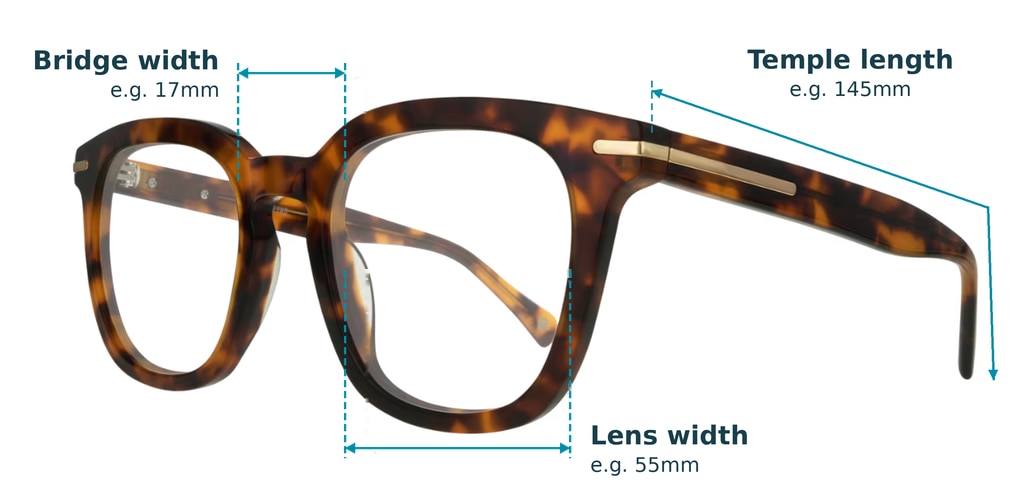
There's a little row of numbers hiding on the inside of most glasses. Most of us wear them for years without a second glance. But those three figures are the closest thing eyewear has to a fit label, and once you can read them, shopping online stops being a guessing game.
As All About Vision's optician-reviewed guide to frame sizes explains, every number is in millimetres. They always run in the same order: lens width, bridge width, then temple length. Here's a quick glasses size chart using 55-17-145 as the example.
| Number | What it measures | Typical range | What it changes |
|---|---|---|---|
| 55 | Lens width (or eye size): the horizontal width of one lens opening | 40–60mm | How big or small the frame looks on you |
| 17 | Bridge width: the gap between the lenses, where the frame sits on your nose | 14–24mm | Whether frames perch nicely or slide down |
| 145 | Temple length: each arm, from the hinge to the tip that curves behind your ear | 120–150mm | How secure and comfortable they feel behind the ears |
One quirk to look out for: a small square (▢) often separates the first two numbers rather than a dash, so that you might see 55▢17 145. It's just a printing convention. The figures mean exactly the same thing.
It's also worth knowing that two frames with identical numbers can still fit differently, because shape and style change how a frame sits. Treat the numbers as a strong shortlist, not a guarantee.
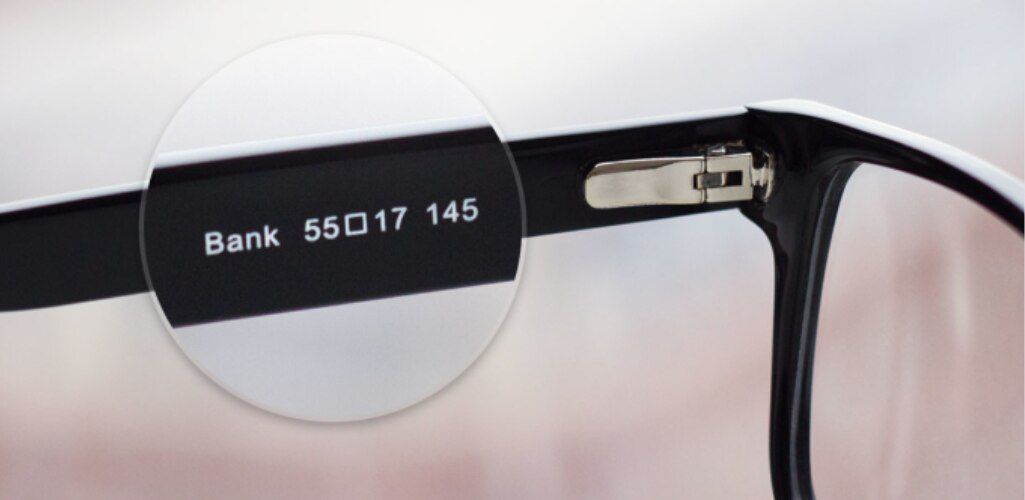
Pick up any pair and look along the inside of the left or right arm, near the hinge. On a slim metal frame like our own-brand Kai, the digits are tiny and laser-fine. On a chunkier acetate frame like London Retro's Kew, they're easier to spot. If the arm is too narrow to display them, check the inside of the bridge instead.
You'll usually see a few other markings alongside the size, such as a model name and a colour code.
On Glasses Direct's website, you'll also find a size letter (S, M, L or XL) in each product's web address, as well as in the Frame Info section of each product page. It's a handy shortcut, but the three numbers on the inner arm are the precise measurements, so reach for those when fit really matters.
There's no single standard glasses size, because faces vary so much. Instead, most frames fall within the typical ranges above. At Glasses Direct, we group every frame into four sizes based on its internal frame width, as set out in our frame size guide.
| Size | Frame width | Usually fits |
|---|---|---|
| Small (S) | 125mm and under | Narrow or petite faces |
| Medium (M) | 126–130mm | Average-width faces |
| Large (L) | 131–135mm | Wider faces |
| Extra-large (XL) | 136mm and over | Broader faces – see our XL glasses |
When you’re browsing, you’ll also see an extra-small (XS) filter. It covers frames from 116mm to 122mm, for very narrow or petite faces.
Use the size band to narrow your search, then check the three numbers on each frame against a pair you know fits.
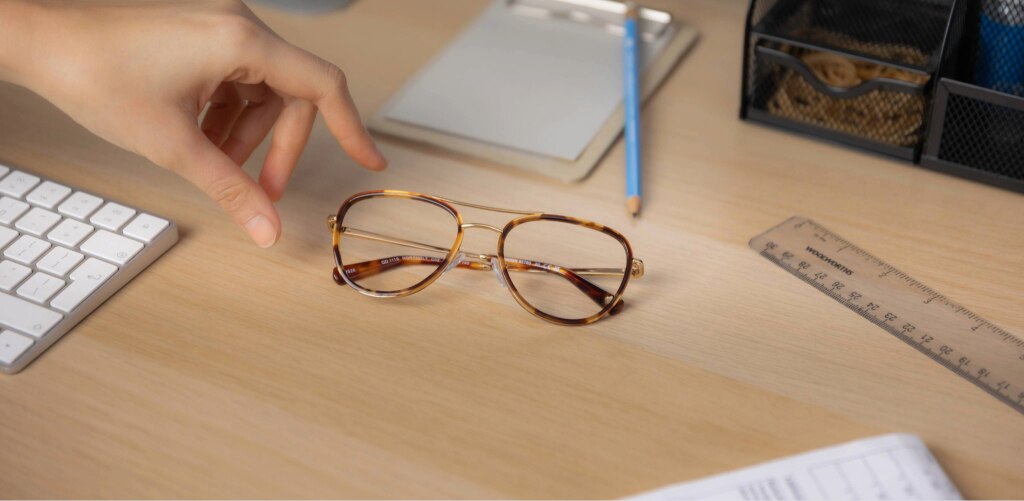
The fastest route to frames that fit is to match the size of a pair you already wear and love. If an old favourite sits just right, its numbers are your blueprint. No tape measure held against your face, no squinting into a mirror.
You'll need: a ruler marked in millimetres and about five minutes.
When a new pair online lists numbers within a millimetre or two of yours, it should feel reassuringly familiar from the first try-on.
Once you have your measurements, you don't need to compare them frame by frame. Our Best Fit Machine works like a glasses size calculator. Enter the lens width, bridge width and arm length from your current pair – or its frame width and frame depth – and it shows you frames with a similar fit.
It's the simplest way to turn a ruler and an old pair of glasses into a shortlist of new ones.

Glasses aren't sized by gender. A 55-17-145 frame measures the same whether it's listed under men's or women's styles. What differs is face width. A 2012 study of 947 adults, published in the Journal of Ophthalmic and Vision Research, measured an average pupillary distance of 63.6mm in men and 61.1mm in women.
That gap is small, and plenty of people sit outside it. So use it as a starting point, then let your own numbers decide.
Men's glasses size guide: If standard frames tend to pinch at the temples or look narrow, start with large and XL sizes. Check the temple length too; longer arms towards 150mm sit more securely on larger heads.
Women's glasses size guide: If frames tend to slide down or look too wide, start with small and medium sizes. A narrower bridge or adjustable nose pads will help them stay put.
The measurement that really decides whether a frame suits you is the total width across the front. Ideally, it should match the width of your face at the temples.
To gauge yours, look straight into a mirror, level with your eyes, and note where your face ends on each side. A frame whose front lines up with those edges will sit right. Too wide and the arms splay out and slip. Too narrow and they pinch, leaving little red marks by lunchtime.
The bridge does the fine-tuning:
Temple length matters most for comfort. Arms that are too short tug behind the ears; too long and the frames never feel anchored. If you're between sizes, lighter materials help a longer arm sit gently. The titanium Oakley® Lizard™, for instance, has ultra-thin arms that feel barely there. As a guide, frames weighing 20g or less count as lightweight. Browse all our titanium glasses if weight is your deciding factor.
Once the size is sorted, shape does the rest. Our face shape guide helps you choose between softer round glasses, classic rectangle frames and more.
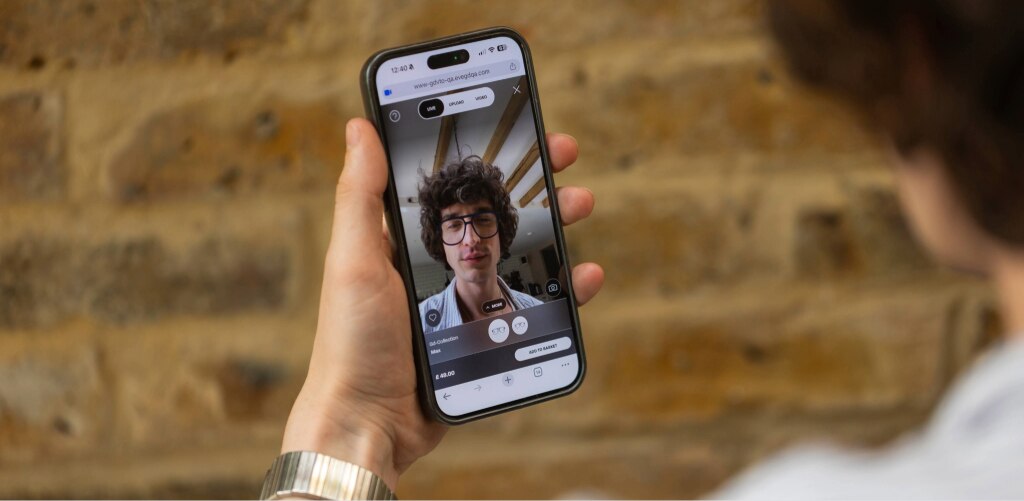
Numbers tell you how a frame will fit. Virtual Try-on shows you how it looks. Using your phone or laptop camera, you can see a frame's width and shape on your face before you add it to your shortlist. It's a quick way to check that a size that fits on paper also looks right in the mirror.
There’s a fourth number worth knowing, and it’s a common source of confusion: your pupillary distance (PD). This is the gap between the centres of your pupils, in millimetres. Unlike the other three, it measures you rather than the frame, and it’s used to centre your prescription lenses correctly.
The key thing is not to mix it up with bridge width. Bridge width describes the frame; PD describes your eyes. You’ll need your PD when you order prescription lenses, but you won’t find it stamped on any arm. To find yours, read our guide to measuring your PD.

Reading the numbers turns a wild guess into a shortlist. Still, how a frame feels on the day is the real test.
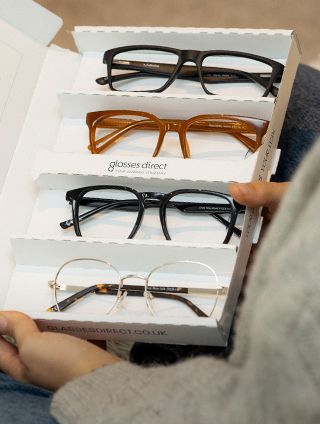
That's exactly what our free Home Trial is for. Choose up to four frames, try them at home for seven days, then send the whole trial back for free. Order your favourite with prescription lenses, and our qualified opticians check every order before it is sent.
Measure once, check the look with Virtual Try-on, try at home – and your next pair should fit like it was made for you.
There's no single standard size. Most frames have a lens width of 40–60mm, a bridge width of 14–24mm and a temple length of 120–150mm. Glasses Direct frames come in four sizes, from small (125mm inner frame width and under) to extra-large (136mm and over).
Check the inside arm of a pair that fits you well for three numbers, such as 52-18-145. If they've worn off, measure the lens width, bridge and arm length with a millimetre ruler, then add the frame width and lens height.
Yes. Our Best Fit Machine uses your current glasses measurements to find new frames with a similar fit.
No, frame sizes are measured the same way for everyone. On average, men's faces are slightly wider, so many men start with large frames and many women with small or medium. Your own measurements are the best guide.
Nothing different. A small square (▢) between the lens width and bridge width is simply a printing convention, used in place of a dash.
No. Bridge width is the gap between the lenses on the frame. Pupillary distance is the gap between the centres of your pupils, used to position your prescription lenses.
Try before you buy with our free Home Trial. If you've already ordered, our 120-day free returns give you plenty of time to send them back.