







Full-rim vs semi-rim vs rimless glasses: which should you choose?
2 April 2026

In short: When choosing between full-rim vs semi-rim vs rimless glasses, the right frame type depends on your prescription, your lifestyle and the look you want. Full-rim glasses are the sturdiest and hide thick lens edges best. Semi-rimless glasses are lighter, with a smart, understated look. Rimless glasses, also called frameless glasses, are the lightest option and suit lighter prescriptions.
Who this guide is for: Anyone choosing new glasses who wants to know how frame type affects comfort, durability, lens thickness and style.
Frame type changes more than the look of your glasses. It affects how much they weigh, how well they protect the lenses and how thick those lenses appear. Here's how full-rim, semi-rim and rimless glasses compare, so you can pick the right type for your prescription and your day.
| Full rim | Semi rim (half rim) | Rimless (frameless) | |
|---|---|---|---|
| How the lens is held | Frame surrounds the whole lens | Frame holds the top; a thin nylon cord holds the bottom | Bridge and temple arms fixed straight onto the lens |
| Weight | Heaviest of the three | Lighter | Lightest |
| Lens protection | Highest | Moderate | Lowest; lens edges exposed |
| Strong prescriptions | Most suitable; hides thick edges | Suits most low to moderate prescriptions | Better for lighter prescriptions |
| Look | Bold or classic | Sleek and professional | Minimal, barely there |

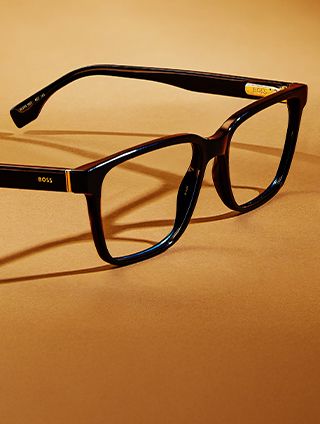
Full-rim glasses have a frame that goes all the way around each lens. It's the style most people picture when they think of glasses, and the closed rim holds the lenses firmly in place.
Full-rim frames come in acetate, stainless steel, titanium and lightweight plastics such as TR90, in shapes from chunky and oversized to slim and understated. Sports brands like Oakley® use full-rim designs across much of their range, because the closed rim adds strength for active wear.
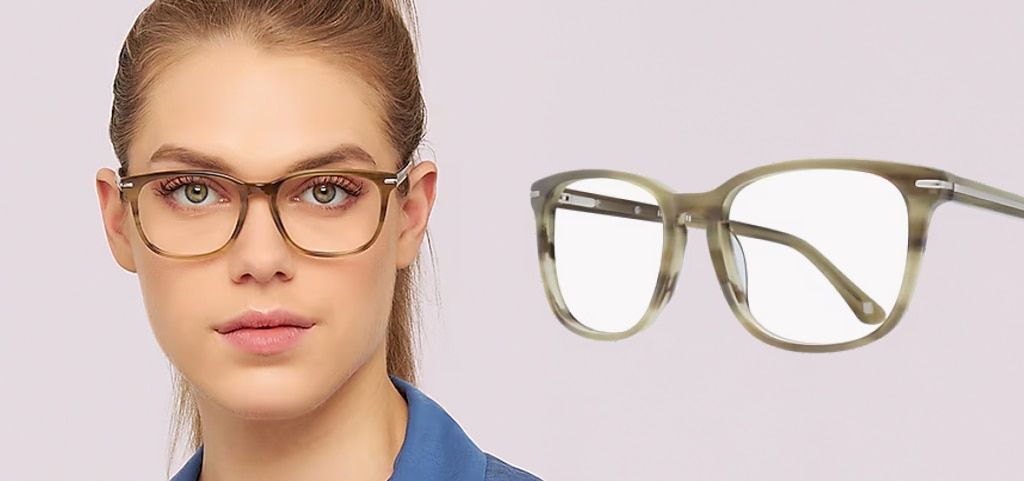
Who they suit: People with strong prescriptions, anyone active or sporty and anyone after a bold look.
Style tip: Oversized full-rim frames add definition to softer features, while slim acetate or metal frames keep things clean for everyday wear.
Opticians often recommend full-rim glasses because they suit almost every prescription. The frame supports the whole lens and protects it from knocks. It also hides the edges of thicker lenses.
They're the most varied style too, from retro round frames to bold squares and classic tortoiseshell.

Oversized full-rim frames are still a leading trend, pairing retro shapes with modern materials. Popular styles right now include bold square and cat-eye acetate frames, round and geometric metal frames, clear or crystal frames, and classic black or tortoiseshell.
Semi-rimless glasses, also called half-rim or semi-rim glasses, have a frame that only partially surrounds the lens. A thin nylon cord, similar to fishing line, sits in a groove cut into the bottom edge of the lens to hold it in place.
Most semi-rimless frames are made from high-quality metal or titanium, with the temple arms attached to the top rim. With less material than a full-rim frame, they weigh less, which makes a real difference if you wear glasses all day.
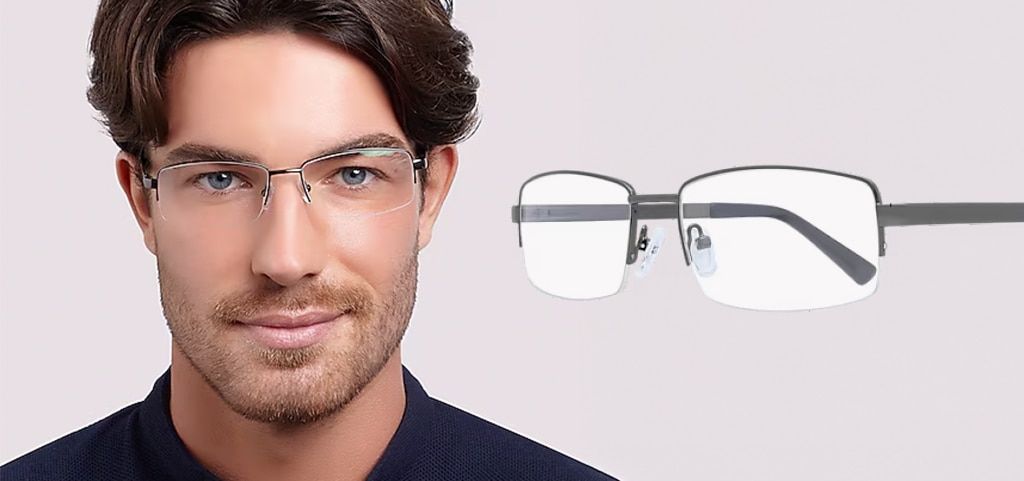
Who they suit: Office workers, all-day glasses wearers and anyone after a middle ground between bold and subtle.
Style tip: Half-rim glasses pair well with clean, modern outfits and look smart without feeling formal.
The main difference is how the lens is held. Full-rim frames surround the entire lens for maximum support, while half-rim frames hold only the top, making them lighter but slightly less protective. For thick lenses, full rim is usually the safer choice. For all-day comfort and a lighter look, half-rim is a good fit.

Yes. Half-rim glasses fit the current trend for slimmer, lighter frames. Rectangular semi-rim styles are a classic choice, and geometric and butterfly shapes are growing in popularity.
The strong brow line draws attention to the top of the face for a balanced look. Half-rim frames are also a popular choice for reading glasses, because the open bottom gives a clear view when you look down at a page.
Rimless glasses, also known as frameless glasses or frameless specs, have no frame around the lenses. Instead, the lenses are drilled, and the nose bridge and temple arms are fixed directly onto them with small screws or mounts.
This gives rimless glasses a near-invisible look. The metal fittings, often titanium or stainless steel, keep the lenses secure without a frame.

Who they suit: Anyone wanting a clean, minimal look, people who want their features to lead and those with lighter prescriptions.
Rimless glasses are comfortable and subtle, but they're not right for everyone. Here's the trade-off.
Pros
Cons
That's why opticians usually recommend rimless frames for lighter prescriptions, often with tougher lens materials such as polycarbonate.

Yes. Rimless glasses fit the ongoing trend for lighter, slimmer eyewear, and their minimal look works for everyday wear.
Modern frameless glasses often add small details, such as decorative temple arms, thin titanium bridges and softer lens shapes like ovals and rectangles. These give character while keeping the look clean.
Three things decide which frame type suits you: lens thickness, lifestyle and face shape. Start with your prescription, as it narrows your options the most.
If you love the look of semi-rim or rimless glasses but have a stronger prescription, consider high-index lenses. They're thinner and lighter than standard lenses, which reduces visible edge thickness. Rest assured, our opticians check every order, so you'll know whether the lenses fit your frame.

There's no single best frame type. Full-rim frames offer the most strength and the widest range of looks. Semi-rim glasses are lighter, with a smart finish. Rimless glasses are the lightest and most minimal of the three.
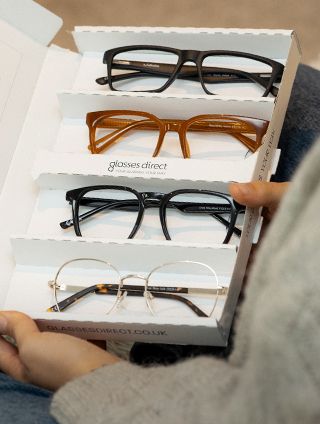
The easiest way to decide is to try a few on. With our Free Home Trial, you can try four frames at home before you buy, and if you change your mind, you have 120 days to return them for free.
The difference is how the frame holds the lenses. Full-rim glasses surround the whole lens, semi-rim glasses hold only the top and rimless glasses have no frame, with the bridge and temple arms fixed straight onto the lenses. Opticians often recommend full-rim frames for strong prescriptions and rimless frames for lighter ones.
Yes. Frameless glasses, frameless specs and rimless glasses all describe the same style: lenses with no frame around them, held in place by a bridge and temple arms fixed directly to the lens. Semi-rimless glasses are sometimes called frameless too, but they still have a rim along the top.
Yes. Half-rim glasses are a popular modern choice thanks to their light build and clean lines. They're common in offices because they look smart without feeling heavy.
Full-rim glasses are usually the best choice for thick lenses. The frame surrounds the whole lens, so it hides thick edges, supports the lens and protects it from chips. Opticians often recommend full-rim frames for strong prescriptions and varifocal lenses.
You can, but thick lens edges will be visible and the lenses are more exposed to knocks. High-index lenses reduce thickness, so ask an optician whether rimless frames will work for your prescription.
Rimless glasses are less sturdy than full-rim frames, because the lens edges are exposed and the bridge and arms attach straight to the lens. Many rimless frames use titanium or stainless-steel fittings for extra strength, and tougher lens materials such as polycarbonate reduce the risk of cracks.
Weigh up three things:
Try a few at home with our Free Home Trial to find the perfect pair for your face and lifestyle.