







How to remove scratches from glasses lenses
29 October 2026


In short: You can't fully remove a scratch from a glasses lens because a scratch is a groove cut into the lens surface. You can make a light scuff less noticeable by cleaning it with an alcohol-free lens spray and a microfibre cloth. Toothpaste, baking soda and polishing kits strip lens coatings and make things worse. A deep scratch on glasses lenses needs a new lens.
Who this guide is for: Anyone with a scratched pair of prescription glasses or sunglasses who wants to know what's worth trying at home and when to replace the lens.
A scratch across your line of sight is distracting and can make it harder to see clearly. This guide covers which fixes are safe, which DIY hacks cause damage and how to prevent the next scratch.

Not completely. Most glasses lenses today are plastic (including polycarbonate), topped with thin coatings such as anti-glare and scratch-resistant layers, which can wear down over time. Once a scratch cuts through those coatings and into the lens, nothing at home can fill the groove back in.
What you can do at home is clean away the dirt and grease that collect inside and around a light scratch. That residue catches the light and makes a mark look bigger than it is, so a careful clean can make a minor scuff much less noticeable.
A scratch scatters light as it passes through the lens. This can cause glare, halos and a hazy patch in your line of sight, which is most noticeable when you're driving at night or looking at a bright screen.
Looking through a scratched lens can also make your eyes work harder to focus. That's why the right cleaning and storage habits matter as much as dealing with a scratch once it's there.
Most scratches come from everyday habits that are easy to change:
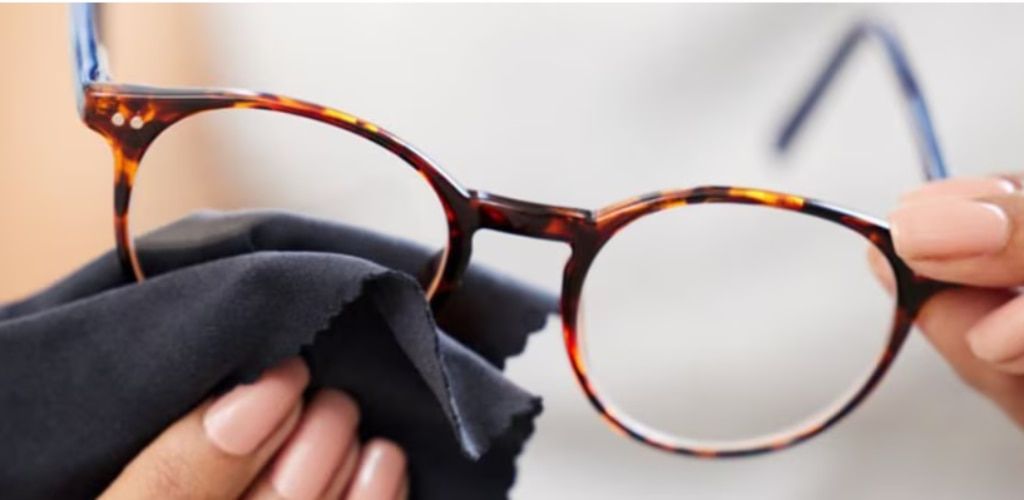
For everyday cleaning, the safest option is an alcohol-free lens spray and a microfibre cloth. Spray both sides of the lens to loosen any grit, then wipe gently in small circles. This lifts the grease that makes a light scratch look bigger than it is. Never wipe a dusty lens dry.
Advice online is mixed. Our guide on how to clean your glasses suggests a drop of lotion-free washing-up liquid for a deeper clean, while Which?, quoting the College of Optometrists, warns it can damage lens coatings. So keep it for the odd occasion when lens spray won't shift the grime, such as greasy frames or a build-up of make-up, and follow these steps carefully.
You'll need: lotion-free washing-up liquid, lukewarm running water and a clean microfibre cloth.
1. Wash your hands. This stops oil and dirt from your fingers transferring to the lenses.
2. Rinse the glasses under lukewarm running water. This flushes away loose grit before anything touches the lens. Avoid hot water, as heat can damage lens coatings.
3. Add one small drop of washing-up liquid to each lens. More soap is harder to rinse off.
4. Rub both sides of each lens gently with your fingertips. Work over the frame too, especially the bridge, nose pads and arms, where sweat and make-up build up.
5. Rinse thoroughly. Make sure no soap is left on the lenses or frame.
6. Shake off excess water and dry with a microfibre cloth. Pat first, then wipe gently.
7. Hold the glasses up to the light. Check for smudges or soap marks and repeat if needed.
Pitfall to avoid: pressing hard. Scrubbing a lens adds new scratches rather than removing old ones. If a lens still looks cloudy after cleaning, the coating may be damaged, so it's worth asking an optician to take a look.
When you're out and about without lens spray, single-use lens wipes are a handy alternative. Never wipe a dusty lens on your clothes.
No. Rubbing toothpaste on a lens is one of the most common tips online. The theory is that toothpaste is mildly abrasive, so it should smooth the scratch away. In practice, you're rubbing grit across a coated lens. It wears through anti-glare and scratch-resistant coatings and leaves the lens hazier than before. Whitening toothpastes, which contain more abrasive particles, do even more damage.
No. Baking soda (bicarbonate of soda) is an abrasive. Rubbing a paste of it on a lens scuffs the coating and can leave a cloudy patch across your vision. It's particularly risky on lenses with anti-glare coatings, blue-light filters or sun tints. The same applies to any “polish it out” method. On a modern coated lens, an abrasive can't remove a scratch without removing the coating first.
Only gentle cleaning is safe for coated lenses, and only a new lens fixes a deep scratch. Which?'s guide to cleaning glasses, with advice from the College of Optometrists, also warns against window cleaner, alcohol-based wipes, hot water and wiping lenses on clothing.
| Method | Does it help? | Effect on lens coatings |
|---|---|---|
| Lotion-free washing-up liquid and lukewarm water | Sometimes, for an occasional deep clean of greasy lenses | Advice is mixed: use only occasionally and rinse off fully |
| Alcohol-free lens spray and microfibre cloth | Yes, for everyday cleaning | Safe |
| Toothpaste | No | Wears through anti-glare and scratch-resistant coatings |
| Baking soda paste | No | Scuffs coatings and can leave a cloudy patch |
| Window cleaner or household sprays | No | Ammonia and alcohol can break down coatings |
| Paper towels or tissues | No | Fibres and trapped grit can add fine scratches |
| Car wax or glass-etching cream | No | Can leave permanent cloudy patches |
| Replacement lens | Yes, the only fix for a deep scratch | New lens with fresh coatings |
If a home remedy promises to buff out a scratch in minutes, it's best avoided.
A deep scratch can't be repaired, so the answer is a replacement lens. You can usually tell a scratch is deep if you can feel it with a fingernail or if it's still clearly visible after a careful clean.
It's time to replace your lenses if you notice:
If you're getting headaches or your vision has changed, book an eye test as well, since your prescription may need updating.
Every Glasses Direct order is checked by our opticians before it's sent out, and our team is on hand by phone or live chat if you need help choosing replacement lenses.

A scratched lens (left) scatters light and blurs your view, while a clear lens (right) keeps it sharp.
The coatings you choose affect how well a new lens holds up. No lens is fully scratch-proof, but the right coating makes everyday wear far less likely to leave a mark.
| Coating | What it does | Worth it if you... |
|---|---|---|
| Scratch-resistant | Adds a hard layer that protects against minor scuffs | Wear glasses every day (included as standard with Glasses Direct lens packages) |
| Anti-glare | Reduces reflections and glare from lights and screens | Drive at night or work at a screen |
| Blue-light filter | Filters some blue-violet light from screens | Spend long hours on digital devices |
| KODAK® lenses | Combine anti-static, water-repellent and scratch-resistant coatings | Want lenses that stay cleaner for longer and need less wiping |
You can compare what's included in each option in our lens packages guide or read more in our lens options and coatings FAQs.
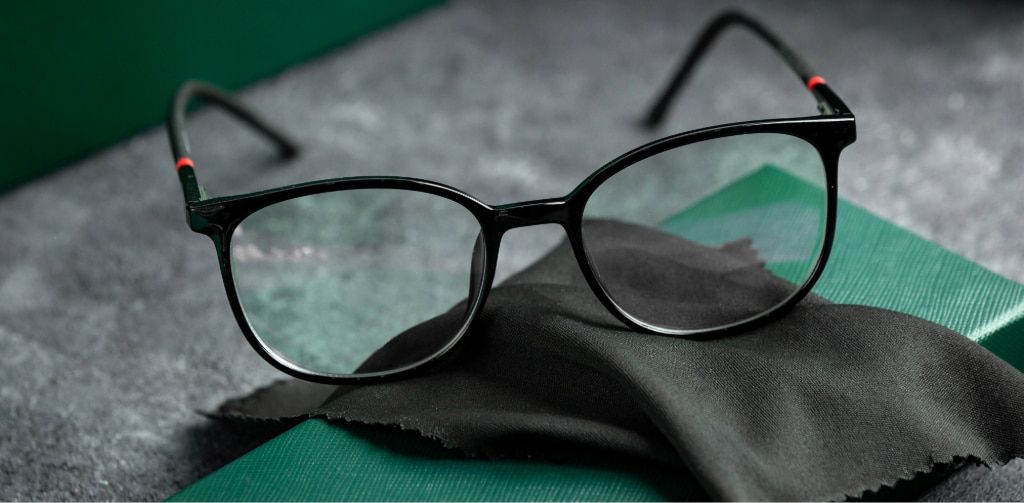
A few simple habits stop most scratches before they happen:
If sport is where your glasses take the most knocks, Oakley® frames are designed for active wear. For more ways to look after your frames, see our glasses aftercare guide.
Keeping a spare pair is also worth it, so a scratched lens never leaves you without glasses while a replacement is on its way.
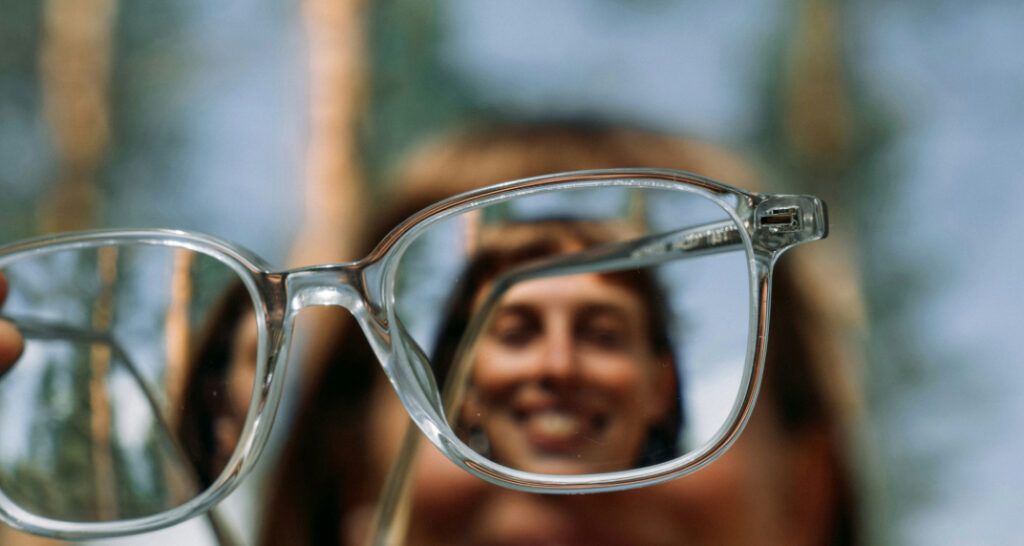
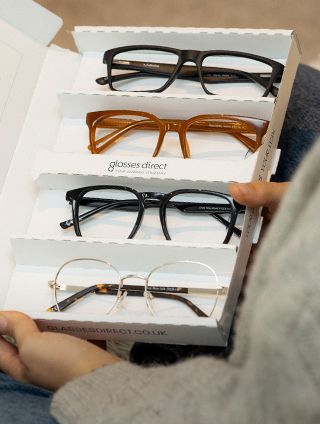
Not sure which frames to choose? With our free Home Trial, you can try up to four frames at home before you decide. If you'd like a backup pair, our 2-for-1 offer starts from £49, and every lens package comes with a scratch-resistant coating as standard. Browse our new glasses to find your next pair.
You can't remove them, but you can make light ones less visible. Clean the lenses with an alcohol-free lens spray and a microfibre cloth to remove the grime that makes light scratches stand out. A drop of lotion-free washing-up liquid can help with a deeper clean, but advice is mixed, so only use it occasionally.
Not usually. Polishing a modern lens removes its coatings and can change how the lens focuses light. An optician will recommend replacing the lens instead.
If you can feel the scratch with a fingernail, or it's still clearly visible after cleaning, it's too deep to improve at home.
Yes, glass is harder and resists scratches better. But it's heavier and can shatter, so most lenses today are plastic with a scratch-resistant coating.
Yes. A scratch on a sunglasses lens scatters light in the same way, and on polarised lenses it can damage the polarising layer. The same cleaning rules apply, and a deep scratch means a new lens.
A microfibre cloth. It lifts dirt and oil without scratching lenses or damaging coatings. Avoid clothing, tissues and paper towels, which can hold grit and leave fine scratches.
Yes. They protect lenses against minor scuffs and everyday wear. They don't make a lens scratch-proof, so careful cleaning and a hard case still matter.