







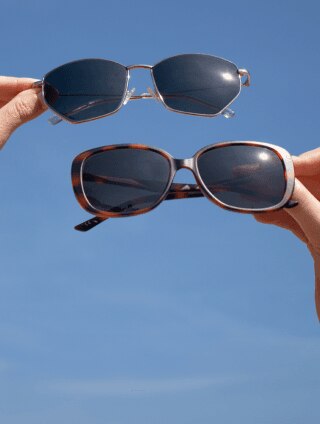
How to wear hearing aids with glasses: a comfort and fit guide
30 March 2026

In short: You can comfortably wear glasses and hearing aids together. Choose frames with slim, lightweight arms. Put on your glasses first, then settle the hearing aid alongside the glasses arm so neither pushes the other out of place. Receiver-in-the-canal (RIC) and in-the-ear (ITE) hearing aids leave the most room. Spectacle hearing aids, which build the hearing technology into the frame, are also an option for some types of hearing loss.

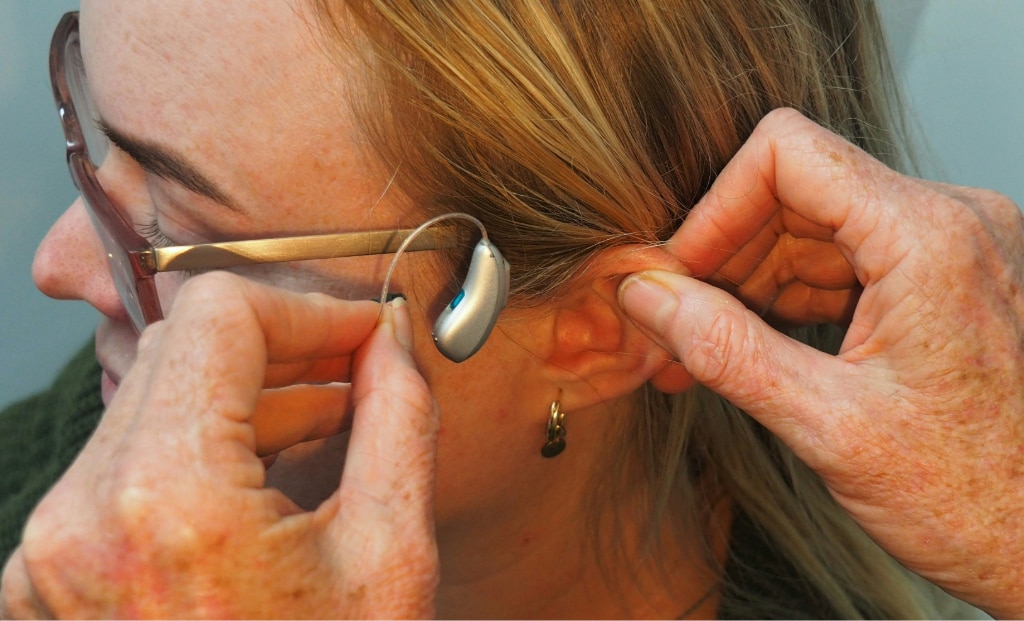
Yes, and lots of people do. Wearing glasses and hearing aids together is very common. Hearing aids and glasses both sit around the outer ear, and most modern hearing devices are slim enough to share that space with the arms of your glasses. When both are fitted correctly, neither affects the other.
Hearing loss affects around 1 in 3 adults in the UK, according to the RNID, and many of them wear glasses too.
It makes sense to look after your hearing health and your eye health together. An audiologist looks after your hearing care and an optician looks after your vision.
Your hearing needs come first and your glasses second. A hearing test with an audiologist will show which styles suit your level of hearing loss. After that, the right hearing aid for a glasses wearer is usually the one that takes up the least space behind the ear.
| Hearing aid type | Where it sits | Room left for a glasses arm | Typical hearing loss range* |
|---|---|---|---|
| Behind-the-ear (BTE) | Behind the ear, with a tube into an ear mould | Least: shares the space directly | Mild to profound |
| Receiver-in-the-canal (RIC) | Small body behind the ear, receiver inside the ear canal | More: smaller housing tucks in easily | Mild to severe |
| In-the-ear (ITE) | Inside the outer ear and ear canal | Most: nothing behind the ear | Mild to severe, depending on size |
*Your audiologist will confirm which style suits your hearing.
Rechargeable models are worth asking about too. They charge overnight in a case, so you won't have to change tiny batteries around your glasses arms.
A BTE device sits behind the ear and sends sound through a slim tube into an ear mould or ear tip. BTE aids give strong, reliable amplification, so they suit most levels of hearing loss. The device shares the narrow space behind your ear with your glasses arm, so frame choice matters most with this style. Thin, straight arms stop the two from stacking up.
RIC hearing aids are shaped like a BTE but have a smaller body. The receiver, which is the part that plays sound, sits inside the ear canal instead. That smaller body tucks in more easily beside a glasses arm, so a RIC is often more comfortable if you wear glasses all day.
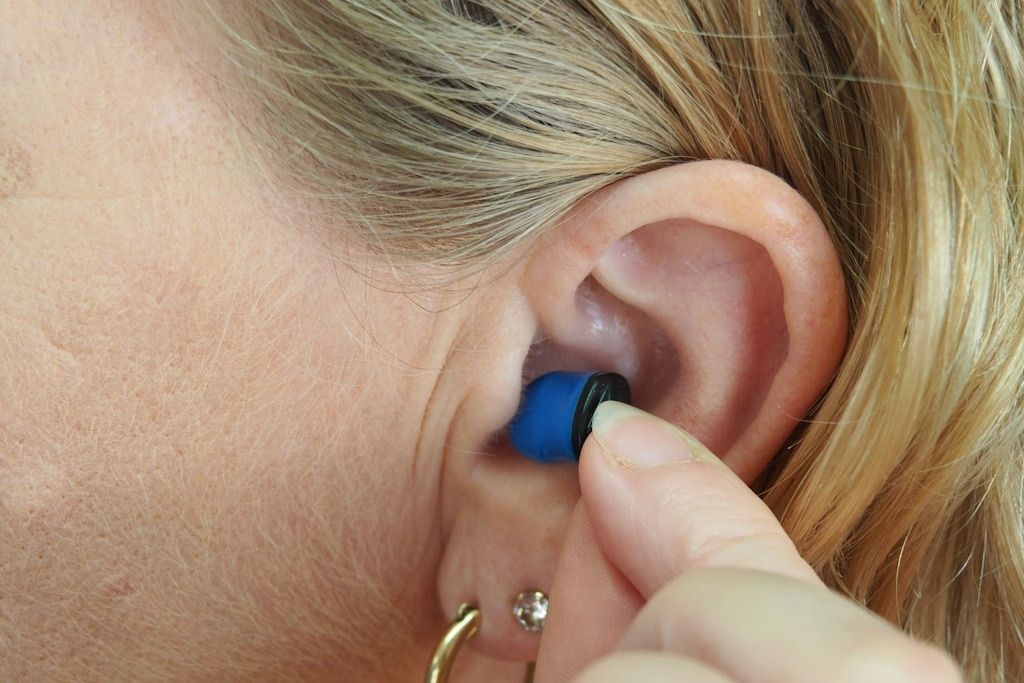
ITE hearing aids are custom-made to fit inside your ear, so nothing sits behind it. That leaves more room if you prefer thicker frames or have smaller ears. Smaller in-the-canal versions usually suit milder hearing loss, so ask your audiologist whether an ITE suits you.
Spectacle hearing aids, also called hearing aid glasses, build a microphone and speaker into the arms of the glasses, so you wear one device instead of two. There are two main types:
Hearing aid glasses are far less common than standard hearing aids and don't suit every type of hearing loss. Because the frame and the hearing device are built together, changing your prescription or frame style can also mean changing the hearing device. For most people, wearing a separate hearing aid with spectacles is simpler and more flexible. Glasses Direct doesn't sell hearing aids, so ask an audiologist which option suits you.
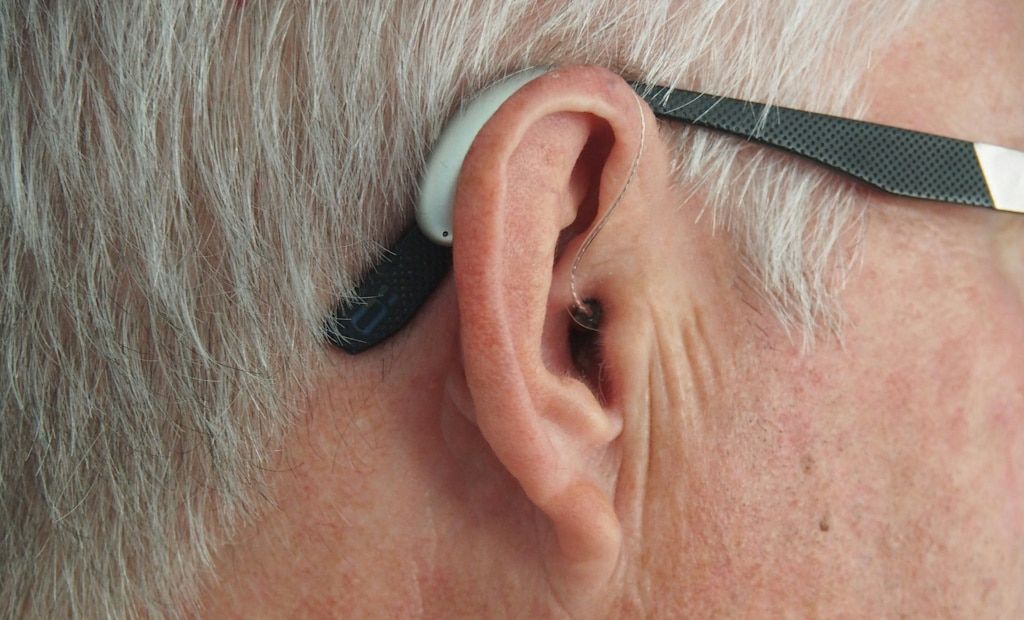
This routine works for BTE and RIC hearing aids. It can feel fiddly at first, but it takes less than a minute. Practise in front of a mirror for the first few days.
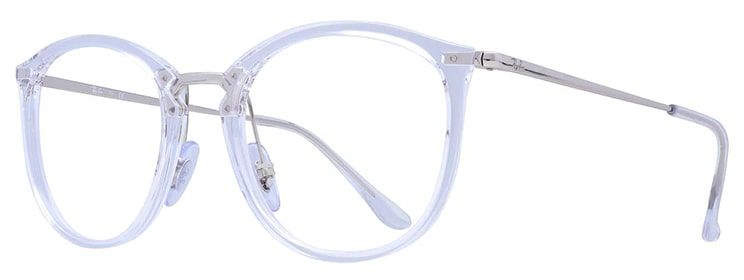
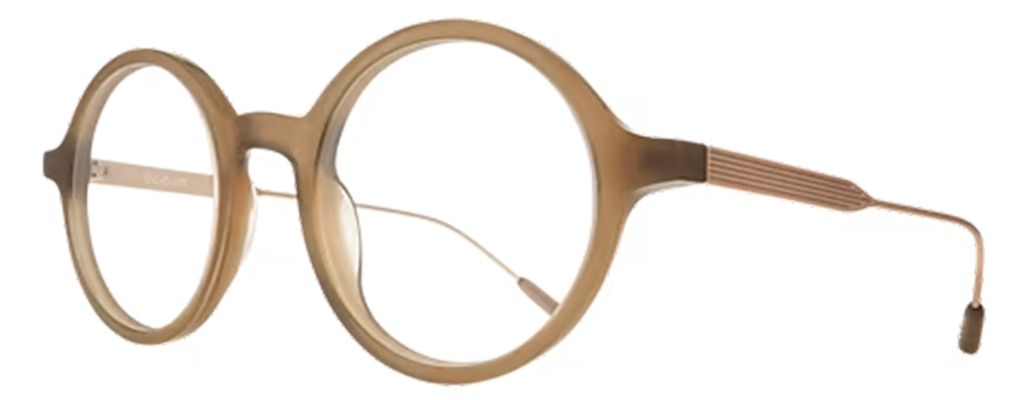
Look for lightweight frames with slim, straight arms. Here's what else to check:
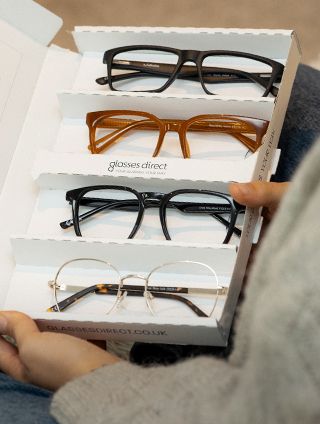
Browse our titanium frames or own-brand metal styles from £9. Want to check the fit first? Our Free Home Trial lets you try up to four pairs at home before you decide.
A hearing aid glasses clip attaches the device to your glasses arm with a thin cord. Keeping hearing aids on glasses this way means that if one slips off when you bend down or take your glasses off, the clip catches it before it hits the floor. Clips don't change how the hearing aid works, but they can give you peace of mind. Your audiologist or a specialist hearing retailer can recommend one that fits your model.

Hearing loss is common, but many people put off doing anything about it. According to the British Academy of Audiology, an estimated 6.7 million UK adults could benefit from hearing aids, yet only around 2 million use them. RNID reports that untreated hearing loss can lead to social isolation, and that the right hearing aids can support communication and social connection.
If you've noticed changes in your hearing, book a hearing test with an audiologist. RNID also offers a free online hearing check that takes about 3 minutes. Once you know which hearing aid you need, matching it to the right frames is easy.
Yes. Most hearing aids sit comfortably alongside glasses. Slim frames make it easier, and so does putting your glasses on first.
RIC and ITE hearing aids, because they take up little or no room behind the ear. Your audiologist will confirm which suits your hearing.
Not usually. If a glasses arm presses on the hearing aid it can cause whistling, but repositioning either one fixes it.
Usually, yes. An optician can often bend metal arms or change the angle of the temple tips so the frame sits clear of the device. Thin metal and titanium arms are generally the easiest to adjust.
Yes. The same rules apply to any eyewear: look for slim, straight arms and a secure, comfortable fit.
No. Spectacle hearing aids build the hearing technology into the frame. Most people wear a separate hearing aid alongside their glasses instead.
Put your glasses on first, then the hearing aid. Most people find that order easiest, especially first-time hearing aid users.