








HomeBlog News Wellbeing7 essential tips to protect your eyes from UV rays this summer

7 essential tips to protect your eyes from UV rays this summer

7 essential tips to protect your eyes from UV rays this summer

UV rays (UVA and UVB) can damage your eyes and increase the risk of cataracts, macular degeneration, and photokeratitis. The most effective protection is wearing a a pair of sunglasses with 100% UV protection, limiting sun exposure during peak hours, and using protective eyewear and sunscreen. 

Quick sun safety tips 
  • Wear sunglasses with 100% UV protection 
  • Choose polarised lenses or Transitions® 
  • Apply broad-spectrum SPF sunscreen 
  • Limit sun exposure between 11am–3pm 
  • Wear a wide-brimmed hat and protective eyewear 
  • Stay hydrated with plenty of water 
  • Avoid sunbeds and artificial UV radiation 

What is Sun Awareness Week?

Sun Awareness Week is a UK campaign that highlights the risks of UV exposure and encourages better sun protection habits. It focuses on reducing the risk of skin cancer, protecting eye health, and raising awareness of how UV radiation can cause long-term damage. 

This makes it the perfect time to review your eye care routine and ensure you’re properly protected from the sun’s rays. 

Why UV eye protection is essential for eye health

UV radiation from the sun’s rays includes UVA and UVB rays, both of which can harm your eyes over time. 

  • UVA rays penetrate deep into the eye and are linked to cataracts and macular degeneration 
  • UVB rays affect the surface of the eye and can cause photokeratitis (sunburn of the cornea) 

Repeated UV exposure can lead to long-term eye conditions, while short-term exposure can cause: 

  • Eye strain 
  • Dry eyes 
  • Irritation and light sensitivity 

This is why consistent eye protection is essential during the summer months — and year-round, even on cloudy days. To understand more, watch our Ask the Optician video below, which explores the importance of UV protection. 

Top tips for UV eye protection this summer

A young man lounges on a bright orange-and-white striped deck chair, one hand resting behind his head as he beams with a bright smile. His short, dark curly undercut and neat anchor-shaped beard add a stylish edge, while a light blue t-shirt and Persol Havana acetate sunglasses complete his laid-back summer look.

1. Wear sunglasses with 100% UV protection

The most effective way to protect your eyes is to wear sun tints that block 100% of UVA and UVB rays.

Look for:

  • Full UV protection (labelled UV400)
  • Wraparound styles to reduce side exposure
  • Larger frames or thicker temples for better coverage

A high-quality pair of sunglasses reduces UV damage, glare, and eye strain during outdoor activities.

Polarised sun tints are especially useful around water, sand, or roads, where reflected light increases UV exposure.
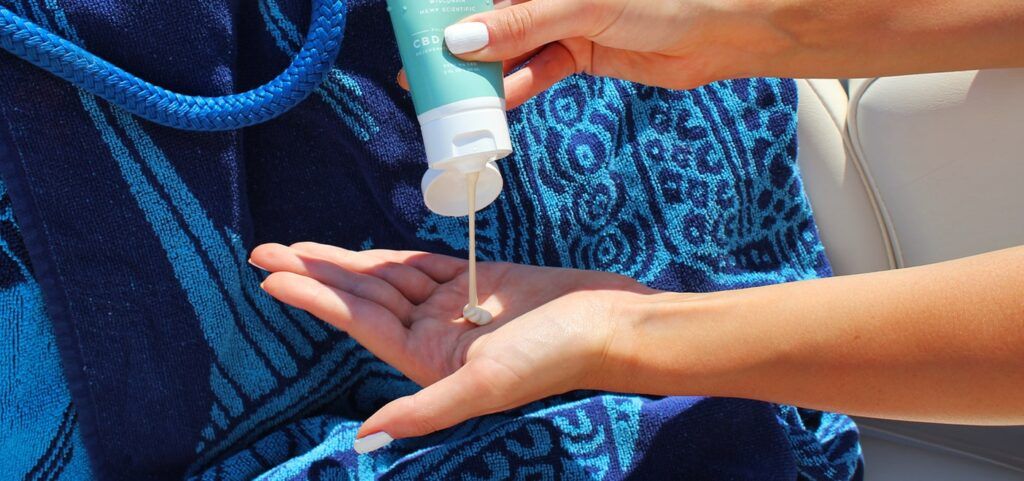
A close-up shows two manicured hands dispensing sunscreen from a tube, with a blue patterned towel in the background.

2. Choose lenses that adapt to your lifestyle

If you move between indoor and outdoor environments, consider: 

  • Transitions® lenses that darken in response to UV light 
  • Anti-reflective coatings to reduce glare 
  • Built-in UV filters for everyday eye care 

These options support consistent eye protection without needing to switch glasses. 
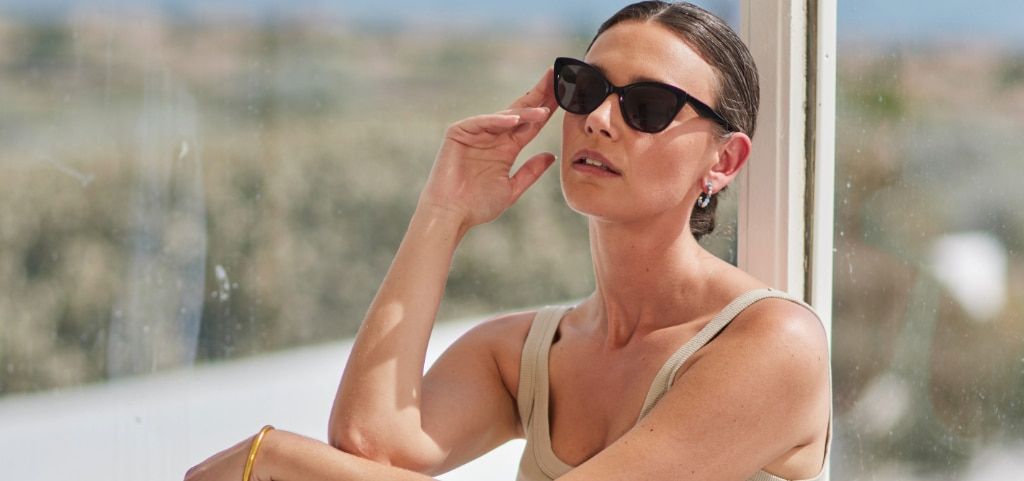
A young woman with neatly tied-back brown hair sits indoors, leaning against a window. She wears a simple beige vest, hoop earrings and black acetate cat-eye sunglasses, with her right hand resting lightly on the frame.

3. Use sunscreen to protect the skin around your eyes 

The skin around your eyes is highly sensitive to sunburn and skin cancer. 

  • Apply sunscreen with at least SPF 30 
  • Choose broad-spectrum formulas that block UVA and UVB rays 
  • Reapply every two hours 

This reduces overall sun exposure and supports long-term eye health. 

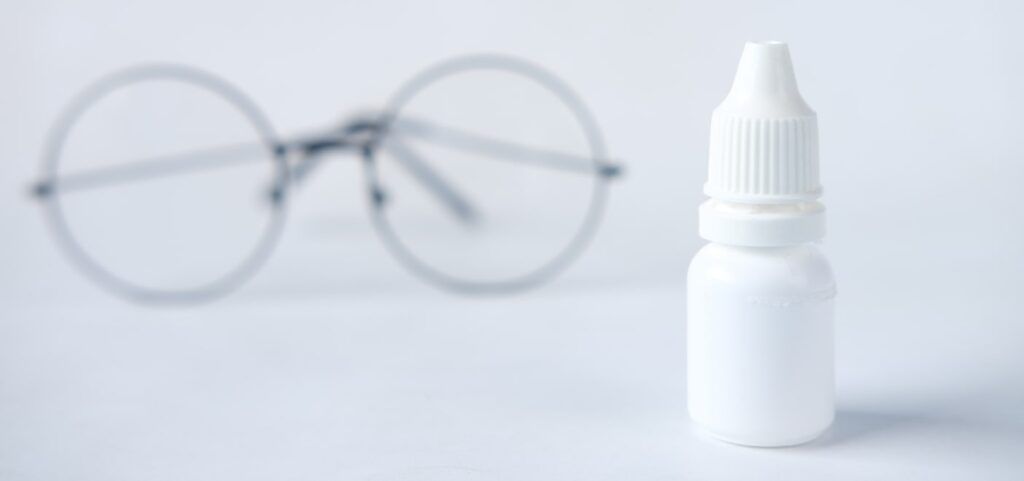
A close-up of a white eye drop bottle, with a pair of round metal glasses softly blurred in the white background.

4. Limit exposure during peak UV hours

UV radiation is strongest between 11am and 3pm.

  • Seek shade during peak hours
  • Use umbrellas or covered areas
  • Check the UV Index when planning outdoor activities

Even on cloudy days, up to 80% of UV rays can pass through clouds.
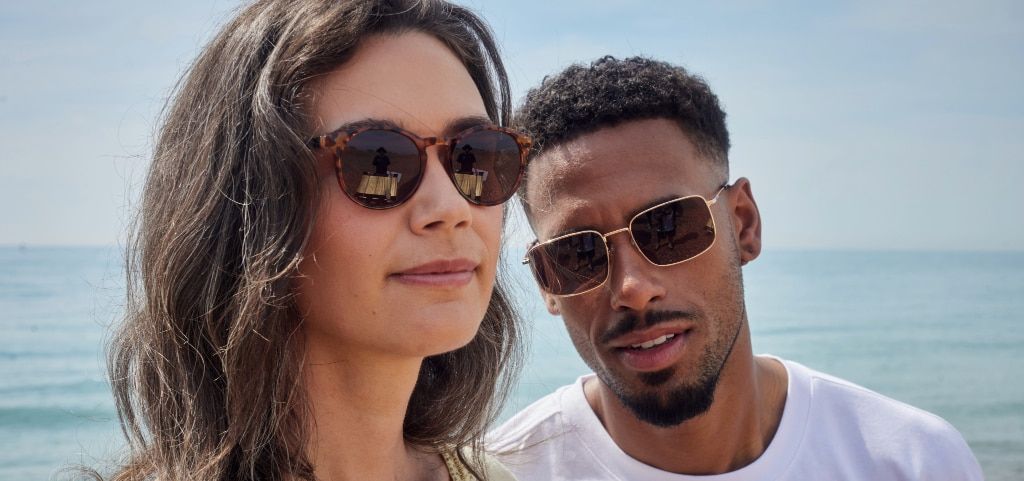
A young couple stands close together on a sunlight beach with the sea in the background. The man, with a short curly undercut, looks at the camera with a slight smile. He’s dressed in a white t-shirt and wears rectangular, gold metal sunglasses. Standing just in front of him, the woman has medium-length, brown wavy hair. She is looking off into the distance and is wearing Havana round acetate sunglasses paired with a simple yellow summer dress.

5. Wear protective clothing and accessories

Clothing adds another layer of sun protection: 

  • A wide-brimmed hat helps shield your eyes and face 
  • Close-weave fabrics reduce UV penetration 
  • Combining hats with sunglasses improves overall protection 

This reduces total exposure to harmful UV rays. 
A close-up of a hand holding a chilled glass of water, with the person's blonde hair and a white t-shirt blurred in the background.

6. Keep your eyes hydrated

Heat, wind, and increased time outdoors can lead to dry eye.

  • Use lubricating eye drops
  • Drink plenty of water
  • Take breaks from screen time before and after sun exposure

This is especially important for people who wear contact lenses, as dryness can increase discomfort.
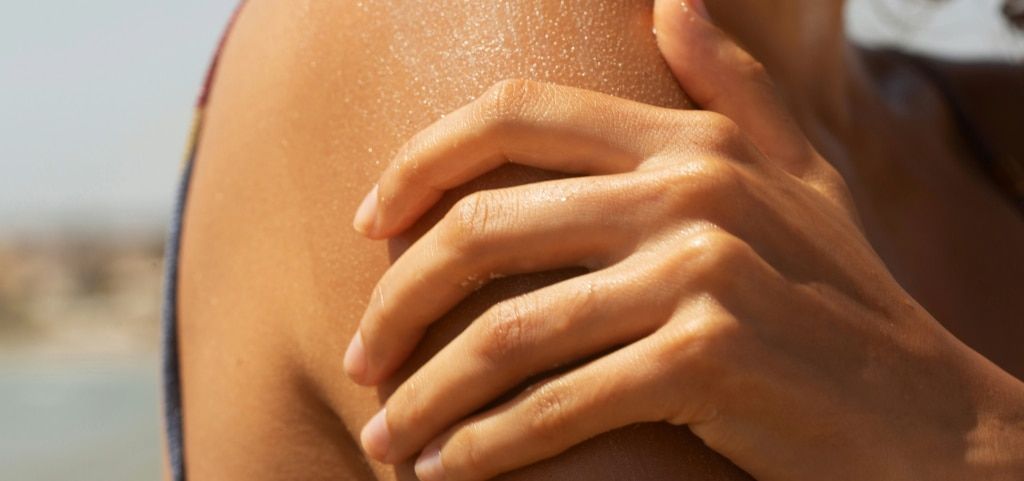
A close-up captures a woman’s shoulder as she applies lotion to her skin. She’s wearing a swimsuit, with the blurred backdrop suggesting a coastal setting.

7. Avoid artificial UV exposure

Sunbeds and tanning booths emit high levels of UV radiation. 

  • Avoid artificial tanning where possible 
  • Choose safer alternatives like spray tan 

Reducing overall exposure lowers the risk of eye conditions, skin cancer, and long-term UV damage.

UV protection is important all year round

UV rays are present even in winter and on overcast days. Reflection from water, sand, and snow can increase exposure. 

Making UV eye protection part of your daily routine helps protect your vision long-term. 

When to see an optician or optometrist 

Regular eye exams are essential for maintaining eye health. 

Visit an optician or optometrist if you notice: 

  • Increased light sensitivity 
  • Persistent dry eyes 
  • Changes in vision 

Regular eye exams can detect early signs of cataracts, macular degeneration, and other eye conditions. 
Protect your eyes with confidence

Protecting your eyes doesn’t require major changes — just consistent habits. Wearing the right protective eyewear, limiting sun exposure, and supporting hydration all help reduce risk.

Explore sunglasses with 100% UV protection at Glasses Direct or try Transitions® lenses for everyday eye care.

FAQs: UV protection and eye care 

Do I need sunglasses on cloudy days? 

Yes. UV rays can pass through clouds, so wear sunglasses even when it’s overcast. 

Can UV rays damage eyes in winter? 

Yes. Reflection from snow and water increases UV exposure. 

Are polarised lenses the same as UV protection? 

No. Polarised lenses reduce glare, but you still need full UV eye protection. 

Can contact lenses protect against UV rays? 

Some contact lenses offer partial UV filtering, but you should still wear protective eyewear. 

What is photokeratitis? 

Photokeratitis is a temporary but painful condition caused by UV damage to the cornea, similar to sunburn.