


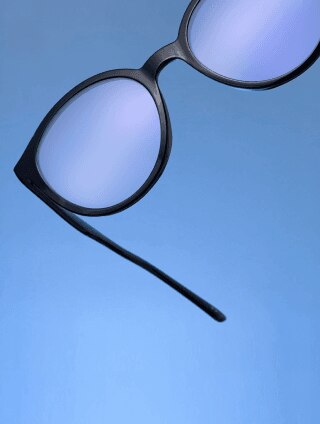




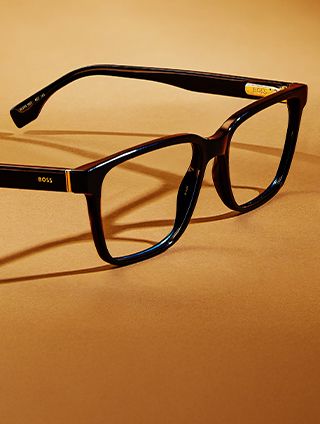

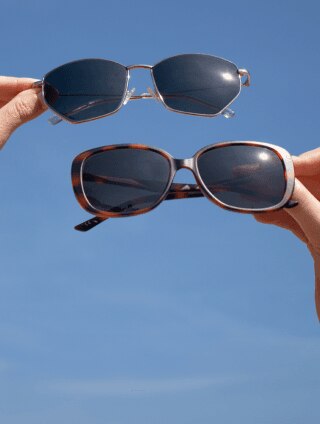

Choosing between acetate vs metal frames affects more than just appearance. Frame material changes how your glasses feel, fit, adjust, and wear over time.
In simple terms, acetate glasses usually create bolder styles with thicker shapes and richer colours, while metal glasses tend to feel lighter and look more minimal. Neither option is universally better — the right choice depends on your comfort preferences, lifestyle, and personal style.
Acetate vs metal frames at a glance
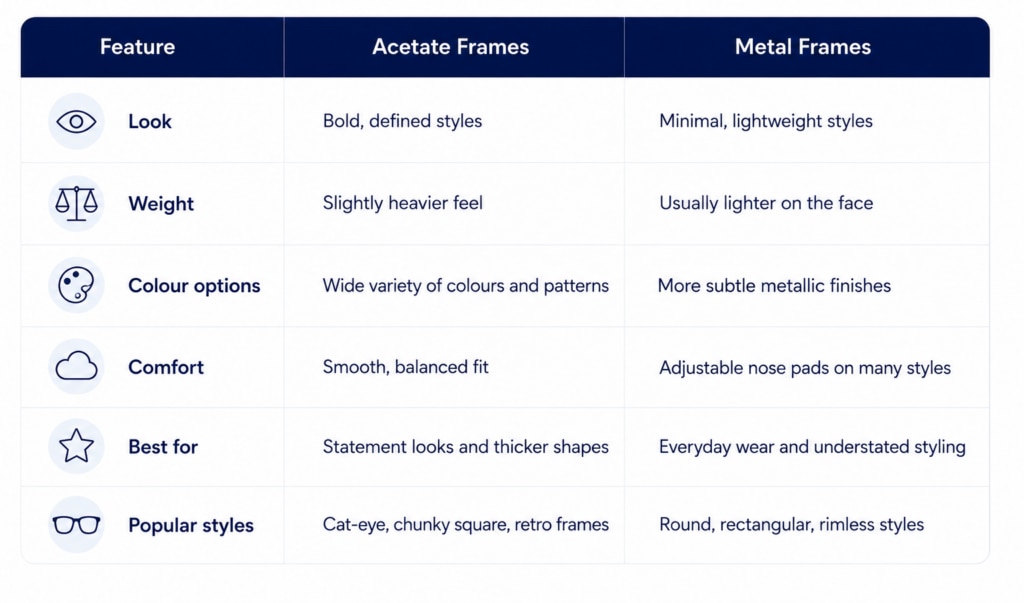
If you’re comparing acetate vs metal frames, acetate styles are often best for bolder looks and colour variety, while metal frames suit people who prefer lightweight comfort and a cleaner silhouette.

Acetate vs metal frames: an overview
Frame material shapes how your glasses look, feel, and perform throughout the day. It can influence:
- Weight on your face
- Long-term comfort
- Durability
- Fit and adjustability
- Styling options
- Maintenance needs
Most modern glasses use either acetate or metal because both materials offer durability and flexibility across different frame styles.
Acetate is a plant-based plastic material known for colour depth and sculpted shapes. Metal frames usually use materials such as stainless steel or titanium to create lighter, slimmer designs.
Understanding the differences between the two can make choosing your next pair much easier.
What are acetate frames?
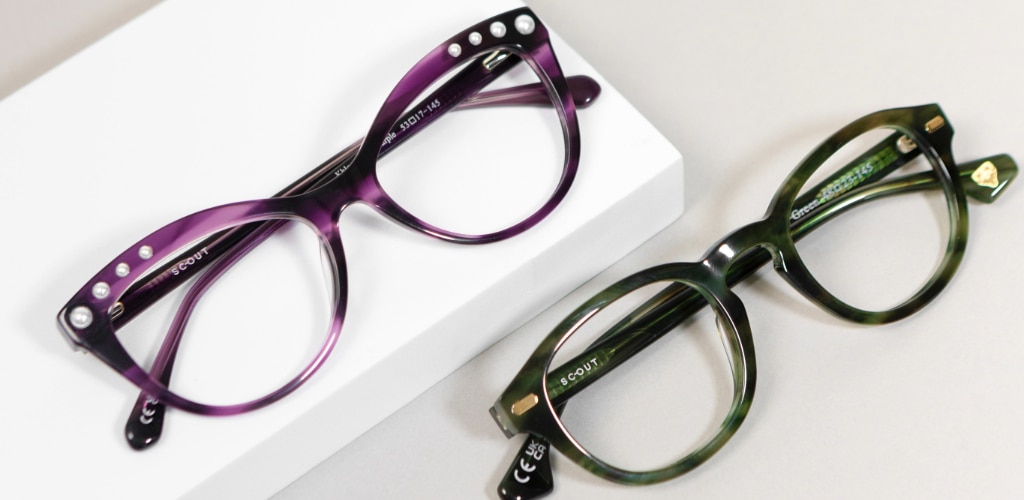
Acetate frames are made from cellulose acetate, a plant-based material derived from natural fibres such as wood pulp and cotton.
The material is popular in eyewear because it allows designers to create:
- Rich colour effects
- Transparent finishes
- Chunkier silhouettes
- Layered tortoiseshell patterns
- Sculpted frame shapes
Unlike standard injected plastic, acetate is usually cut from sheets and polished for a smoother finish.

Advantages of acetate frames
Wider colour and pattern choice
Acetate holds pigments extremely well, making it ideal for:
- Tortoiseshell glasses
- Crystal-clear frames
- Transparent colours
- Layered colour blends
This gives acetate frames a more fashion-led appearance.
Bold frame styling
Acetate works especially well for:
- Oversized glasses
- Cat-eye frames
- Thick square styles
- Vintage-inspired shapes
The material creates stronger outlines and more noticeable silhouettes.
Comfortable feel
Many people find acetate comfortable because the material distributes weight evenly across the face.
The smooth finish can also feel softer against the skin compared with thinner metal arms or nose pads.
Hypoallergenic options
High-quality acetate is generally considered skin-friendly, making it a good option for people with certain metal sensitivities.
Disadvantages of acetate frames
Slightly heavier weight
Acetate frames are usually heavier than thin metal styles, particularly oversized designs.
This is not necessarily uncomfortable, but some people prefer lighter frames for long working days.
Less adjustable
Unlike many metal frames, acetate styles usually do not include adjustable nose pads.
Fit adjustments are still possible, but they are often more limited.
Heat sensitivity
Acetate can soften slightly in high temperatures. Leaving frames in a hot car or near direct heat may affect shape over time.
What are metal frames?
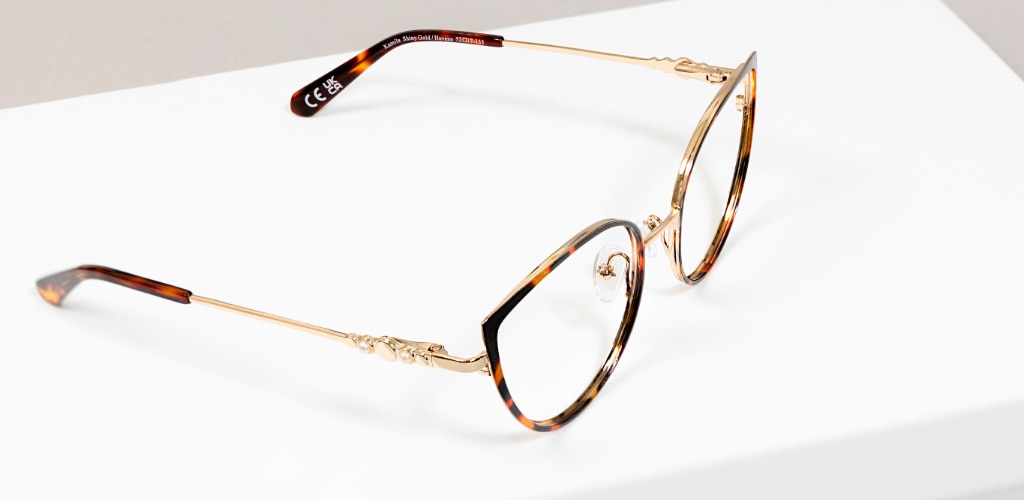
Metal frames use lightweight alloys such as:
- Stainless steel
- Titanium
- Aluminium
- Monel metal blends
These materials allow for slimmer constructions and lighter overall weight.
Metal frames are especially popular for minimalist and professional eyewear styles.

Advantages of metal frames
Lightweight feel
One of the biggest advantages of metal glasses is reduced weight.
Titanium and stainless steel frames can feel noticeably lighter during long periods of wear.
This makes them popular for:
- Multi-purpose styling
- Office wear
- Everyday glasses
- Long screen-time use
Adjustable fit
Many metal frames include adjustable nose pads, which help improve:
- Bridge fit
- Stability
- Weight distribution
This is especially useful for narrower nose bridges or people who struggle with slipping frames.
Slim and versatile styling
Metal frames create cleaner, less prominent outlines.
They work well for:
- Minimal aesthetics
- Professional settings
- Lightweight everyday looks
- Rimless or semi-rimless styles
Durable materials
High-quality metals such as titanium resist bending and everyday wear very effectively.
Disadvantages of metal frames
Potential for corrosion
Lower-quality metals may corrode over time if exposed regularly to moisture or sweat.
Titanium and stainless steel typically resist corrosion better than cheaper alloys.
Less colour variation
Metal styles generally offer fewer bold colour choices compared with acetate.
Most focus on:
- Rose gold
- Gold
- Silver
- Black
- Gunmetal
Nose pad maintenance
Frames with nose pads may occasionally require:
- Tightening
- Cleaning
- Replacement pads
This is usually minor but worth considering for long-term maintenance.
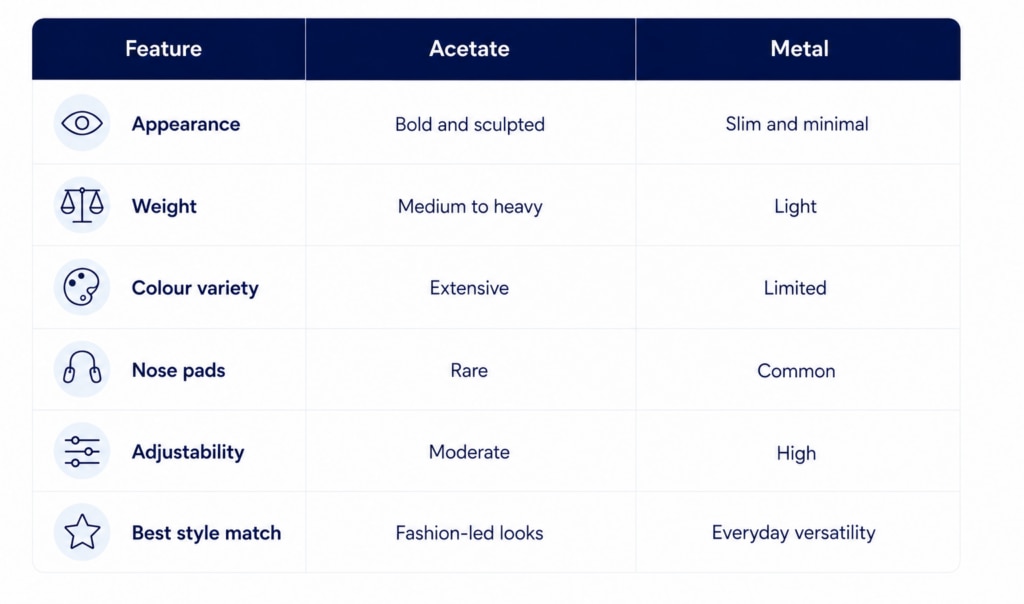
Acetate vs metal frames: key differences
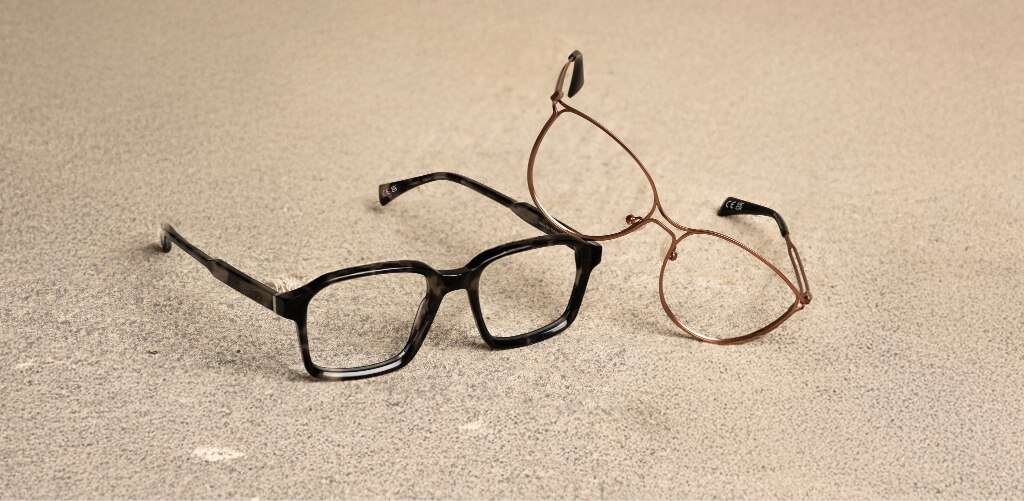
When comparing acetate vs metal frames, the biggest differences usually come down to comfort, styling, weight, and adjustability.
Which is more durable?
Both materials can last for years with proper care.
Acetate resists surface wear well and keeps colour effectively. Metal frames tend to handle bending and small adjustments more easily.
Titanium is often considered one of the most durable lightweight eyewear materials.
Which is more comfortable?
Comfort depends on personal preference.
People who prefer lightweight glasses often choose metal frames. Those who like a more balanced, structured feel may prefer acetate.
Acetate vs metal frames pros and cons
Understanding the acetate vs metal frames pros and cons helps narrow down which material works best for your routine.
Acetate frame pros
- Bold colours and patterns
- Fashion-focused styling
- Smooth polished finish
- Comfortable balanced feel
- Strong statement shapes
Acetate frame cons
- Slightly heavier
- Less adjustable
- Can soften in heat
Metal frame pros
- Lightweight construction
- Adjustable nose pads
- Minimal appearance
- Flexible fit
- Ideal for everyday wear
Metal frame cons
- Fewer colour choices
- Nose pads may need replacing
- Some alloys may corrode over time

How to choose the right frames for your lifestyle
Choosing between acetate vs metal frames often becomes easier once you consider how and where you wear your glasses most.
Style considerations
If your glasses are part of your overall style, acetate frames may offer more flexibility through colour, shape, and visual impact.
Acetate styles work especially well with:
- Vintage looks
- Streetwear styling
- Bold wardrobes
- Statement accessories
Metal frames suit:
- Minimal wardrobes
- Professional settings
- Clean everyday styling
- Lightweight fashion trends
Practical considerations
Think about:
- How long you wear glasses each day
- Whether you need adjustable nose pads
- How lightweight you want your frames to feel
- Whether you prefer bold or subtle styling
If comfort during long wear matters most, lightweight titanium or stainless steel frames may suit you better.
If visual style is the priority, acetate often offers more design variety.

Sustainability in eyewear materials
Sustainability is becoming more important in eyewear manufacturing.
Many acetate frames now use bio-based or recycled acetate blends derived partly from plant materials.
Metal frames can also support recycling because materials such as stainless steel and titanium are reusable.
Some eyewear collections now combine:
- Recycled metals
- Bio-acetate
- Lower-waste production methods
- Reduced packaging
When shopping for glasses, checking material information can help identify more sustainable frame options.
Maintenance tips for acetate and metal frames
Proper care helps both materials last longer.
Acetate frame care:
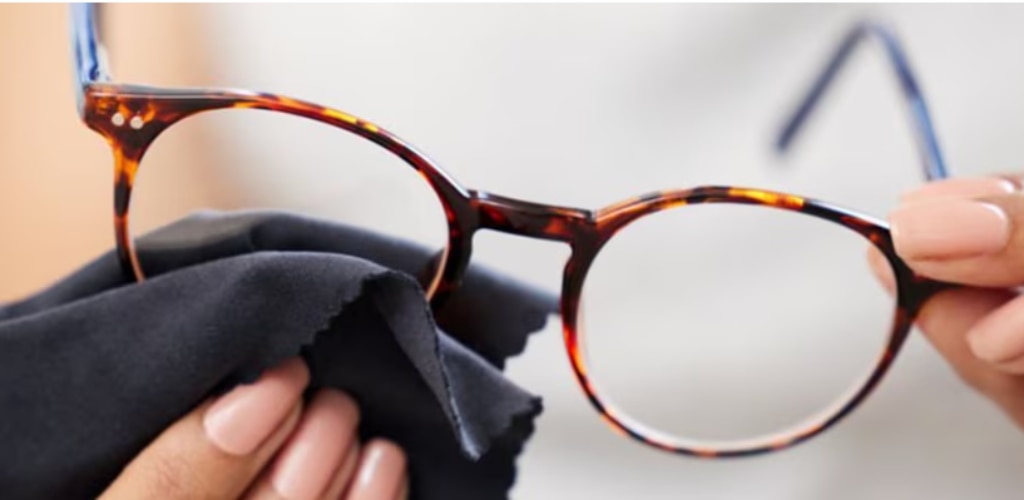
- Clean with a microfibre cloth and use lens-safe cleaning spray
- Avoid high heat exposure
- Store in a protective case
- Tighten hinges when needed
Metal frame care:
- Clean nose pads regularly
- Keep frames dry after exercise
- Store carefully to avoid bending
- Check screws occasionally
Regular cleaning helps maintain comfort, fit, and lens clarity regardless of material choice.
What frame material is best for you?
There is no universal winner in the acetate vs metal frames debate.
Acetate frames usually suit people who want:
- Bolder styling
- Rich colours
- Vintage-inspired looks
- Stronger frame shapes
Metal frames usually suit people who want:
- Lightweight comfort
- Minimal styling
- Adjustable fit
- Everyday versatility
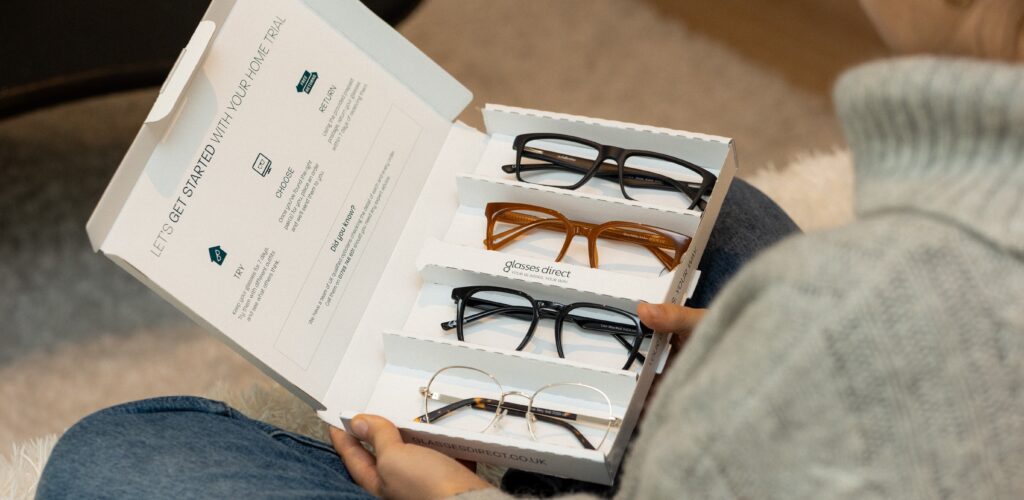
The best way to decide is often to try both materials in real-life settings. Comparing frame weight, fit, and appearance at home can quickly show which option feels more natural for your daily routine.
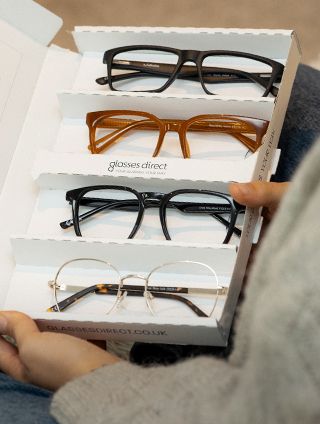
At Glasses Direct, you can explore both acetate and metal styles online and compare selected frames using the free Home Trial service.
FAQs: Acetate vs metal frames
Are acetate or metal frames better for everyday wear?
Both materials work well for everyday use, but the best option depends on your preferences. Metal frames usually feel lighter and more minimal, while acetate frames offer a slightly bolder look with a smooth, comfortable feel.
Do acetate frames last longer than metal frames?
High-quality acetate and metal frames can both last for years with proper care. Acetate is durable and flexible, while metals like titanium and stainless steel are known for their lightweight strength.
Which is lighter: acetate or metal frames?
Metal frames are generally lighter than acetate styles. Thin metal frames, especially titanium designs, are often preferred for long periods of wear because they place less pressure on the face.
Are acetate frames good for sensitive skin?
Acetate frames are often a good option for sensitive skin because they do not usually contain nickel. Some metal frames may include nickel alloys, although many modern designs now use hypoallergenic materials such as titanium.
How do I choose between acetate vs metal frames?
When deciding between acetate vs metal frames, think about your style, comfort preferences, and lifestyle. Acetate suits bolder colours and statement shapes, while metal frames work well if you prefer lightweight, understated styles.