







Holiday eyewear: prescription sunglasses worth trying
13 July 2026

In summary: Prescription sunglasses give you clear vision, reliable vision correction and UV400 protection in a single pair — no swapping, no squinting, no compromise. Whether you wear single-vision, progressive lenses or reading glasses, the right pair makes every part of your holiday more comfortable. Current studies indicate 25% to 50% of lifetime UV exposure can be accumulated before age 18 — but unprotected eyes at any age remain at risk, making proper sun protection genuinely important, not just a nice-to-have.
This guide is for: anyone who wears prescription glasses and wants to enjoy their holiday without constantly switching between eyewear.

If you rely on glasses to see clearly, prescription sunglasses solve a problem you might not realise you have. Instead of switching between your regular glasses and a pair of non-prescription shades throughout the day — or squinting your eyes without either — you get clear vision and full sun protection in one pair. Prescription sunglasses are available with the same lens options as your everyday glasses, including single-vision, varifocal and prescription reading glasses, so you don’t have to compromise on your usual vision correction while you’re away.
Prescription sunglasses are particularly useful if you’re:
And if you want maximum versatility, Transitions® lenses (also known as photochromic lenses) adapt automatically from clear indoors to tinted outdoors, giving you one pair of glasses that does it all.
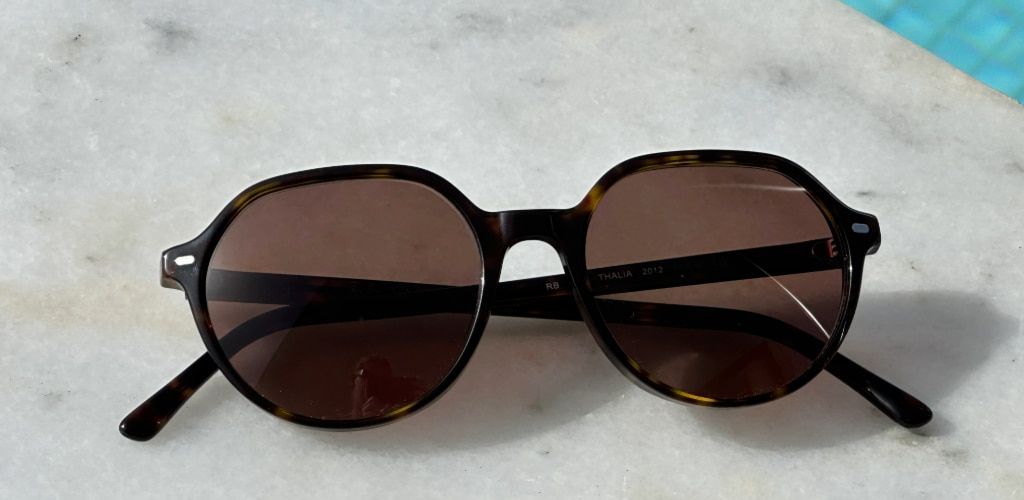
Not every pair of sunglasses is built for holiday life. Long days, changing weather and plenty of movement put eyewear to the test.
When choosing RX shades for travel, it’s worth looking for:
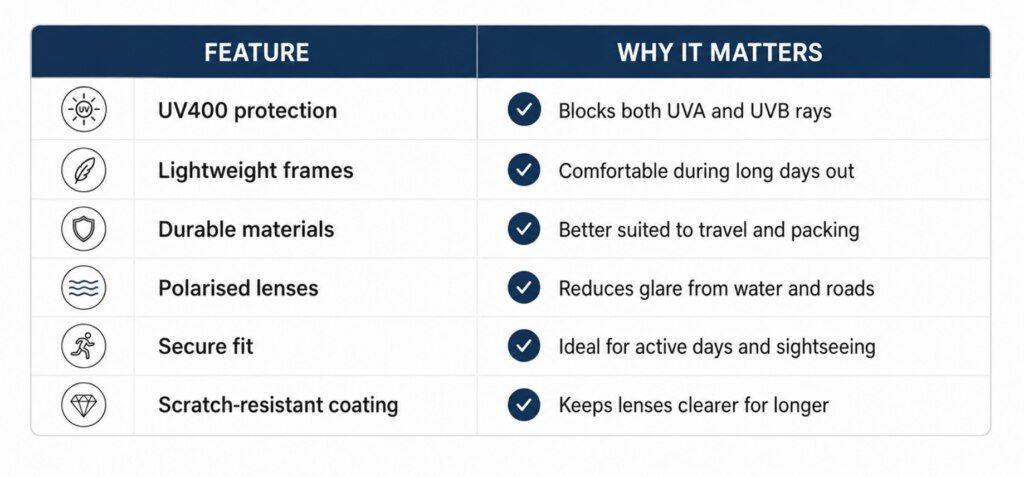
Make sure you have an accurate pupillary distance (PD) measurement to ensure the clearest possible vision.
A great pair should feel comfortable enough to wear all day — and look good doing it.
The ideal holiday sunglasses balance style with practicality. Here are the most popular shapes and when they work best.

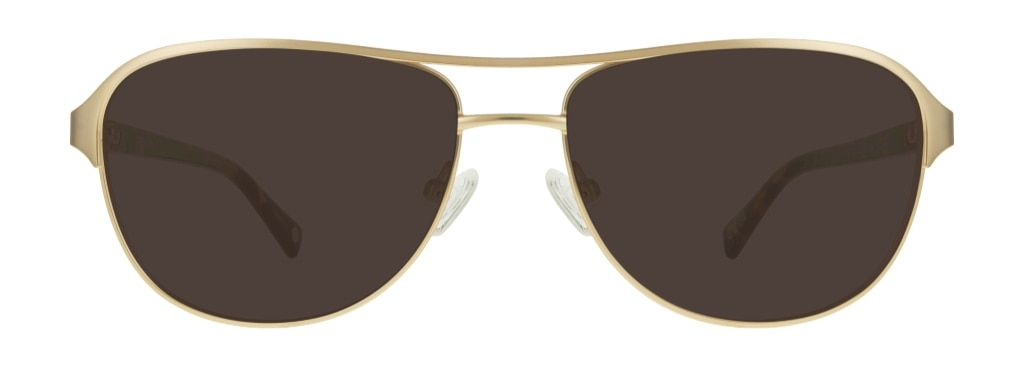
Aviators are one of the most enduring sunglasses shapes for good reason. Large lenses offer excellent coverage, the timeless silhouette suits a wide range of face shapes and they pair easily with almost anything in a holiday wardrobe.
Best for: beach holidays, road trips, sightseeing, everyday travel

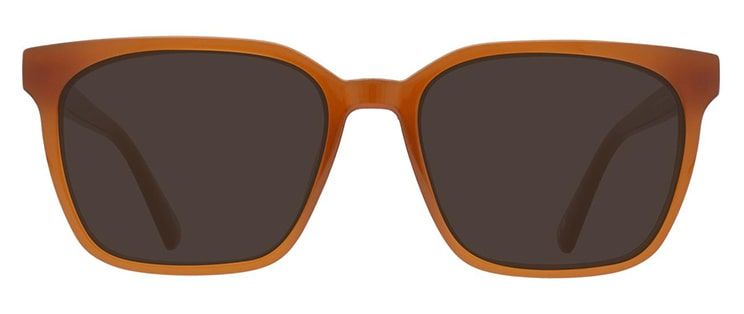
Square frames — including classic wayfarers — are a reliable holiday choice. The angular shape provides solid coverage from sunlight and works well across many face shapes without feeling too fashion-forward.
Best for: city breaks, coastal holidays, weekend getaways

Oval frames offer a softer, more relaxed look while still providing reliable sun protection. If you’re after something that feels effortlessly stylish rather than structured, this is a strong option and ideal for creating a more relaxed holiday aesthetic.
Best for: European city breaks, festivals, casual summer holidays

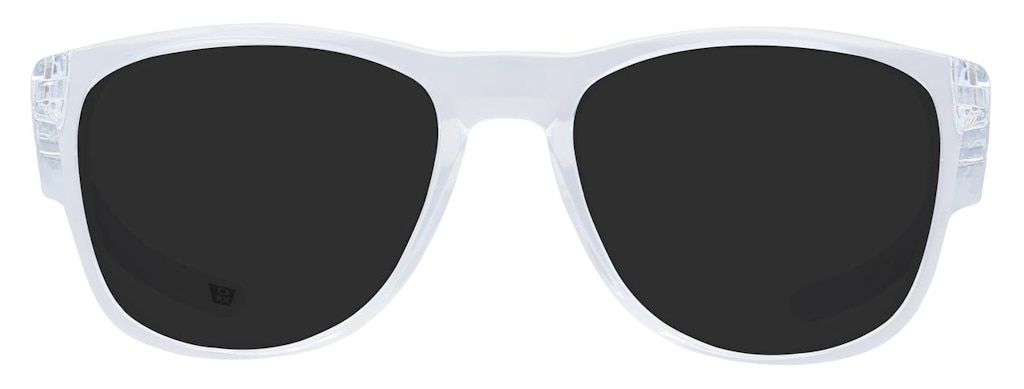
Statement oversized frames give you maximum coverage around the eyes. That extra lens area reduces squinting and makes long days outdoors noticeably more comfortable.
Best for: beach holidays, poolside lounging, cruises
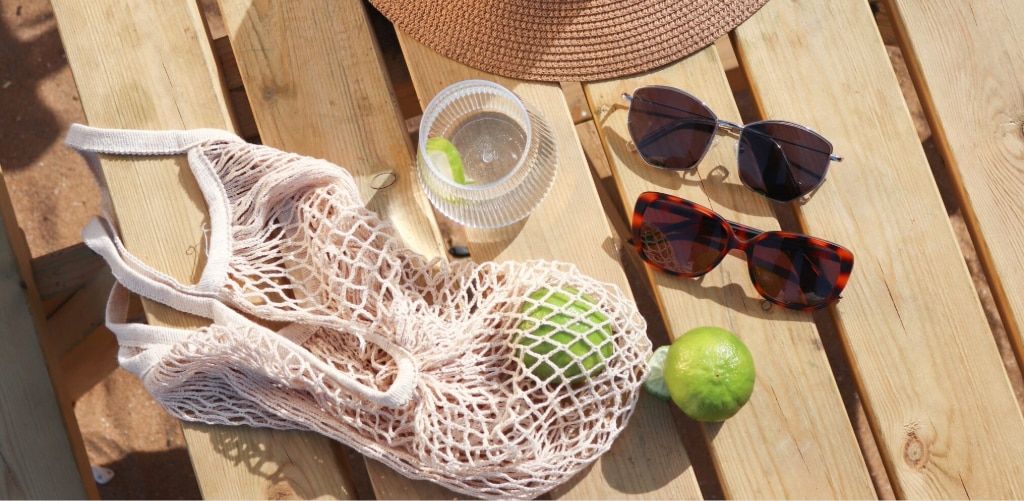%2C%20and%20a%20mesh%20tote%20bag%20holding%20green%20limes.%20)
The beach is one of the most demanding environments for your eyes. Sand reflects 15–20% of UV radiation (compared to around 4% from grass), while open water can reflect up to 25% on brighter days. Together, they create conditions that are far brighter — and more tiring on the eyes — than most everyday situations.
Quality beach sunglasses should offer:
Polarised sunglasses are especially useful at the beach because they help reduce reflected glare from water surfaces, making it easier to see clearly and comfortably.

For most beach and water holidays, yes — they make a real difference.
Polarised sunglasses contain a special filter that blocks horizontally reflected light — the kind that bounces off water, sand and wet roads. That means less glare, less squinting and noticeably clearer, more comfortable vision.
Benefits of polarised sunglasses include:
Particularly worth considering for: beach and coastal holidays, sailing, fishing, road trips and any holiday packed with outdoor activities.
Different trips call for different things. Here’s a quick guide to help you narrow it down.
Look for:
Consider:
Choose:
Prioritise:
Lens colour has a bigger impact on your experience than most people expect. It affects contrast, colour perception and how your eyes feel at the end of a long day outdoors.
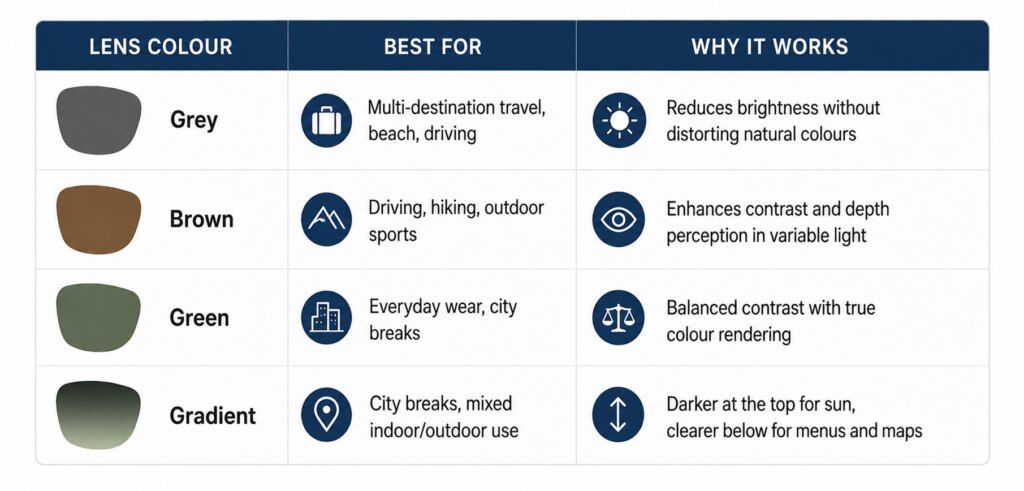
Grey lenses remain the most versatile all-rounder when it comes to sunglasses for travel — especially if you’re visiting more than one type of destination.
If you have existing eye conditions such as cataracts or macular degeneration, bright sunlight can sometimes feel even more uncomfortable. While prescription sunglasses won’t treat these conditions, high-quality UV protection and the right lens tint may help improve visual comfort outdoors. If you’re unsure which option is right for you, speak to your optician.
If you wear progressive lenses, many people also find it helpful to pack a backup pair, especially for longer holidays.
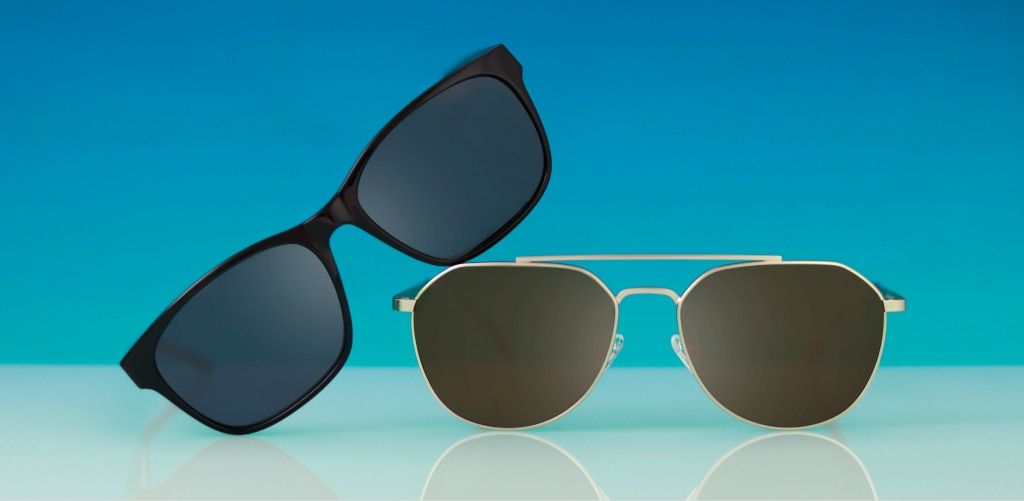
At Glasses Direct, you can get two pairs of prescription sunglasses from just £39 with our 2-for-1 range. It’s a simple way to cover every occasion — oversized frames for the beach, a classic aviator for the drive and peace of mind throughout.

The best prescription sunglasses for travel combine comfort, protection and a style you’ll actually want to wear. Whether you need practical beach sunglasses for a summer getaway, versatile holiday shades for a city break, or polarised lenses for time on the water — there’s a pair that fits.
During sunny daytime conditions, yes — prescription sunglasses can easily be your main pair. You’ll still want your regular glasses for evenings and indoor activities, though.
Yes. Prescription sunglasses are available with progressive lenses, single-vision lenses and prescription reading glasses, allowing you to choose the same type of vision correction you use every day.
Yes. If you have a stronger prescription, high-index lenses can make your sunglasses thinner, lighter and more comfortable without affecting UV protection.
They’re most useful for beach, driving and water-based trips. If most of your holiday is spent indoors or in cooler, overcast climates, standard tinted lenses may be sufficient.
Look for UV400 protection, good lens coverage and ideally polarised lenses to manage glare from water and sand. A secure, comfortable fit matters too if you’re active.
Wayfarer and aviator styles tend to be the most universally flattering — they’re popular holiday choices for exactly that reason.
For most people, yes. Clear vision and sun protection in a single pair is one less thing to think about — and that’s usually enough of a reason.
Look for UV400-rated lenses, which block 99–100% of both UVA and UVB rays. This is the standard recommended by eye health organisations including the College of Optometrists.
Transitions® lenses darken in response to UV light, making them a good everyday option. For very bright conditions like beach or snow, dedicated prescription sunglasses with polarised lenses often provide stronger, more consistent protection.