







In a nutshell: On 12 August 2026, the UK will see a partial solar eclipse, with around 90% of the Sun covered by the Moon just before sunset. It’s the deepest eclipse we’ve had here in almost three decades. You don’t need any special kit to enjoy it, but you do need the right eye protection. Here’s everything worth knowing before it happens.

What is a solar eclipse?
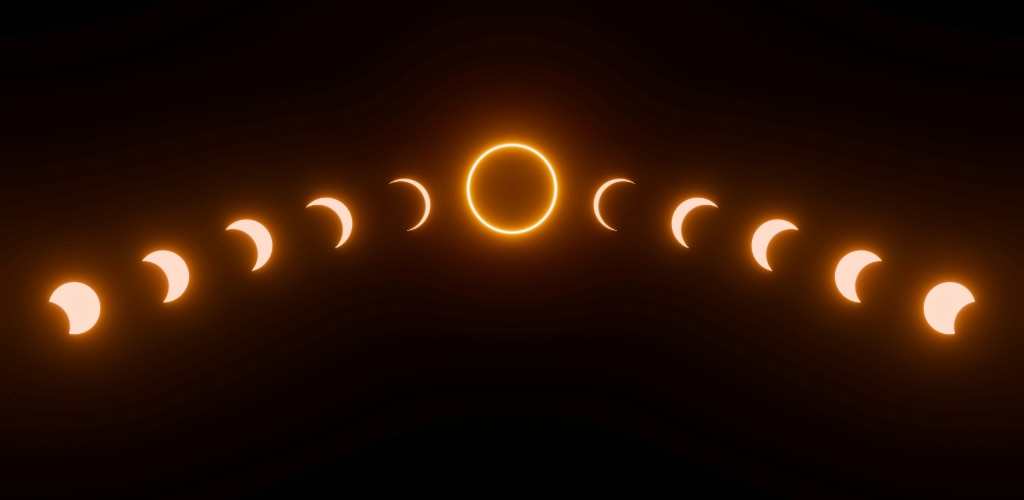
A solar eclipse happens when the Moon passes between the Sun and the Earth, blocking some or all of the Sun’s light for a short time. There are four types: total, partial, annular and hybrid. Which one you see depends on how much of the Sun is covered from where you’re standing and how close the Moon is to Earth at the time.
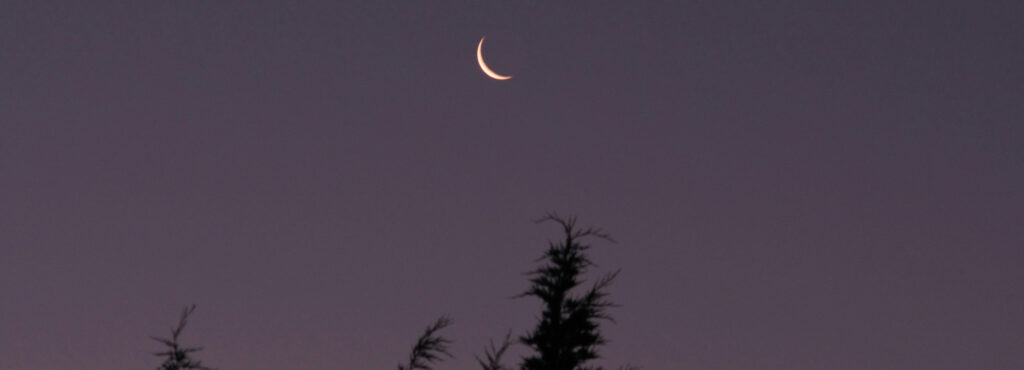
During a total eclipse, the Moon fully covers the Sun and the sky briefly goes dark. A partial eclipse is more common: only part of the Sun is hidden, so daylight dims but never disappears. That’s what the UK will experience on 12 August 2026 — and at around 90% coverage, it’ll be a dramatic one.
Solar eclipse dates: when is the next one?
The UK’s next solar eclipse falls on Wednesday 12 August 2026. It’s a partial eclipse, meaning the Moon won’t fully cover the Sun here, but it comes close. Timings vary slightly by location, but from London:
- First contact (the Moon starts to cross the Sun): around 6.17pm
- Maximum eclipse (up to 90% coverage): around 7.12pm
- Eclipse ends: around 8.06pm
The eclipse unfolds low on the horizon as the Sun sets, so you’ll need a clear view to the north-west if you want to catch the whole thing. A totally eclipsed Sun will be visible from parts of Greenland, Iceland and northern Spain, but from the UK and Ireland, it stays a partial eclipse throughout.
When is the next solar eclipse in the UK after 2026?
After 12 August 2026, the next partial solar eclipse visible from the UK is expected on 2 August 2027, though it’ll be far less dramatic than this one.
If you’re wondering when the next total solar eclipse in the UK will happen, the answer is a while yet: 23 September 2090, when totality is due to sweep across the south coast of England. So, this August is a rare chance to see something close to the real thing without waiting decades.
How to protect your eyes from the solar eclipse 2026
Looking directly at the Sun is never safe, eclipse or not, and a partial eclipse doesn’t change that. Even with 90% of the Sun covered, the remaining sliver is still bright enough to damage your eyes — and because it’s less intense than a full, glaring Sun, it can be tempting to look for longer than you should. Here’s how to watch safely:
1. Use certified eclipse glasses
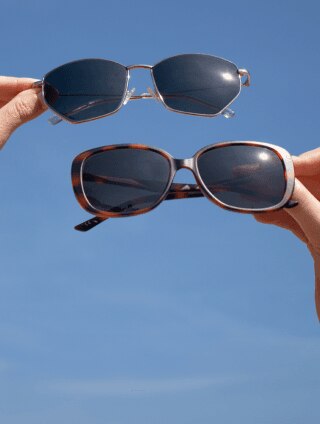
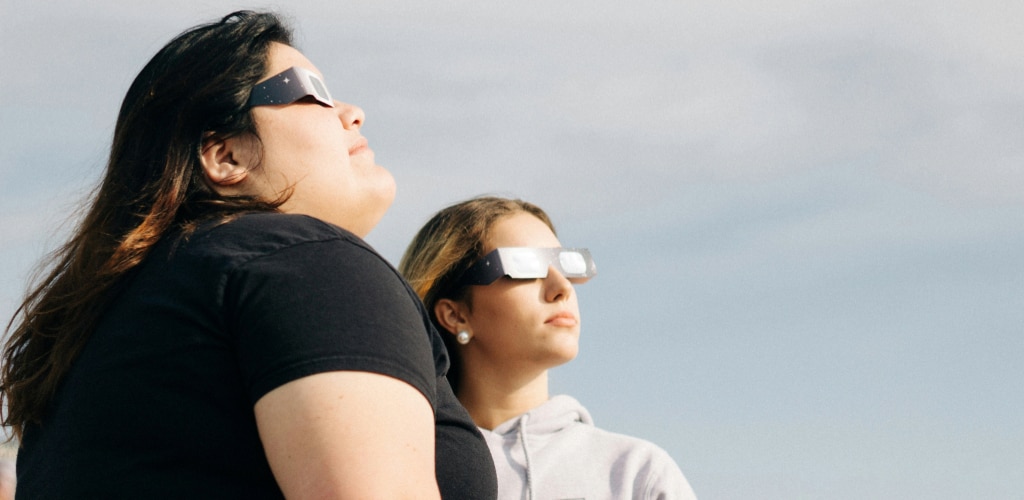
Proper eclipse glasses are rated ISO 12312-2 and block almost all visible, UV and infrared light. Ordinary sunglasses, however dark, don’t offer anywhere near enough protection, so they’re not a substitute — even the best UV-blocking sunglasses are designed for everyday brightness, not looking directly at the Sun. Check your glasses are undamaged before you use them — any scratches or tiny holes let too much light through.
2. Make your own eclipse projector
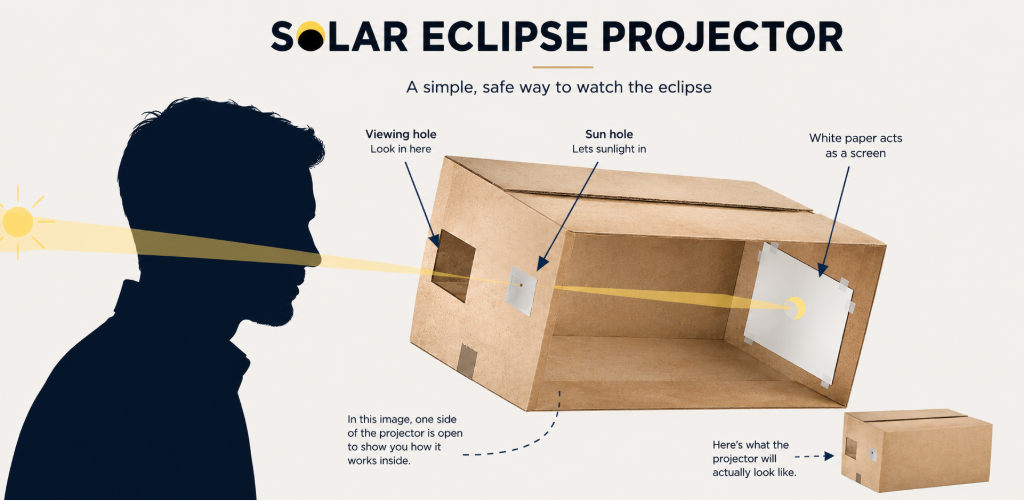
Fancy a bit of a project? A pinhole projector is an easy, safe way to watch the eclipse and you probably have everything you need at home already: a cardboard box, a sheet of white paper, sticky tape, scissors and some tin foil.
Here’s how to put it together:
- Cut a hole in one side of the box, then tape a piece of tin foil over it.
- Prick a small pinhole in the centre of the foil.
- Tape the white paper to the inside of the box, opposite the pinhole — this is your screen.
- Cut a second, larger hole in another side of the box, so you can look inside without blocking the light.
To use it, stand with your back to the Sun and let light pass through the pinhole. During the partial phases of the eclipse, you’ll see a small crescent Sun projected onto the paper inside — no need to look at the Sun itself at any point.
3. Never use cameras, binoculars or telescopes without a proper solar filter
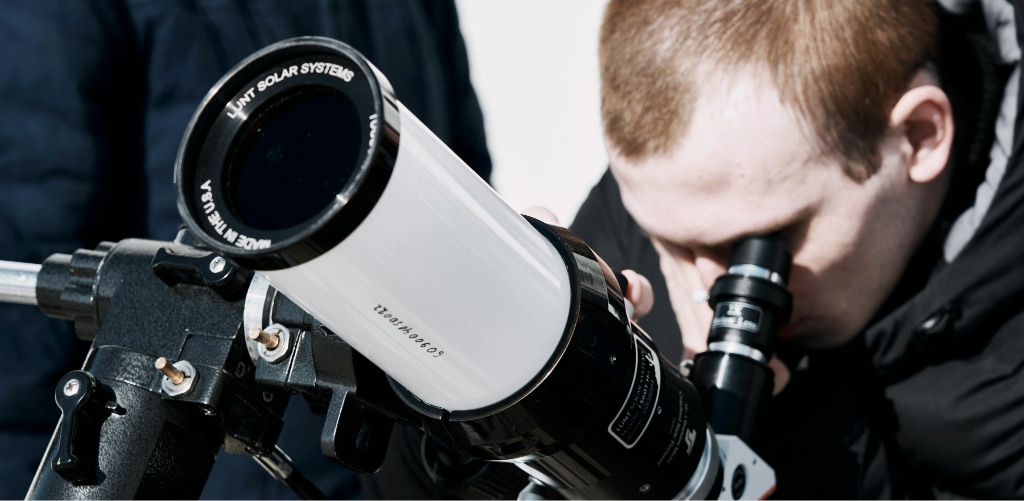
These devices concentrate sunlight, so looking through them at the Sun — even briefly, even wearing eclipse glasses — can cause serious eye damage. If you want to photograph the eclipse, fit a certified solar filter to your lens first.
Keep an eye on children
Children are naturally curious, so it’s worth talking them through why looking at the Sun isn’t a good idea before the eclipse starts and supervising them throughout. Make sure any eclipse glasses fit securely and aren’t easily knocked off.
If in doubt, watching a livestream is a perfectly good way to enjoy the eclipse with zero risk to your eyes — several observatories, including the Royal Observatory Greenwich, plan to broadcast it live.
And while eclipse glasses are very much a one-day essential, it’s a good moment to check your everyday sunglasses are pulling their weight too — full UV protection matters just as much on an ordinary sunny day.
FAQs: solar eclipses
What is a solar eclipse?
A solar eclipse happens when the Moon moves between the Sun and Earth, blocking some or all of the Sun’s light from view. Depending on your location and the alignment, you’ll see a total, partial, annular or hybrid eclipse.
What are the solar eclipse dates for 2026?
The main event is 12 August 2026, visible across the UK as a partial eclipse. It’ll be a total eclipse across parts of Greenland, Iceland and northern Spain.
When is the next solar eclipse in the UK?
The next one falls on 12 August 2026. After that, the UK’s next partial eclipse is expected on 2 August 2027, with the next total eclipse not due until 2090.
How to protect your eyes from the solar eclipse 2026?
Wear certified ISO 12312-2 eclipse glasses, use a pinhole projector or watch a livestream. Never look at the Sun through a camera, binoculars or telescope without a proper solar filter fitted, even briefly.
Can I wear my regular glasses under eclipse glasses?
Yes. Most eclipse glasses are designed to fit over prescription glasses comfortably. If you find they don’t sit well over your frames, hold them close to your eyes rather than removing your glasses.
Will it get dark during the UK eclipse?
Not fully. Because this is a partial eclipse, the sky will dim noticeably around maximum coverage, similar to an overcast evening, but it won’t go properly dark as it would during a total eclipse.
What if it’s cloudy on the day?
Cloud cover can block the view, though thin, high cloud sometimes lets enough light through to see the eclipse safely. Either way, keep eclipse glasses on for direct viewing and check for local livestreams as a backup.