







Anti-scratch lens coatings: everything you need to know
4 June 2026

In summary: Anti-scratch lens coatings are protective layers applied to spectacle lenses to help reduce everyday scratches caused by cleaning, handling and regular wear. While they do not make lenses scratch-proof, they can improve lens durability, maintain clearer vision and help glasses stay in better condition for longer.
If you wear glasses every day, your lenses are exposed to dust, debris, accidental drops and frequent cleaning. Over time, these everyday interactions can leave marks that affect both the appearance and clarity of your lenses. That’s where an anti-scratch lens coating can help.
Whether you’re commuting to work, studying, travelling or simply going about your daily routine, your glasses experience constant handling. Even small scratches can affect lens clarity over time, making protective coatings a popular addition to modern eyewear.
In this guide, we’ll explain how anti-scratch coatings work, the benefits they offer, how they compare with other lens coatings for glasses, and how to keep your lenses in great condition for longer.

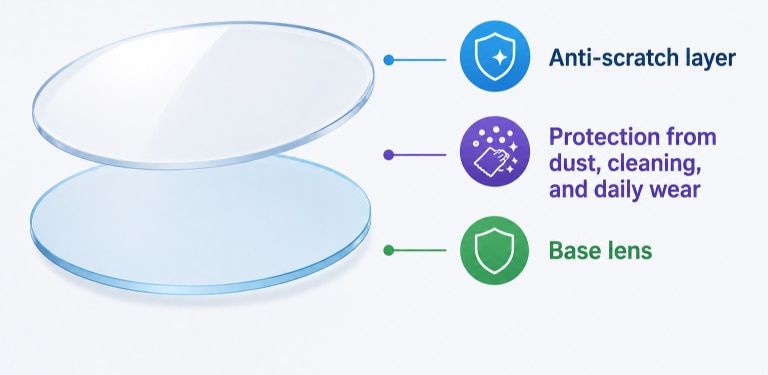
An anti-scratch lens coating is a thin, hardened layer applied to spectacle lenses during manufacturing. The coating creates a more durable outer surface that helps reduce minor scratches caused by everyday wear and tear.
Modern lens materials such as polycarbonate and high-index lenses are lighter and more impact-resistant than traditional glass lenses. However, they can also be more susceptible to surface marks. Anti-scratch coatings help improve resistance to these everyday scratches.
It’s important to understand that anti-scratch coatings do not make lenses completely scratch-proof. Instead, they help reduce the likelihood of minor scratches developing through normal use.
During production, a hard coating is bonded to the lens surface to create a protective barrier.
This layer helps protect against:
The result is a lens that can maintain its appearance and clarity for longer.

Anti-scratch coatings are one of the most practical lens upgrades available because they help protect your glasses from everyday wear.
Glasses are handled throughout the day. They’re taken on and off, cleaned, stored and transported regularly.
An anti-scratch coating helps create a tougher outer surface, reducing the likelihood of minor scratches developing over time.

Even small scratches can scatter light across the lens surface and affect visual clarity.
By helping to minimise surface marks, anti-scratch coatings can support clearer vision throughout the life of your glasses.
Replacing scratched lenses can be inconvenient and expensive.
Because anti-scratch coatings help reduce everyday wear, they may help extend the lifespan of your lenses and reduce the need for premature replacements.

If you regularly commute, travel, exercise or spend time outdoors, your glasses are likely to experience more wear.
Scratch-resistant glasses can provide additional protection and greater peace of mind when you’re on the move.
Most anti-scratch coatings are applied during the lens manufacturing process using specialised hard-coating technology.
Typical application process
This process helps create a strong bond between the coating and the lens surface, ensuring long-lasting protection.
At Glasses Direct, an anti-scratch coating is included as standard across all lens packages for glasses, alongside other lens treatments such as anti-reflective or hydrophobic coatings, available depending on your chosen package.
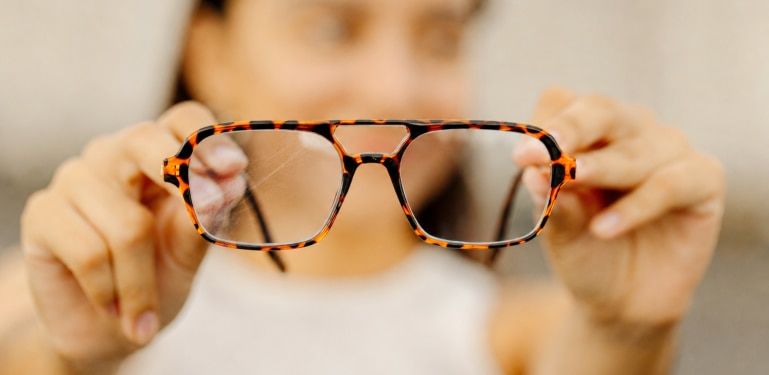
Several lens coatings are available for prescription glasses, and each serves a different purpose.
Lens coatings for glasses comparison
| Coating type | Main benefit |
|---|---|
| Anti-scratch coating | Helps reduce everyday surface scratches |
| Anti-reflective coating | Reduces glare and reflections |
| UV coating | Helps block harmful UV rays |
| Hydrophobic coating | Repels water and smudges |
Understanding the differences can help you choose the right combination for your lifestyle and visual needs.
Although they’re often included together, anti-scratch and anti-reflective coatings solve different problems.
Anti-scratch coatings help protect the lens surface from everyday wear.
Anti-reflective coatings reduce reflections from screens, artificial lighting and headlights, helping improve visual comfort.
At Glasses Direct, every lens package includes an anti-scratch coating as standard, helping protect lenses from everyday wear from day one.
Hydrophobic coatings repel water, oils and fingerprints, making lenses easier to clean.
Anti-scratch coatings focus on durability, while hydrophobic coatings focus on keeping lenses cleaner.
Together, they provide a more complete lens protection system.
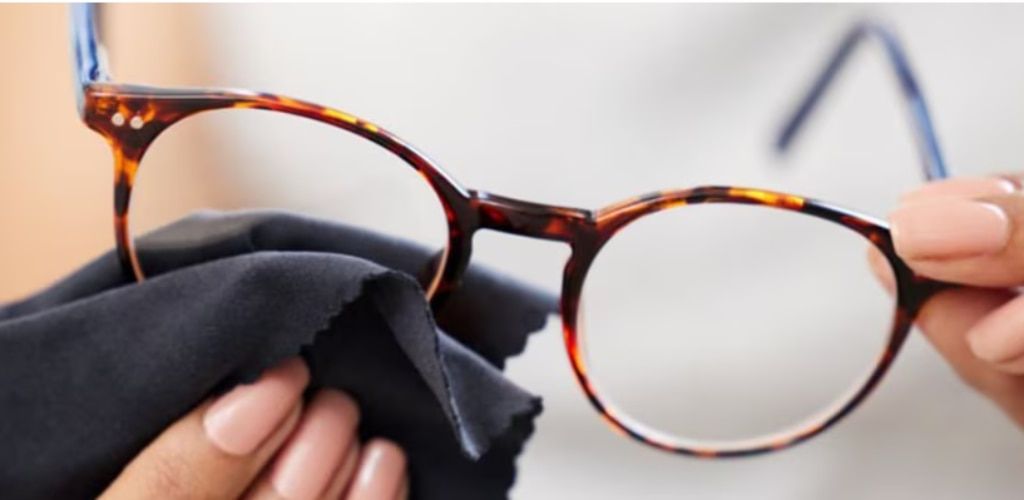
Although scratch-resistant glasses offer improved protection, proper care remains important.
These simple habits can help preserve both the coating and the lens surface.
Avoid:
Even the best anti-scratch lens coating performs better when combined with proper care.
Most glasses wearers can benefit from scratch-resistant protection, but some people may find it particularly useful.


This is the most common misconception.
No spectacle lens is completely scratch-proof. Anti-scratch coatings improve resistance, but they cannot prevent all damage.
While polycarbonate and high-index lenses benefit greatly from anti-scratch protection, most lens materials can benefit from additional surface protection.
Even premium scratch-resistant glasses need proper cleaning and storage to maintain their condition.

Lens technology continues to evolve, bringing new ways to improve durability and performance.
Some advanced coatings use nanotechnology to create smoother and more durable surfaces.
These coatings can improve scratch resistance while maintaining optical clarity.
Modern lenses increasingly combine multiple technologies into a single coating package, including:
This layered approach helps deliver a more complete lens-care solution.
Researchers continue to explore adaptive coatings that respond to environmental conditions and improve lens performance in different situations.
These developments demonstrate how lens technology continues to advance to meet the needs of modern glasses wearers.

Anti-scratch lens coatings are one of the most practical ways to help protect your glasses from everyday wear.
By reducing minor surface scratches, they can help maintain lens clarity, improve durability and keep your glasses looking their best for longer.
Whether you’re buying your first pair of prescription glasses or upgrading your current lenses, anti-scratch coatings can be a worthwhile addition. They work particularly well when combined with other lens coatings for glasses, such as anti-reflective and hydrophobic treatments.
While no coating can make lenses completely immune to damage, scratch-resistant glasses offer valuable protection against the knocks, wipes and bumps that happen every day.
Yes. Anti-scratch lens coatings help reduce minor scratches caused by everyday cleaning, handling and wear. However, they do not make lenses completely scratch-proof.
Minor marks may sometimes be less noticeable after professional cleaning, but deep scratches generally cannot be removed completely.
For most people who wear glasses every day, anti-scratch coatings are a practical investment because they help improve lens durability and maintain clarity for longer.
Not all lenses include anti-scratch protection as standard. However, every Glasses Direct lens package includes an anti-scratch coating, helping to protect your lenses from everyday scratches caused by handling, cleaning and regular wear.
Modern anti-scratch coatings are designed to last for the lifetime of the lens when cared for correctly. Proper cleaning and storage help maintain their performance.