






How rare are amber eyes and what makes them unique?
17 August 2023

In a nutshell: Amber eyes show up in roughly 5% of people, making amber one of the rarest eye colours around. The gold-to-copper glow comes from pheomelanin, a reddish-yellow pigment, and the shade is determind by two genes, OCA2 and HERC2. Amber is often confused with hazel eyes, but hazel mixes green, brown and gold, while amber stays one solid warm colour.
Do your eyes sparkle gold in the light? If so, you might be one of the lucky few with amber eyes. Many people mistake them for hazel or brown, but this colour is extremely rare and distinctive. Here's what gives amber eyes their glow, the genetics behind them, and the frames that show them off.

Rare enough to turn heads. Only about 5% of people have amber eyes, making it one of the rarest eye colours, alongside green. It's more common in animals like dogs, cats and owls than in humans. Exact figures are hard to pin down too, since eye colour has never been recorded the way blood type has, and the mix shifts from region to region. Either way, true amber eyes aren't something you see every day.
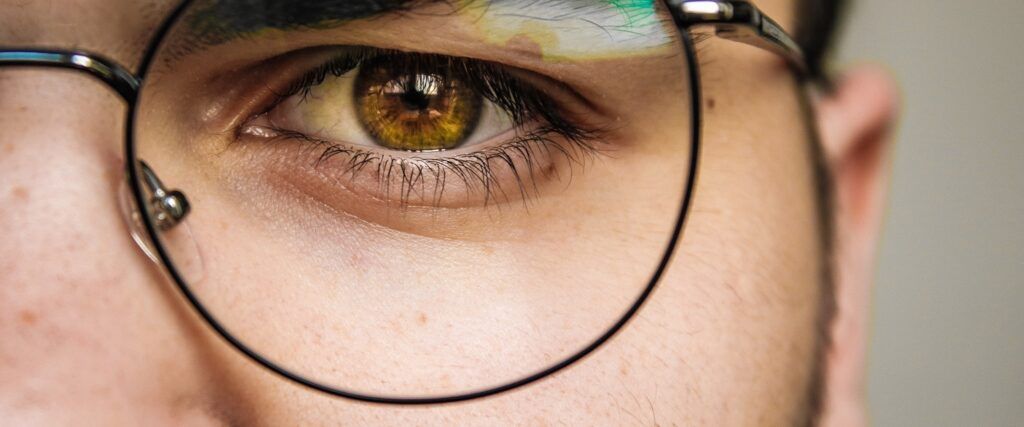
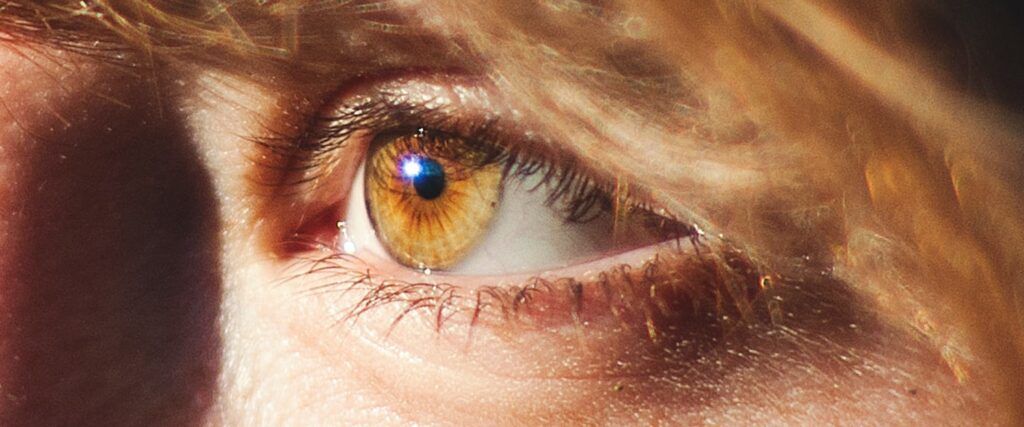
Amber sits between yellow and orange on the colour spectrum: think warm, honey-yellow. The name comes from amber itself, the fossilised tree resin. Amber eyes vary in colour, ranging from bright golden to a warmer yellowish-brown. Catch one in full sun and it almost lights up.
Eye colour comes from a pigment called melanin, the same pigment that determines your skin and hair colour. Lots of melanin means brown eyes. Less means green or hazel, and little or none leaves eyes blue or grey.
Melanin comes in two forms. One is eumelanin, which is brownish-black. The other is pheomelanin, a reddish-yellow pigment also called lipochrome. Amber gets its colour from these two types of melanin. Amber eyes have a lot of pheomelanin and little eumelanin, and that warm pigment is what gives them a gold-to-copper glow.
Genetics play a big part, but not in the neat, one-gene way people often assume. Eye colour is polygenic. That means several genes have a say — more than 60 of them, with two doing most of the work. Those two are OCA2 and HERC2. They sit side by side on chromosome 15 and set how much melanin your iris makes.
That's why amber can appear seemingly from nowhere. Two brown-eyed parents can have an amber-eyed child. Other eye colours, like green and blue, can carry the trait into the next generation too. Though less likely, recessive genes from brown eyes can also produce it. A single genetic mutation can impact an entire family's eye colours, which is why siblings sometimes end up with completely different shades. Despite this, amber eyes can remain strong throughout the generations if passed down consistently.
Amber, brown and hazel get mixed up often, but the differences come down to pigment balance and pattern.
| Colour | Pigment balance | What to look for |
|---|---|---|
| Amber | High pheomelanin, low eumelanin | One solid warm gold colour, no flecks |
| Brown | High eumelanin | Deep, even brown; the world's most common eye colour at 70–80% |
| Hazel | Mixed pheomelanin and eumelanin | Green, brown and gold blended |
If the colour remains gold with no flecks, that's amber. If it shifts between green and brown depending on the light, that's hazel.
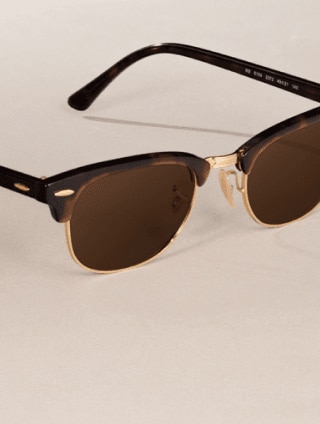
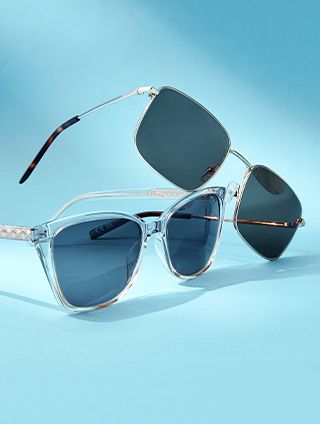
Amber sits on the warmer, lighter half of the eye colour spectrum, so bright days can feel harsher than they would for darker eyes. A good pair of sunglasses earns its place here. Look for a UV400 label: it means the lenses block 100% of UVA and UVB rays. Wear them through winter too, not just in summer. If you need a prescription, prescription sunglasses give you sharp vision and full UV protection in one pair.
It's also worth keeping up with eye tests. The NHS recommends one at least every two years, free for anyone who qualifies. That keeps your prescription current and lets an optometrist check the parts you can't see yourself.
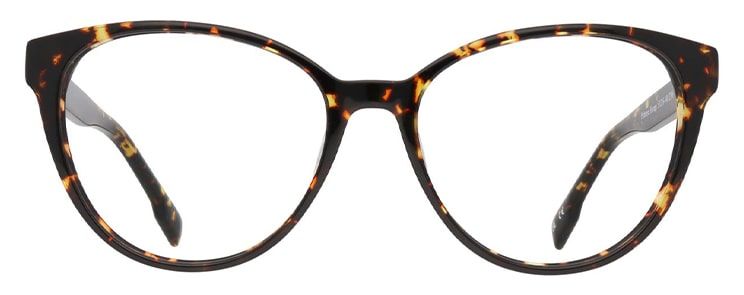
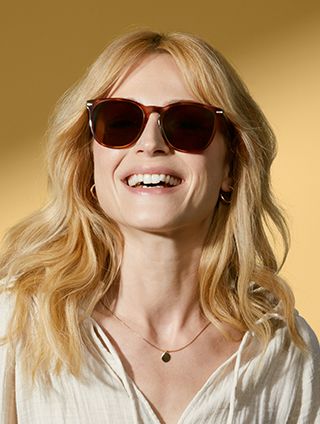
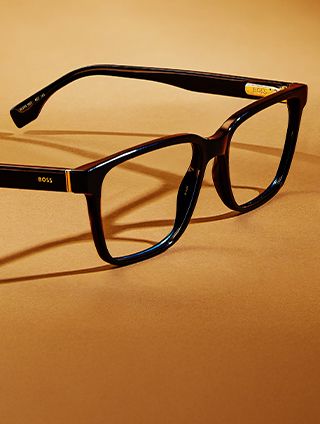
Amber eyes are a golden yellow without blue, brown or green flecks. For something classic, try a simple black or dark tortoiseshell frame. To stand out, contrast with colours like azure, plum or lavender all sit opposite gold on the colour wheel, so they'll bring out the glow rather than compete with it.
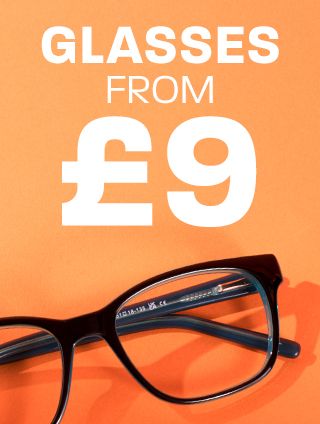
Shape matters too. A round frame feels soft and retro; a rectangle adds structure. Ray-Ban® and Gucci both fall within our designer range, and our own-brand frames start from just £9, with 2-for-1 on selected styles if you fancy a spare. Eye colour is a good starting point, but what actually suits your face is personal, so it's worth trying a few before deciding.
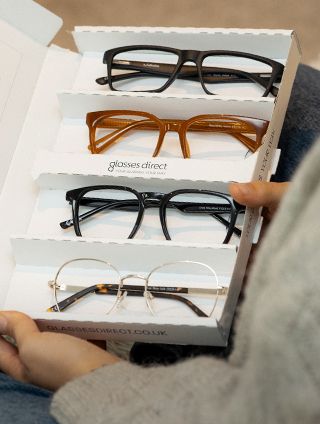
Whatever shade of amber you've got, it comes down to a strong dose of pheomelanin and a rare roll of the genetic dice. When you're ready to find frames that suit it, start a free Home Trial: pick a few pairs, try them at home for free, and let your own mirror decide.
Green is usually considered the rarest, but amber is close behind at around 5% of the world's population.
Two genes, OCA2 and HERC2, control how much melanin the iris produces, and their combination determines whether eyes end up amber, brown, green or blue.
Yes. Eye colour depends on more than 60 genes, so combinations can skip a generation or appear unexpectedly.
Amber stays one solid gold colour. Hazel mixes green, brown and gold, and can look different depending on the light.
No special protection beyond good sunglasses. Look for a UV400 label so lenses block 100% of UVA and UVB rays.