








Blue light glasses: are they worth it for your eye health?
22 October 2025

The short answer: Blue light glasses won’t prevent eye damage. In fact, there’s no strong evidence that blue light from screens harms your eyes. However, they may ease glare and visual discomfort during long screen sessions. Wearing them in the evening may also help you wind down and sleep better. Whether they’re worth it really depends on your individual screen habits.
From scrolling your phone over breakfast to video calls at work and streaming your favourite series at night, it’s no surprise that many of us spend hours in front of digital screens every day. With all that screen time comes one big question: do blue light glasses actually work?
The short answer? It depends on what you’re hoping they’ll do.
While there’s no strong evidence that artificial blue light from digital devices causes permanent eye damage, blue-light-blocking glasses may help improve visual comfort, reduce glare and support better sleep quality for some people. Here’s what the research says.

Blue light sits at the higher-energy end of the visible light spectrum. It plays a key role in regulating our circadian rhythm. This internal body clock keeps us alert during the day and ready to wind down at night.
But sunlight isn’t the only source. Blue light is also emitted by:
Although these devices emit far less blue light than the sun, we spend much longer looking at them up close. Research commissioned by the charity Fight for Sight found that around a third of UK adults noticed their eyesight getting worse as screen time increased during the pandemic, which helps explain why so many of us are now asking questions about blue light, eye health and sleep.
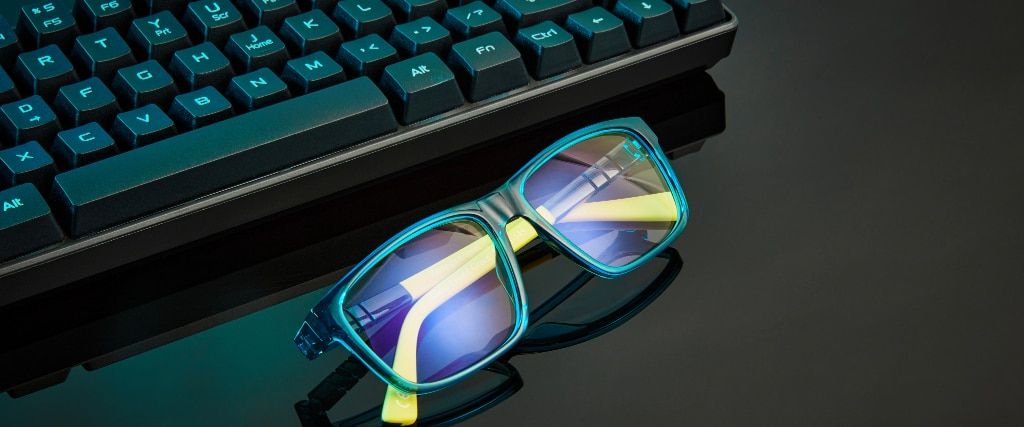
Blue-light-blocking glasses have specially coated lenses, often with an anti-reflective coating. This is designed to filter or reduce some of the blue light reaching your eyes from digital screens. According to the Association of Optometrists, most blue-light-filtering coatings only block around 10–35% of light in the violet-blue range, rather than blue light in its entirety.
They’re designed to improve comfort during prolonged computer use by reducing screen glare and helping your eyes feel less fatigued. Some people also choose to wear computer glasses in the evening to minimise the effect of screen exposure before bed and support better sleep quality. Blue-light-blocking lenses are available as both non-prescription and prescription glasses. This means you can add the coating whether or not you need vision correction. Contact lenses with blue-light filtering are also available for those who prefer them to frames.
If you’re curious whether the coating would suit your frames, it’s worth asking during your next eye test. Your optician can talk you through the options alongside your prescription. Already know what you’re after? Speak to our team via Live Chat. They can add the coating to an existing order or help you find frames that support it.

Current evidence suggests that everyday exposure to blue light from digital devices does not cause permanent retinal damage or negatively impact long-term eye health.
Laboratory studies have shown that extremely high levels of blue light can affect the retina. However, these conditions are far more intense than anything produced by smartphones, laptops or computer screens. Similar lab studies have found that concentrated blue light can penetrate the cornea and trigger reactive oxygen species, a process linked to cell damage, slower healing on the eye’s surface and worse dry-eye symptoms. As with the retina studies, these effects were seen under intense, direct exposure in a lab setting — not the everyday levels of blue light we get from screens.
In 2017, the College of Optometrists carried out a systematic review of the evidence, examining three randomised controlled trials on blue-blocking lenses. Using the internationally recognised GRADE framework for assessing evidence quality, the review rated the certainty of benefit for visual performance, eye fatigue and sleep as low to very low. A follow-up Cochrane review in 2023 reached similar conclusions, and also noted that side effects — including headaches and low mood — were occasionally reported, though uncommon.
Unlike blue light, UV light is known to be harmful. In fact, prolonged exposure can increase the risk of eye conditions such as cataracts and macular degeneration. That’s why wearing sunglasses with UV protection outdoors remains one of the best ways to protect your eye health — and why regular check-ins with your optician or ophthalmologist matter more than blue light filtering when it comes to preventing eye damage.

If your eyes feel dry, sore or tired after a day at your desk, blue light isn’t necessarily the culprit.
Digital eye strain, sometimes called computer vision syndrome, is usually caused by the way we use screens rather than the light they emit.
Looking at digital screens for long periods can:
Common symptoms of digital eye strain include:
Many people find blue-light-blocking glasses make prolonged screen time feel more comfortable, even if the latest research doesn’t show consistent improvements for everyone. If dryness is a regular issue, artificial tears can also help lubricate the eyes. This is ideal during long stretches at a computer screen.
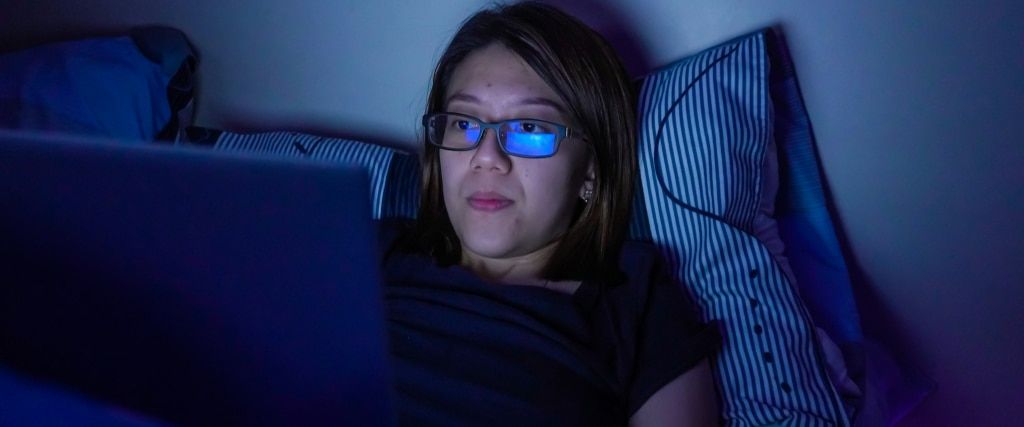
This is where blue light appears to have the greatest impact.
Blue light influences melatonin production — the hormone that tells your body it’s time to sleep. During the day, this is helpful, because it keeps you alert and supports your natural sleep-wake cycle. In the evening, however, prolonged exposure to digital screens may delay melatonin release. This can make it harder to switch off and can contribute to sleep disruption.
Some of the early research behind blue-blocking lenses came from studies on teenagers and students. It found that wearing blue-blocking glasses in the evening reduced the alerting effect of screen light and helped protect natural melatonin levels. It’s a smaller and more specific body of evidence than the marketing around blue-light glasses often suggests, but it’s the area where the research is most promising. Wearing blue-light-blocking glasses before bed may:
If you regularly use screens in the evening, blue-light glasses may be worth considering as part of a healthy bedtime routine.

You may benefit from blue light glasses for screen time if you:
Blue light glasses pros and cons:
Pros
Cons
Weighed up together, the pros and cons suggest blue light glasses are a reasonable, low-risk thing to try — just not a guaranteed fix, and not a substitute for good screen habits or regular eye tests.
Whether you wear blue-light-blocking glasses or not, these tips can help reduce digital eye strain and keep your eyes feeling comfortable during long periods of screen time.
Follow the 20-20-20 rule. Every 20 minutes, look at something around 20 feet away for 20 seconds to give your eyes a break.
Reduce screen glare. Adjust your screen brightness to suit your surroundings, position your monitor to minimise reflections and cut down on glare wherever possible.
Remember to blink. Blinking keeps your eyes naturally lubricated. If your eyes feel dry, artificial tears may also help.
Cut down on screens before bed. Try limiting screen time before sleep or switch your devices to night mode in the evening to support better sleep quality.
Book regular eye tests. An up-to-date prescription can make a big difference to your comfort when using digital devices. Your optometrist can also check for early signs of eye diseases like cataracts or macular degeneration, helping protect your long-term eye health — and if anything needs closer attention, they’ll refer you to an ophthalmologist.

Blue-light-filter glasses aren’t a magic solution. However, they can be a useful addition if you spend a lot of time in front of digital screens.
While research doesn’t currently show they prevent eye damage or consistently reduce digital eye strain, many people find they improve visual comfort by reducing glare during prolonged computer use. There’s also growing evidence that wearing blue-light-blocking glasses in the evening may help support healthier sleep quality by working with, rather than against, your natural circadian rhythm.
If you’re looking for a simple way to make long days on screens more comfortable, blue-light-blocking glasses — whether as clear lenses on prescription glasses or a non-prescription pair — could be worth trying, especially when paired with healthy screen habits and regular eye tests to support your eye health. Take a look at our glasses with blue-light lens options if you’d like to try a pair, or explore our lens packages to see what else might suit your prescription and lifestyle.
They may improve visual comfort and reduce glare during screen use, but there’s no strong evidence they prevent eye damage or consistently reduce digital eye strain.
Yes. They’re safe to wear throughout the day, though many people find the biggest benefit comes from wearing them during evening screen use.
No. Blue-light-blocking lenses come in both non-prescription and prescription options, so you can add the coating with or without vision correction.
Not always. Computer glasses are sometimes tailored to reduce eye strain at your typical screen distance, while blue light glasses specifically focus on filtering blue wavelengths — though many products combine both features.
They might, if your headaches are linked to glare or digital eye strain. Persistent headaches are worth mentioning to your optician, as they can have several causes.
Yes, though there’s limited research on children specifically. If you’re concerned about a child’s screen habits or eye comfort, it’s best to speak to an optician.
The main pro is comfort: many people find they ease glare and help with sleep when worn in the evening. The main con is that the science is still uncertain — current evidence doesn’t show they prevent eye damage or reliably reduce digital eye strain.