






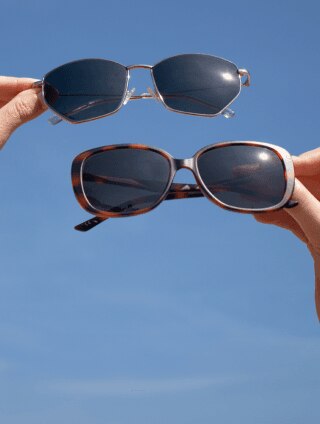
What is the most attractive eye colour? Eye colour chart and frame guide
11 December 2025


In a nutshell: Green is the eye colour people rate as most attractive, with 20.3% of votes in an All About Vision survey of more than 66,000 readers. It's also one of the rarest eye colours, found in around 2% of people worldwide. Brown is the most common, at 70–80%. The eye colour chart below covers every shade, from brown to violet eyes, plus the frame colours that suit each one.
There's an odd gap at the heart of this topic. The colour people admire most is one hardly anyone is born with. And the shade most of us share rarely tops the polls.
This guide covers:
• What the attractiveness studies found, and where they disagree
• A full eye colour chart: how common each shade is and what causes it
• Which frame colours bring out each eye colour
• When a change in eye colour is worth checking with an eye care professional

Green wins the biggest survey, but dating-app data points to blue and hazel. Here's how the two main studies compare:
| Study | What it measured | Top eye colour | Runner-up |
|---|---|---|---|
| All About Vision survey, 66,000+ readers | Which eye colour readers found most attractive | Green (20.3%) | Light blue (16.9%), then hazel (16.0%) |
| Lenstore dating-app study, 2021 – men's profile | Matches on Tinder, Bumble and Hinge | Blue (27.17%) | Brown (21.97%) |
| Lenstore dating-app study, 2021 – women's profiles | Matches on Tinder, Bumble and Hinge | Hazel (20.19%) | Purple (19.88%) |
The Lenstore study used matching dating profiles and changed only the eye colour digitally, so any difference in matches came down to the eyes.
There's a twist, too. Green and brown are the most Google-searched contact lens colours, even though neither tops either study. What people say they prefer and what they actually choose aren't the same thing.
Social media adds another layer. Filters and lighting change how eyes look on screen, so the "most beautiful eyes in the world" lists you'll see shared online rarely compare like with like. The fair conclusion: attraction depends on the light, the culture and the person looking. Every eye colour has its own appeal.
Brown is the most common eye colour worldwide. Violet and red are the rarest, too rare to have a reliable figure, and of the measured shades, green is the rarest at around 2%.
| Eye colour | How common | Population measured | What causes it |
|---|---|---|---|
| Brown | 70–80% | Worldwide | High melanin absorbs most of the light reaching the iris. |
| Blue | 8–10% | Worldwide | Very little melanin, so light scatters rather than being absorbed. |
| Hazel | Around 5% | Worldwide | Moderate melanin spread unevenly, giving a brown-green blend. |
| Amber | Around 5% | Worldwide | Lots of reddish-yellow pigment, little brown-black pigment. |
| Grey | Around 3% | Worldwide | Very low melanin – similar to blue eyes, with even less. |
| Green | Around 2% | Worldwide | Low-to-moderate melanin, with the shade set by how light scatters. |
| Violet | Extremely rare | No reliable figure | Near-zero melanin; pale eyes can look violet in some light. |
| Turquoise | Not a separate category | – | A blue-green blend between green and blue. |
These figures come from the World Population Review. Eye colour hasn't been counted the way blood type has, and the mix varies a lot from one region to the next, from the United Kingdom to East Asia.
Brown is by far the most common eye colour, shared by roughly 70–80% of people worldwide. In the US, the figure is around 45%.
Every shade from light honey to near-black counts as brown. High melanin creates the colour, and it comes with a practical perk: a little more natural shielding from bright light.
Famous faces with brown eyes include Keira Knightley, Daniel Kaluuya, Olivia Rodrigo and Tom Holland.

Brown eyes offer real versatility – almost any frame colour works. Bring out the warmth in your gaze with gold, green or yellow frames. Tortoiseshell and black designs add depth, while purple or emerald hues can add a playful touch.
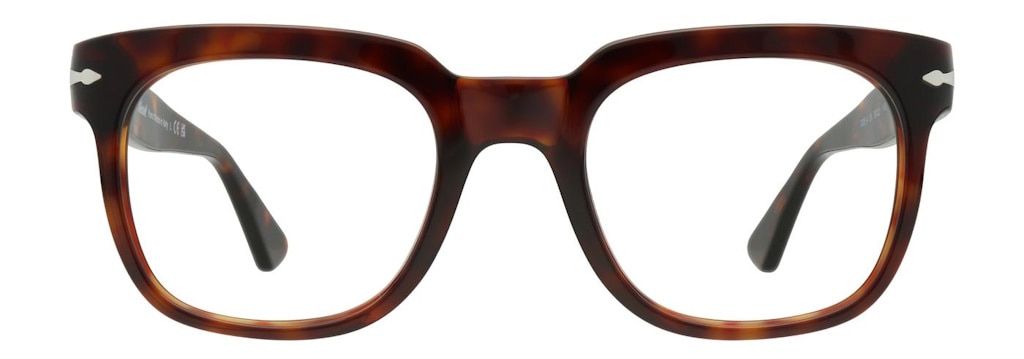
Read more in our brown eyes guide.
Blue is the second most common eye colour worldwide, at around 8–10% of people. It's most widespread in countries such as Iceland, Denmark and the Netherlands.
No eye actually contains blue pigment. The colour comes from how light scatters inside a low-melanin iris – the same effect that makes a clear sky look blue. Shades range from pale ice blue to deep navy, and blue eyes tend to stand out most against blonde or light brown hair colour.
The phrase "baby blues" shows how closely the colour is tied to warmth and youth. Famous faces with blue eyes include Zac Efron, Taylor Swift, Chris Hemsworth and Margot Robbie.

Show off your baby blues with transparent, grey or navy frames. Warm tones like tortoiseshell, beige or light brown add contrast, while silver, red or orange accents make your eyes sparkle.

See our blue eyes guide for more on the science.
Turquoise is a real, describable shade, but it isn't a separate genetic category on clinical eye colour charts. It sits between blue and green.
Like blue eyes, turquoise eyes have very little melanin, so light scatters rather than being absorbed. Melanin levels land between blue eyes and green eyes. The result can look like a vivid blue-green blend, sometimes called teal.
You'll see it searched as "eye color turquoise" on US sites and "turquoise eyes" here in the UK – either way, it's the same blue-green blend. Lighting shifts it further. The same eyes can look bluer indoors and greener in daylight.

Because turquoise sits between two cool tones, the frame advice for blue and green eyes applies. Bring out the glimmer in your turquoise eyes with navy, silver and grey frames. Or, contrast them with warm tortoiseshell or gold.
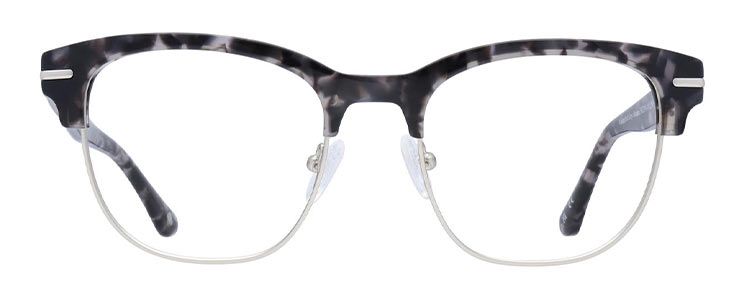
Around 5% of people worldwide have hazel eyes, rising to around 18% in the US, where it's the third most common shade after brown and blue. Hazel blends green, gold and brown, sometimes with a hint of blue.
The shifting quality comes from melanin spread unevenly across the iris, so different patches catch the light differently. Famous faces with hazel eyes include Rihanna, David Beckham, Kelly Clarkson and Tom Cruise.

Hazel eyes naturally suit a variety of different hues. They pair beautifully with tortoiseshell, green and brown frames. Add warmth with gold accents, or highlight your natural flecks with amethyst, cherry red or berry pink for a bolder statement.

Our hazel eyes guide explains how the colour forms.
An estimated 5% of people have amber eyes, placing them alongside green as one of the less common shades. The colour comes from a high level of reddish-yellow pigment, called pheomelanin, with comparatively little of the brown-black pigment that makes eyes brown.
Amber eyes glow gold or honey and are sometimes called "wolf eyes" for their likeness to animal irises. Famous faces with amber eyes include Jennifer Lopez, Justin Bieber, Nicole Richie and Darren Criss.

Highlight your golden tones with brown, honey, gold or warm tortoiseshell frames. To create contrast, go for plum purple, cobalt blue or forest green for an elegant, eye-catching finish.
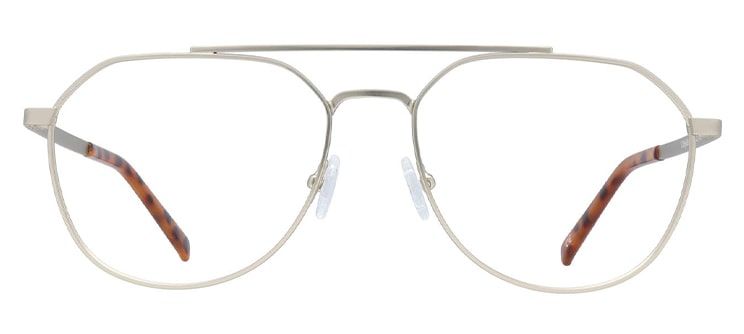
Our amber eyes guide covers the genetics, including why two brown-eyed parents can have an amber-eyed child.
Grey is one of the rarest natural eye colours. The World Population Review estimates that 3% of the world’s population has grey eyes. People with little or no melanin in the iris have blue or grey eyes – the exact shade comes down to just how little melanin is there.
Grey eyes can move from icy pale to deep charcoal depending on the light, which is why they're often mistaken for blue at first glance. Famous faces with grey eyes include Daniel Craig, Saoirse Ronan, Meg Ryan and Ian Somerhalder.

Cool tones like grey, silver and light blue will naturally complement the subtle colour of your grey eyes. To highlight this rare eye colour, select dark and rich shades like black, amethyst purple, sage green and dark red. Grey also works as the perfect foundation for bright, multi-coloured frames.
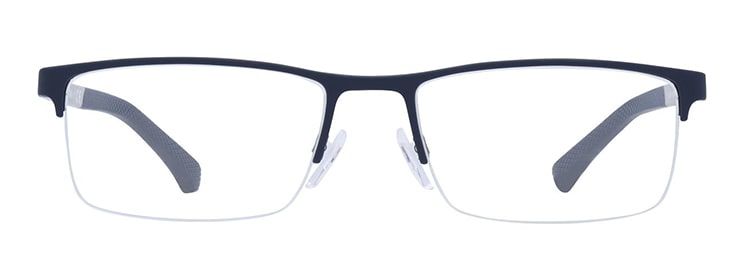
Read our guide to grey eyes to find out more about this unique eye colour.
Green eyes belong to around 2% of the world's population, which makes them one of the rarest eye colours – and the one rated most attractive. They're most common in parts of the United Kingdom and Europe, particularly Scotland, Ireland, France and Germany.
The shade ranges from a light turquoise green to deep emerald. There's no green pigment involved. Low-to-moderate melanin creates the colour, and the way light scatters off it sets the exact shade.
Green eyes have long been linked with creativity and a touch of mystery – ancient myth even gave Aphrodite green eyes. Famous faces with green eyes include Emma Stone, Eddie Redmayne, Scarlett Johansson and Paul Rudd.

Enhance your emerald sparkle with earthy tones like deep brown, tortoiseshell and warm gold. If you’re feeling bold, contrast your eyes with red, purple or pink frames.
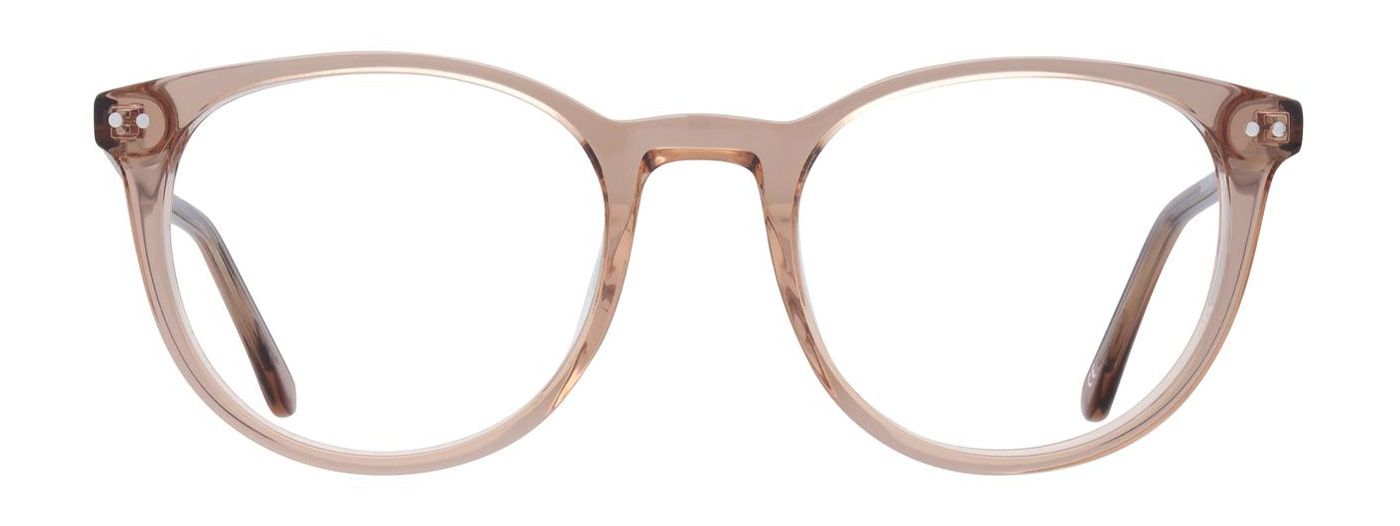
Want the genetics behind green eyes? Our guide to green eyes covers the rest.
Genuine violet eyes are exceptionally rare. They come from very low pigment in the iris – similar to blue or grey eyes, but further along the scale.
In the most extreme cases, seen in some forms of albinism, blood vessels behind the iris become visible enough to give eyes a pink or red tint. Violet sits on that same spectrum: not the full albinism effect, just enough of a shift to look violet rather than blue or grey in certain light.
Elizabeth Taylor is the name most linked with violet eyes. Her eyes are generally described as a deep blue that looked violet under certain lighting.

Violet eyes are close cousins of blue and grey, so the same cool palette works well. For a classic look, choose silver, charcoal and deep navy. Or, if you want to play up the violet, plum or deep berry frames echo the tone without competing with it.

Our purple eyes guide explains how violet irises form.
As a rule, frames in a similar tone bring out eye colour, while opposite tones create contrast. Here's the quick version:
| Eye colour | Frame colours to bring it out | Frame colours for contrast |
|---|---|---|
| Brown | Gold, green, yellow | Tortoiseshell, black, purple |
| Blue | Clear, grey, navy | Tortoiseshell, beige, orange |
| Hazel | Tortoiseshell, green, brown | Amethyst, cherry red, berry pink |
| Amber | Brown, honey, gold | Plum, cobalt blue, forest green |
| Green | Brown, tortoiseshell, gold | Red, purple, pink |
| Grey | Grey, silver, light blue | Black, amethyst, deep red |
| Violet or red | Silver, charcoal, navy | Plum, deep berry |
| Turquoise | Navy, silver, grey | Tortoiseshell, gold |
Hair colour matters too, as frames sit between the two. Warm hair colours – red, copper, golden blonde – tend to suit warm frames like tortoiseshell and gold. Cool tones – ash blonde, black, grey – usually pair well with silver, black or navy. Face shape plays a part too; our face shape guide covers that side.
Every shade on the chart comes down to one thing: how much melanin sits in the iris, and how light behaves once it gets there. Melanin is the same pigment behind skin and hair colour.
Eye colour is polygenic, meaning several genes are involved. The two with the biggest effect are OCA2 and HERC2, both on chromosome 15. That's why two brown-eyed parents can occasionally have a blue- or green-eyed child – the genes don't follow the old "brown beats blue" rule.
Some people have two different eye colours, a condition called heterochromia.

Eye colour on its own doesn't affect how well you see, but it's worth knowing two things:
Alongside that, keep up with regular eye tests – they're the best way to look after your eye health, whatever your eye colour.
Surveys pick green. Dating apps favour blue and hazel. Google searches lean towards brown and green contact lenses. That's several different winners – and none of them is the colour most people are born with.
Attractiveness data captures a moment and a sample, not a rule. Confidence and a frame that flatters your natural colour will do more than any ranking.
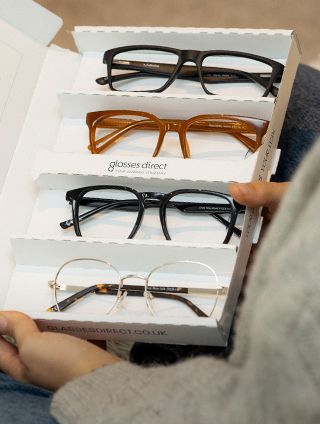
Not sure which shade works for you? Try four pairs at home with our free Home Trial, or see how frames look online in seconds with Virtual Try-on.
Green ranked most attractive in an All About Vision survey of more than 66,000 people, with 20.3% of votes, ahead of light blue (16.9%) and hazel (16.0%). A 2021 dating-app study found blue eyes got the most matches for men and hazel for women.
Violet and red are the rarest eye colours, too rare to have a reliable figure. Of the measured shades, green is the rarest, at around 2% of the world's population.
From rarest to most common: violet and red, green (around 2%), grey (around 3%), hazel, amber (around 5%), blue (8–10%), then brown (70–80%).
Turquoise is a real shade, but not a separate genetic category. It's a blue-green blend caused by low melanin and the way light scatters in the iris.
There's no objective answer. Rankings of the most beautiful eyes in the world depend on who's voting, and surveys disagree. Green tops the largest reader survey, while dating-app data favours blue and hazel.
Eye colour often changes in babies, but rarely in adults. Lighting, clothing and pupil size can make eyes look different. A real change in either eye should be checked by an eye care professional.
Frames in a similar tone bring out your eye colour; opposite tones add contrast. For example, tortoiseshell and gold bring out green and hazel eyes, while silver and navy suit blue, grey and violet eyes.