










New-glasses headache: why it happens and what to do
2 October 2026

In short: A new-glasses headache is common and usually settles within two weeks as your eyes and brain adjust to the new prescription. First-time varifocals can take two to four weeks. To ease it, wear your new glasses full-time, take regular screen breaks and make sure the frames fit properly. If headaches worsen, last beyond two weeks or come with double vision or nausea that won't settle, go back to your optician.
You've picked up your new glasses and by the afternoon your head is aching. The floor might even look slightly tilted. Sound familiar? It's one of the most common worries after an eye test, and in most cases it doesn't mean the glasses are wrong. Your eyes are simply learning to see a little differently.

Yes. A mild headache in the first few days is a normal part of adjusting to new glasses. The NHS says it can take up to two weeks to get used to a new pair, especially with long-sighted prescriptions.
Your eyes spent months or years focusing with your old prescription. Now they're learning a new one, and that extra muscle work is what causes the dull ache. A first-ever pair can feel stranger than a routine update, because there's no old setting to fall back on.
These are the common symptoms in the first week or two:
The key sign is direction. A headache that eases a little each day means you're adapting. One that gets worse is a reason to get your glasses checked.
Lens strength is measured in dioptres, the unit on your eye test result. Even a small change in that number is enough for your eyes to notice. Whether your prescription has gone up or down, your eyes work in an unfamiliar way until the new setting feels automatic.
A bigger jump between prescriptions usually means a longer settling-in period. That's normal and it isn't a reason to put the glasses in a drawer. Going back to your old pair only slows things down, because your eyes never get the practice they need.
Astigmatism is one of the most common causes of that off-balance feeling. When the cylinder (CYL) part of your prescription changes, straight lines can look bowed and the floor may seem to slope for a day or two. It feels odd, but it passes quickly as long as you wear your glasses steadily. A first reading prescription can do something similar: text looks sharp, but the edges of the page may swim until you get used to it.

Varifocals combine distance, intermediate and reading zones in one lens, so they ask more of your eyes than single-vision lenses. The trick is to point your nose at what you want to see. Look through the top for distance, the middle for screens and the bottom for reading, rather than moving just your eyes to find the right spot.
Until that becomes second nature, the softer side edges of the lens can bring on a headache. Take extra care on stairs and kerbs in the first week, and drop your chin slightly so you look through the distance zone. Your optician should mention this when you collect your first pair. The Association of Optometrists puts the adjustment period at around two to four weeks, and wearing them all day makes it quicker.

Not every headache comes from the lenses. Each lens has an optical centre that should line up with your pupil, set using your PD (pupillary distance, the gap between your pupils in millimetres). If the lenses sit too far in or out, you look through the wrong part of them, and that small misalignment strains your eyes all day.
Weight and grip matter too. Frames that pinch behind the ears, slide down your nose or feel heavy can cause a band-like headache that has nothing to do with your vision. Tight temple arms are usually the culprit. You can adjust them gently at home or ask an optician to reshape them so the pressure eases.
The right frame can help from the start. Titanium frames are a good choice if weight is an issue, as titanium is lighter than most other metals used in eyewear. Spring hinges flex slightly outwards, giving a little more room around the sides of your head. Persol's® Meflecto temples go a step further, with a flexible design that adapts to your head shape to reduce pressure.
| Cause | What you might notice | Typical settling time | What helps |
|---|---|---|---|
| Prescription change | Dull ache, tired eyes by evening | A few days to 2 weeks | Wear them full-time |
| Astigmatism change | Curved lines, sloping floor, off-balance feeling | A few days to 2 weeks | Wear them steadily, take care on stairs |
| First-time varifocals | Blur at the lens edges, wobble on stairs | 2–4 weeks | Move your head, not just your eyes |
| Poor fit or wrong PD | Pressure behind ears or on nose, constant eye strain | Won't settle on its own | Get the frames adjusted or lenses checked |
Give a new pair a fair run before you judge it. These steps help most people adjust faster:
1. Wear them full-time. Put them on first thing and keep them on. Switching back to your old pair restarts the adjustment.
2. Move your head, not just your eyes. This matters most with varifocals. Turn to face whatever you're looking at.
3. Check the fit. If the frames slip, pinch or press, get them adjusted so the lenses sit centred over your pupils.
4. Keep the lenses clean. Smudges and dust make your eyes work harder to see through them.
5. Follow the 20-20-20 rule at screens. Every 20 minutes, look at something about 20 feet away for 20 seconds to relax your focusing muscles.
Mild dizziness or queasiness in the first day or two can happen, particularly with a big prescription change, astigmatism or first-time varifocals. It should ease quickly as your brain adjusts.
If nausea continues beyond the first few days, or comes with double vision or dizziness that doesn't settle, go back to your optician. These can be signs that the prescription needs a tweak or the lenses aren't centred correctly. If you get a sudden, severe headache, sudden changes in your vision or eye pain, don't wait: contact NHS 111 or seek urgent medical help, as these are unlikely to be caused by your glasses.
Book a recheck if:
None of this means you've done anything wrong. Sometimes a prescription needs a small adjustment, or the lenses need re-centring to your PD. Your optician can check the prescription, measurements and fit in one short visit.

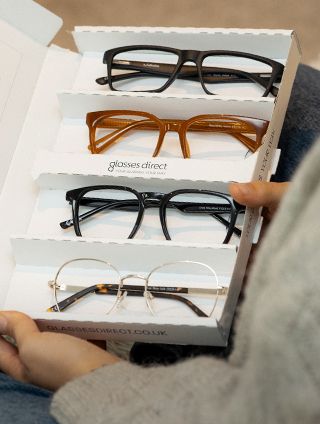
Most new-glasses headaches fade within two weeks. The easiest way to avoid discomfort caused by fit is to choose frames that suit your face and sit comfortably from day one. With our Free Home Trial, you can choose up to four frames and try them at home for seven days before you decide, so you can check the fit, weight and style without any pressure.
Most new-glasses headaches ease within a few days and go completely within two weeks. First-time varifocal wearers may need two to four weeks.
Your eyes and brain are adjusting to a new prescription, which can cause mild dizziness or queasiness at first. This is most common with big prescription changes, astigmatism and varifocals. If it lasts more than a few days, see your optician.
Yes. A new or changed astigmatism correction can make straight lines look curved and cause headaches while your brain adjusts. This usually settles within a few days to two weeks.
No. Switching back to your old glasses slows down the adjustment. Wear your new pair full-time unless symptoms get worse or include double vision, in which case contact your optician.
Warning signs include headaches that get worse instead of better, blurred vision that doesn't improve after two weeks, double vision or one lens feeling much stronger than the other.
Yes. Frames that are too tight, too heavy or sit unevenly can cause tension headaches, and lenses that aren't aligned with your pupils can strain your eyes. An optician can adjust the fit.
Yes. Curved lines, a sloping floor and a slightly off-balance feeling are all common in the first few days of adjusting to new glasses.