








What to do with old glasses?
30 October 2025

In short: You can recycle glasses at most opticians, nearby recycling centres and charity collection points. Send a snapped or scratched pair for recycling or if you have a pair that's still wearable, donate them instead. Either way, the important thing is unused glasses stay out of landfill and don't gather dust in your drawer.
Picture the drawer at home – the one holding two or three old pairs you keep meaning to sort out. An out-of-date prescription doesn't make a pair worthless, and it doesn't belong in the household recycling bin. Recycle glasses that are genuinely done with, donate the ones still going strong, or fit fresh lenses into a frame you already love. Here are simple, sustainable ways to give every old pair its next life, and exactly where to take it.
Right for you if: you've got old glasses, sunglasses or cases sitting unused.
What you'll need: five minutes, and a nearby optician, charity shop or recycling centre.

Recycling spectacles you can no longer wear is straightforward. The easiest starting point is the optician on your local high street. Most keep a collection bin by the door, and dropping off old frames costs nothing.
One thing to know: glasses can't go in your household recycling bin. A single pair can be made from frame materials like metal, acetate and coated lenses – a combination that standard council recycling facilities cannot process. Look for a dedicated glasses recycling point instead. Many opticians host one, some local recycling centres take frames, and sight charities run collection boxes in shops and health centres. An online recycling-point finder maps your nearest drop-off in seconds.

Before any pair goes in the bin, ask one question: could someone still wear these? If the frame is solid and the lenses are only a prescription or two out of date, send them to donation instead. Reach for glasses recycling only when a pair is truly unfixable: snapped arms, split lenses, or frames bent past repair.
Give the pair a quick wipe, drop it in a collection bin, and that's the job done. There's no need to remove the lenses first. The recycling scheme separates the metal, the acetate and the glass at its end, so a pair handled this way stays out of landfill.
♻️ Tip: Always check with your optician or local recycling centre for their specific guidelines.
A wearable pair rarely belongs in the bin – someone else would be grateful for it. Charity shops are the obvious drop-off point. Many take clean, undamaged glasses to sell on or pass to a sight charity, and plenty of opticians double as donation points too, working with charities that fund eye care in places where glasses are hard to come by.
A quick clean and the original case make a donation far more useful – a boxed, wiped pair is ready to wear, not a repair job for someone else. Only usable glasses belong here, though. Anything snapped or scratched beyond use should go to recycling instead.

Lions Clubs have collected and recycled used spectacles in the UK since 1967. Volunteers sort and grade every donated pair, then send the wearable ones to people who need them overseas. The Recycle for Sight programme still supplies eye clinics abroad, turning a forgotten frame into someone else's clear vision.
Beyond the larger charities, independent reuse and upcycling services restore older or vintage frames and rehome them, so a characterful pair from decades ago needn't be scrapped.
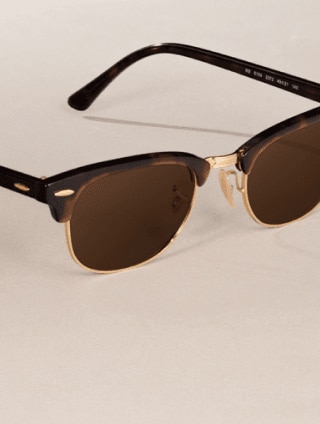
A designer frame gathering dust in a drawer can be worth more as a sale than a donation. Ray-Ban® and other established names hold value on the second-hand market, and a barely worn pair can fetch a fair price on the usual resale sites. A few habits make the sale smoother:
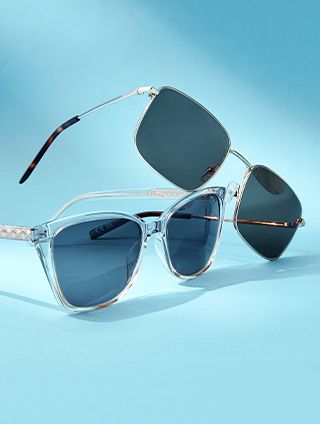
Not fussed about the money? Hand a spare pair to a friend or family member instead. It's the fastest reuse of all, and plano (non-prescription) sunglasses are ideal for reuse.

A loose screw is rarely reason enough to retire a frame you love. Most wobbles are a five-minute fix: a cheap repair kit tightens hinge screws and swaps worn nose pads, and a dab of clear nail varnish stops a screw creeping lose again.
When the prescription has moved on but the frame is fine, ask about a reglaze – fitting fresh lenses into the frame you already own. It keeps the fit you like and often costs less than starting over. For frames that take a daily battering, titanium springs back into shape and is more robust compared to cheaper metal.

Don't overlook the case when clearing out a drawer of old glasses. A sturdy case in good condition is worth keeping – hand it in alongside a donated pair, or reuse it for earphones, spare change or a travel sewing kit.
If it's past its best, check what it's made from before it goes in the bin. A moulded plastic case and a fabric slipcase are sorted differently, and your council's recycling pages confirm which bin each one needs. A metal tin goes straight in with household metal recycling.
When a new pair is ready, sorting the old one becomes simple: donate a wearable pair, recycle a broken one, and either way it stays out of landfill and out of your drawer.
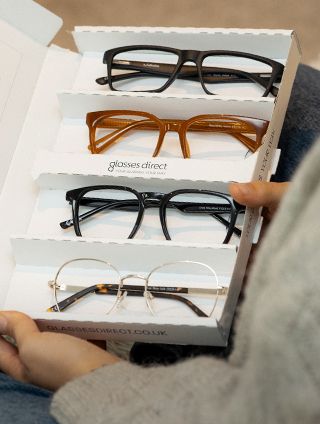
With free Home Trial, you can try up to four frames at home before committing to any of them. 2-for-1 frames means you can have two flexible styles for one great price, and own-brand frames start from just £9. The pair you're replacing already has somewhere better to go than the bin.
No. A single pair often mixes metal, acetate and coated lenses, which council recycling facilities cannot process. Use a dedicated glasses recycling point at an optician, local recycling centre or charity collection box instead.
Most high-street opticians keep a collection bin by the door. An online recycling-point finder can also map the closest drop-off for glasses recycling in your area.
Charities such as Lions Clubs sort and grade every donated pair. Wearable frames are usually sent overseas to people who need them; damaged pairs are recycled instead.
No. Recycling schemes separate the metal, acetate and glass themselves, so a quick wipe and a drop into the collection bin is all that's needed.
Ask about a reglaze. Fitting fresh lenses into a frame you already own keeps the fit you like and is often cheaper than buying a new pair outright.